Thailand

What is this blog post?

Well, in this one I’m obviously going to be talking about a place we went to on the world trip. But this one is different. Okay, every post is different, but this one is the first in Asia! Yep, we were traveling through Asia a few weeks ago and now that we’re in Argentina, I’m writing a post about what we learned in one of the two countries of our Asia tour. So today, I’m going to be teaching you about a Buddhist country that exports 10 million tons of rice a year, with over 40,000 temples, in Southeast Asia, called Thailand.

Bangkok

Bangkok has been the capital of Thailand since 1782. The population is over 9 million! It’s really big, one of biggest cities I’ve ever seen! There are 7 million cars here – even though public transportation is good. That’s 7 million cars, only 2 million less than the people! We went on the subway many times, and Bangkok really does seem to organize these well. The weird thing was, the subway was always clean! The reason I say that is because the last time we went in subways was in Athens and London- the subway… not always so clean there! While driving cars, Thai people don’t honk their horns (in Bali they do all the time). Rush hour (usually a time when most people are going or coming home from work) always has so much traffic.
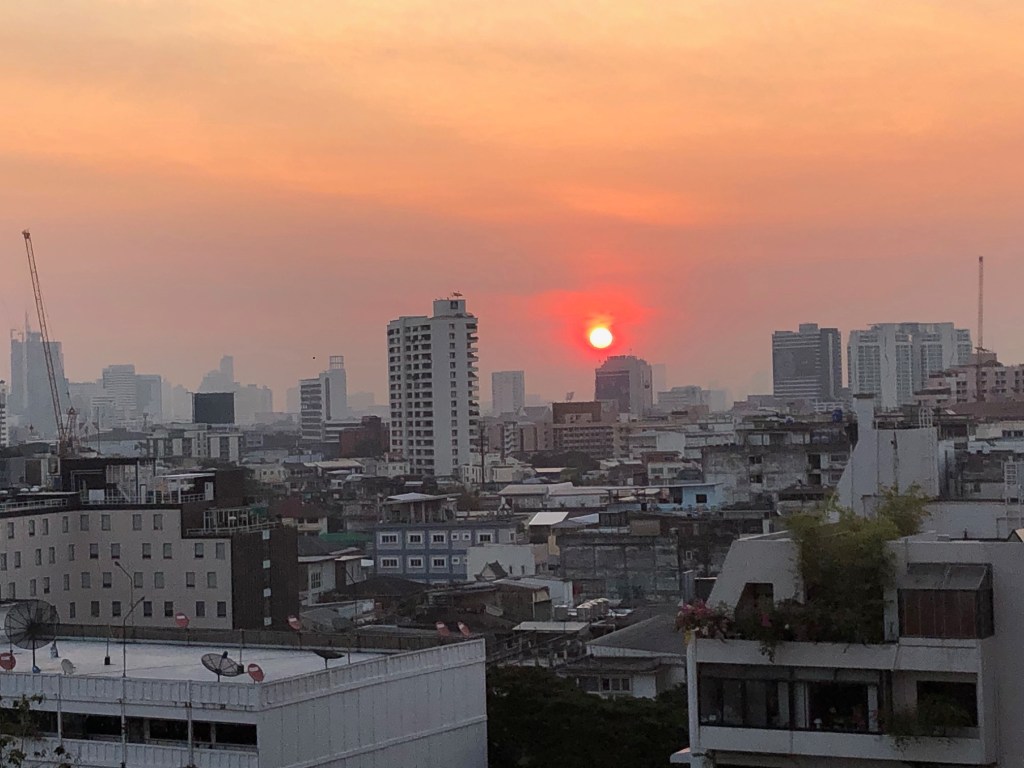
Sunrise in Bangkok from our hotel room. The view is hazy because of the pollution from cars, mopeds, factories, and burning trash and crops.

There are over 400 Buddhist temples in Bangkok, and here are the most famous ones: The Reclining Buddha (at the temples of Wat Pho), the Emerald Buddha (which can be found in the Grand Palace of Bangkok), Wat Suthat, and Wat Ratchanatdaram.
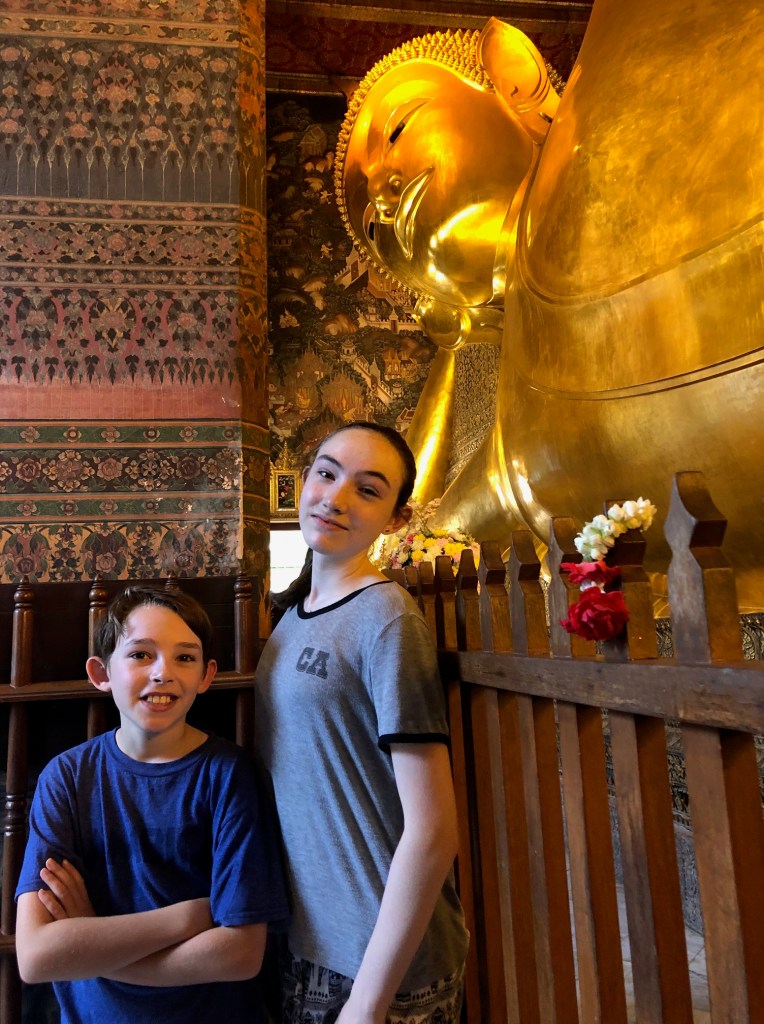
The Reclining Buddha

March to June are the hottest months in Bangkok. I would say, it can get pretty hot there! Well, only in the 80’s and 90’s Fahrenheit, but the sun shines hard.

Fun Fact: according to our tour guide in Bangkok, Sixty percent of Thai people are farmers and gardeners!

The neighboring nations of Thailand are: Cambodia, Laos, Malaysia, Myanmar (formally know as Burma)
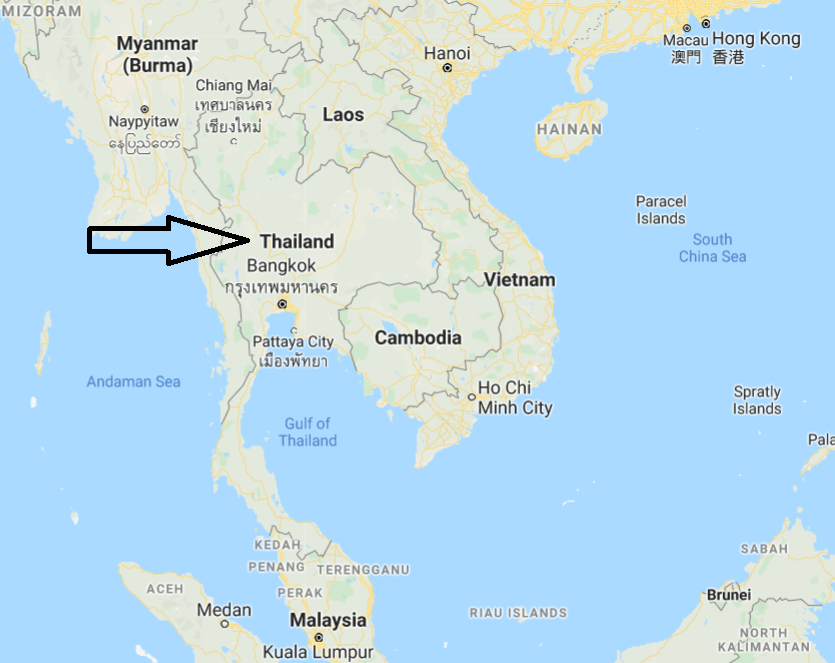
The wars with Burma

The Thai had 20 wars with Burma. The 2nd was called the “Burmese Siamese war” (as Thailand used to be called Siam), often known as the “white elephant war” because the war was over which country would get more white elephants. White elephants in Thailand are not literally elephants that are white, no, a white elephant just refers to a very strong and large elephant. Burmese king Bayinnaung wanted to take some white elephants from Thailand (or Siamese elephants, as that was their name at the time), but King Chakkraphat of the Siamese (Thailand) said no, and so Burma went to war with Ayutthaya, the former capital of Thailand.
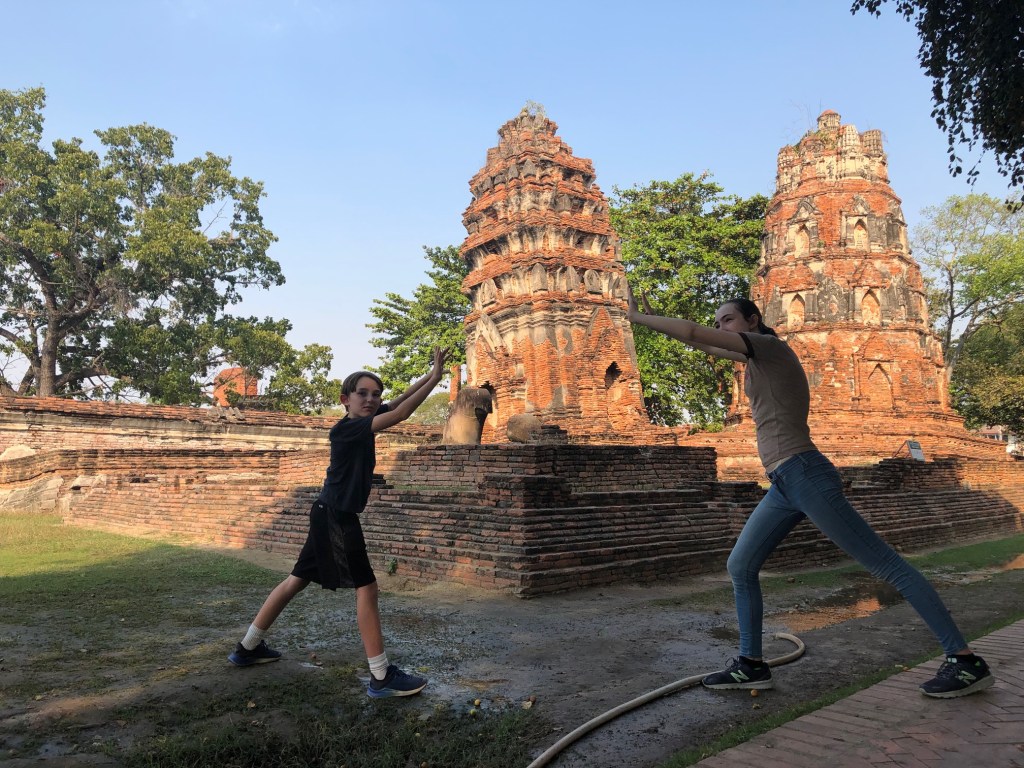
At the temples in Ayutthaya

Fun fact: The Princes of Burma and Siam had a chicken fight that led to a war where Siam’s prince won back their independence from Burma by an elephant duel.

A briefing about the capitals of Thailand

  • Sukhothai was the capital from 1238 to 1378 and means ‘dawn of happiness’.
  • Ayutthaya became the capital of Thailand in 1350 to 1767. This former capital is probably the most famous after Bangkok.
  • After Ayutthaya was destroyed and burned to the ground by the Burmese, Thonburi became the capital in 1767.
  • Finally in 1782 Bangkok became capital of Thailand and it has been until the present.

Fun fact: In the 20th century when there was not great technology, locals used to sneak into the Ayutthaya temples to steal the treasures there! Now there are cameras.

The lucky colors of the week

Each day of the week has a color, So the day of the week you were born on is your lucky color.
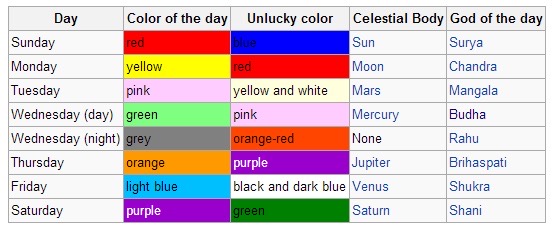
Fun fact: King Rammed the 10th and the 9th were born on Monday, their lucky color is yellow!

The kings of Thailand

Thailand has had 55 kings in its history. The present King of Thailand is King Rammed the 10th or, Vagiralongkorn. The first king was Rama 1, and there have been 10 kings since. It is thought that when a Thai king dies he reincarnates in heaven. The king is also sometimes thought of as a God if he is liked among his people.

King Rammed the Tenth: He became official King of Thailand in November 2016, 50 days after his father’s (Bhumibol) death on the 13th of October. King Rammed the 10th also has ten palaces!

There is also a law to protect the king, meaning that if you do or even say something bad about the king, you can be fined or imprisoned. The head of government is not the king, no, there is a prime minister who is given the job to manage the country’s government system. The new king is 67 years old and has married and divorced many times. Literally every person we met voluntarily told us that they did not like the king, true story. The current king’s father is still revered in Thailand. His name was Bhumibol. Bhumibol had many musical talents. He was a jazz musician, playing clarinet as well as saxophone and trumpet. King Rammed the 9th or “Bhumibol” died in 2016.

Fun fact: King Rammed the 10th loved his dog Fu-Fu so much that he gave it the position of “Air Chief Marshal Fu-Fu”!

The Grand Palace of Bangkok

Ok, so I haven’t really touched on the subject of a specific temple complex yet, so I think this is a good time to now. The Grand Palace of Bangkok has been a palace for the kings of Thailand (formerly known as Siam), but is mostly a temple complex and tourist mania today. It was built in 1782, at the order of King Phutthayotfa, or King Rama 1. The palace is 2,351,000 square feet and contains of over 100 buildings (wikipedia.com). One of these is super famous. It’s the temple of the Emerald Buddha, or Wat Phra Kaew. Inside, obviously it is a beautiful emerald Buddha with surrounding paintings and offerings. And then there are tourists. The temple is just crammed with tourists. Okay, now I’m going to fire up a bunch of questions and answer them. How long did the grand palace take to build? It was built for 150 years, but the Emerald Buddha temple only took 3 (culturetrip.com). Did any U.S. presidents come here? Yes, Bill Clinton, Johnson, Nixon, Bush, and even Barack Obama! Are there special things that happen here? Yes. On the full moon, a bell is rung. Many Buddhist festivals are celebrated here. Like the Royal Ploughing Ceremony coming up the 11th this May. That ceremony is celebrated in the Grand Palace and was made a public holiday on 1957. How many people come to the grand Palace every day? One estimate is 78,000. And in 2016, there was over 32 million people who visited the grand love of Bangkok that year! (https://thaiembdc.org/2016/06/27/grand-palace-among-worlds-50-most-visited-tourist-attractions/)!
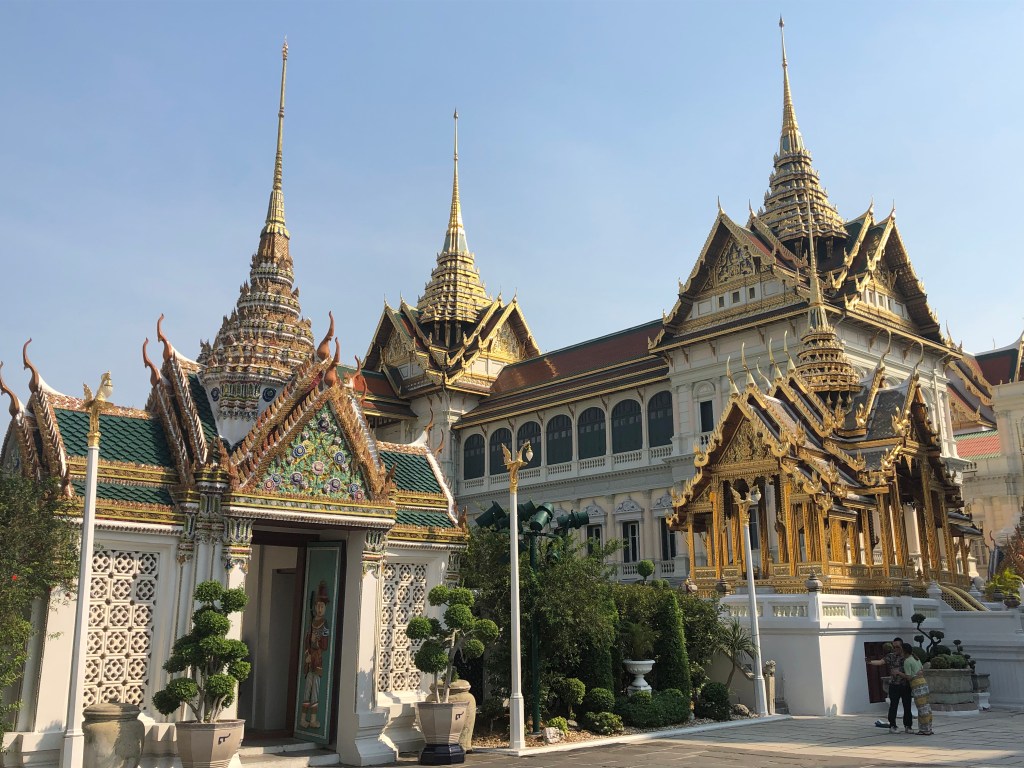
The Banquet Hall at the Grand Palace

What is Buddhism and how many Buddhists are there?

Buddhism is a religion based on a man named Siddhartha Gautama, who was born around 2,620 years ago. He was first a prince of India, but then started to realize that many people in the world were suffering. So he gave up his life as a prince and went out into the world and helped people. Finally, he became known in all the land, and before dying, gained enlightenment, or true eternal knowledge and peace.

After finding this enlightenment, Siddhartha was renamed “Buddha”, which means the awakened one. I think that makes a ton of sense, since Buddha just got enlightenment right? He just unlocked something really important in life, he awakened. Lots of humans in Asia wanted to be like him, helping others, and finding the meaning of life. Some Buddhists other than Buddha have gained enlightenment, as that is one of the main goals of a Buddhist. Now, 535 million people in the world are Buddhists. I know that does not sound like much compared to the 7 billion people on the globe, but at least we can say that there is a lot of the religion in Thailand, because 95% of Thai people are Buddhists! That leaves only 1% as Christians in the country, and Islam at less than 2.5%!
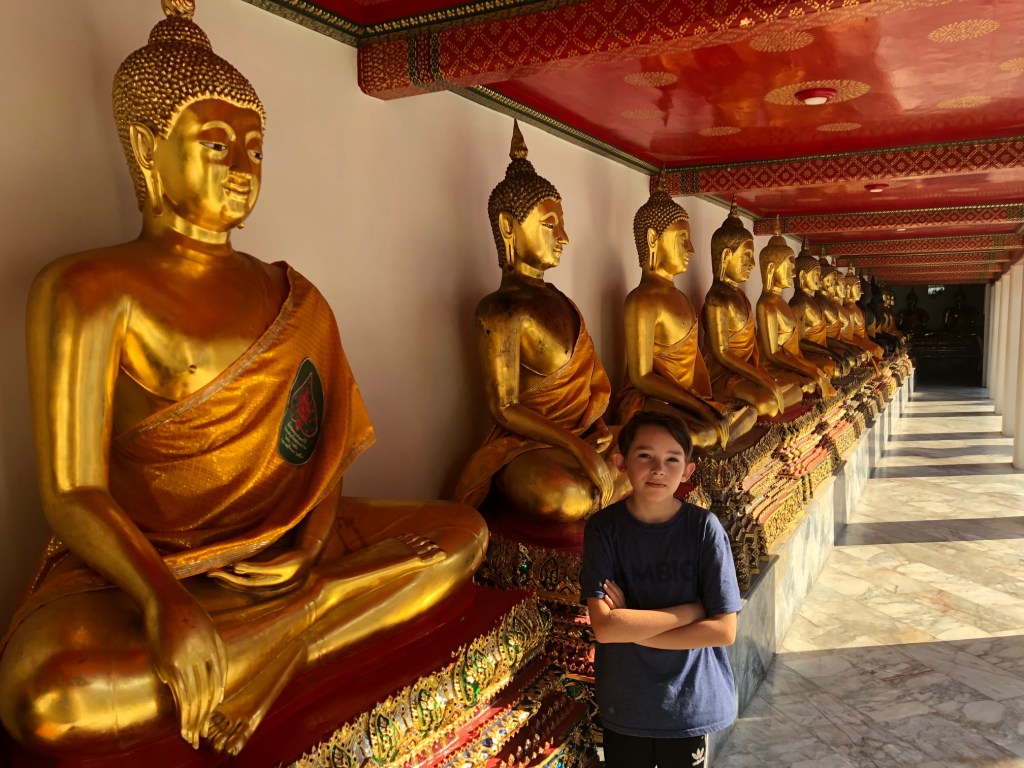
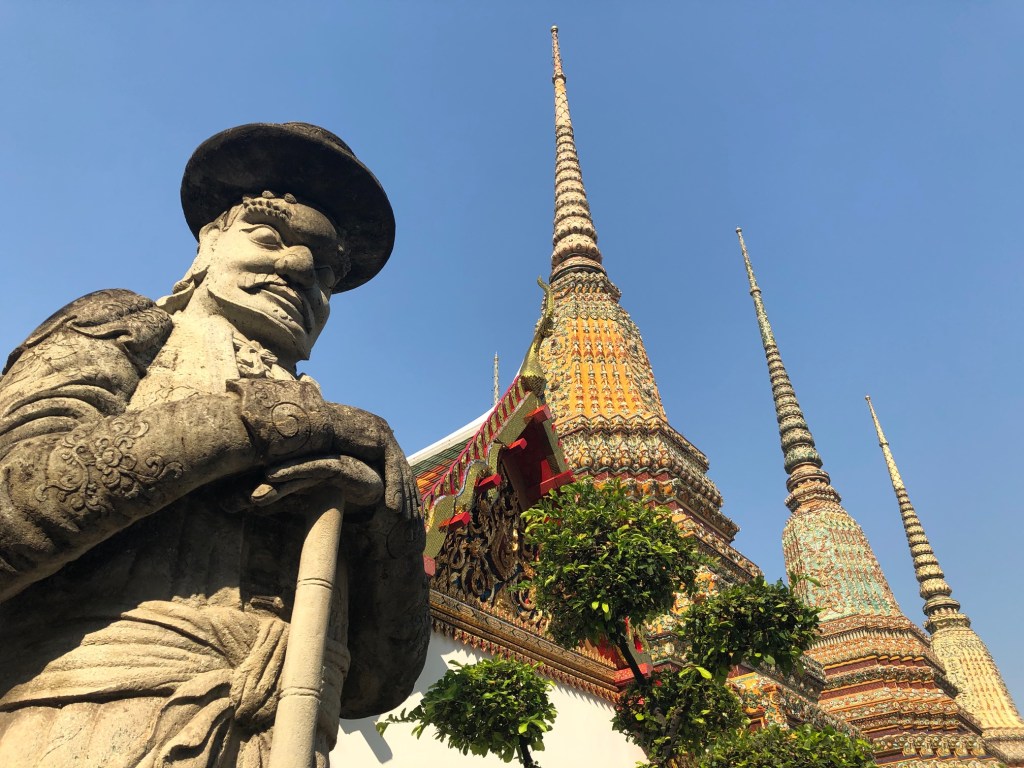
Statues of the Buddha in Wat Pho, Bangkok
Wat Pho, Bangkok

Buddhist monks

Buddhist monks can only eat breakfast, and lunch. Why no dinner? Yeah. They have to finish lunch at 12:00 pm then wait until the next morning at breakfast for their next meal (though they are be able to have water and tea during the whole day without question). It’s not only the men who are monks, but also there are female monks (though most monks are male). You don’t have to be a monk for your whole life as a Thai Buddhist. Many people in the country become a monk for a week, a few months, or even a year! Then the person decides if they want to become one forever or not. Actually, I said that wrong. Once you are a monk, you can retire! We had a tour guide named Tom who was formerly a monk but stopped because he wanted to have a relationship. This is one reason that monks retire. But after retiring, they will still get a job. This is because as a monk, you don’t get much money. You will have donations, but mostly monks just grow their own food. We learned about Thai Buddhist monks in Thailand.
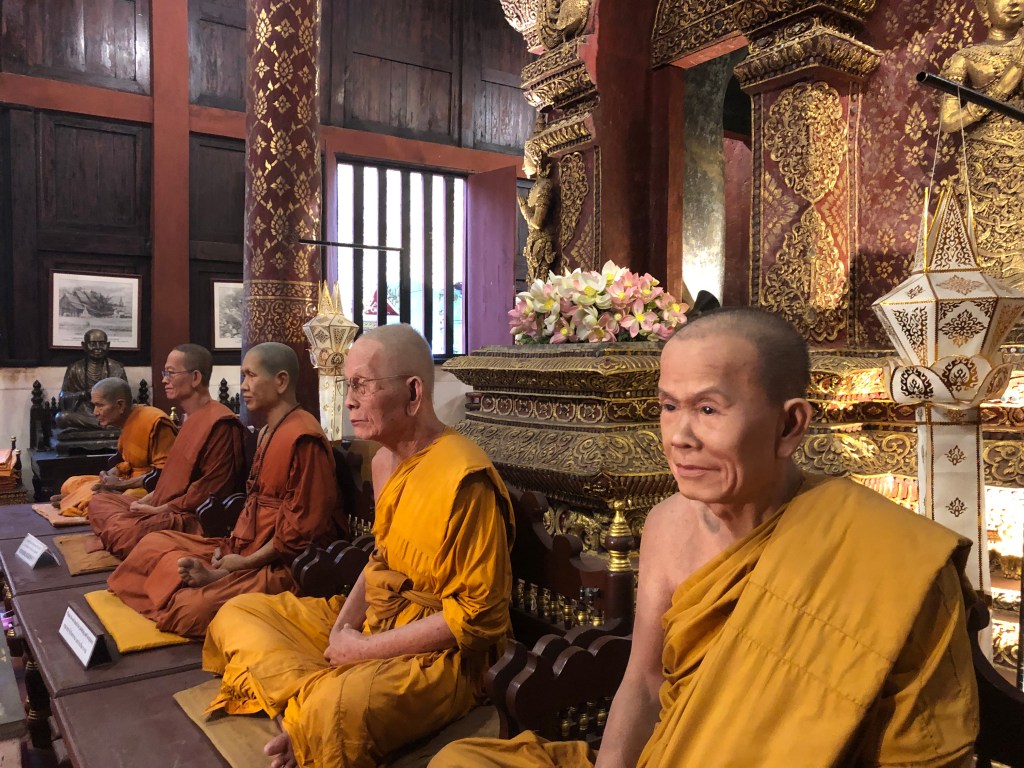
Wax figures in a temple, of real monks that were revered in Thailand. Don’t they look real?

The sacrifices of becoming a monk

  • Monks can not drink any form of alcohol.
  • Monks can not get married or have relationships.
  • Monks can not play sports.
  • Monks can not play music other than chanting in religious form.
  • Male Monks can not touch women, and female monks can not touch men.

Tourists sometimes will learn about and practice Buddhism seriously.

If I was a monk…

No really, I could be a monk at 10 years old. Actually, every Buddhist man in Thailand has to be a monk before turning 20 years old. But I don’t mean being a monk for a long time, if I became a monk I might only do it for a few days! But from my perspective, I would decide to be a monk for like 3 weeks because that’s around the time the majority do it for. Now, to become a monk you have to undertake a few ceremonies. You also must shave your head and eyebrows. Wearing a robe is mandatory as well, and there are different color robes for different types of monks.

If I was a monk I would get on the train or subway, and if there was not a seat open, people would be expected to give up their seat for me. Even tourists would be expected to do this. We did not experience this on a train in Bangkok because there was almost always already a seat open when the monk would come in. One of the reasons families send their child to become a monk, is for money and savings. While the boy learns how to be a monk he will be away in the temples and will not need to be provided for by his parents. The family won’t have to pay for their son’s education. Or, the family might send their child to the temples to learn about life, maybe if they are selfish or vain. Being a monk can teach you life lessons and help you think in the present, not the past or future (that is one of the main points of Buddhism).

What is disrespecting the Buddha?

If you disrespect the Buddha, you can get fined or put in prison. But what is disrespecting Buddha? Well, we saw this sign at a temple called Wat Phra Singh (Gold Temple) and I wanted to show it to you:
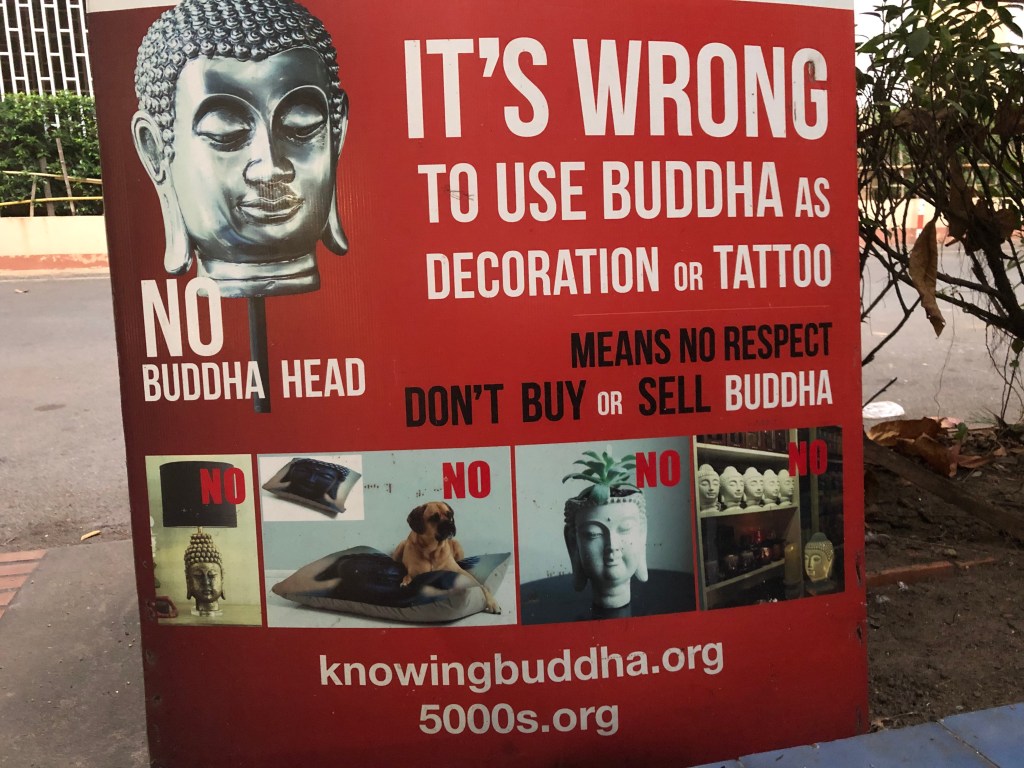
Fun fact: In Bali (a few weeks later in Indonesia) we actually saw people selling Buddha on a stick, Buddha candles, and Buddha mini statues. All I was thinking was ‘that would not be allowed in Thailand!’

The clothing restrictions of visiting a Buddhist temple

No tank tops, no see-through clothing, no shorts, but t-shirts are allowed. They always let us wear our hats. If you do not follow the rules usually shown in the front of a religious place you’re visiting, then you will almost always be kicked out. Some temples and places have different rules, depending on how important they are. The alternative to wearing the wrong clothing is to get appropriate clothes. While visiting one of the summer palaces of the king, you could rent or buy elephant pants just in case you forgot to bring the right clothes.

So that’s it people!

Thanks for logging into the site or just reading this from email if you’re one of our followers. This took a lot of work, so please like it if you’d like. If you don’t like it, put a suggestion or comment so I know what to change in my next post. Or if you don’t understand, just ask a question!

Click here to find our YouTube channel: On the Road with LJ

Bye, and see you later!

Jack
Our Africa Journey Part II – Tanzania and South Africa

Hi, this is Jack and I’ve just written another post below. If you have no idea what this is, you should go back and read the last post: Our Africa Journey Part I: Morocco and Egypt. This is part two of something I call my Africa summary. Yeah, it’s basically just a short summary about every country we have visited in Africa. There is a lot to say about where we went, since we have been in this continent for 3 months. The last post was about Egypt and Morocco, and this one is about Tanzania and South Africa.
Click the links in blue lettering to find blog posts about what is highlighted in blue. Also, this is just a summary, stay tuned to our YouTube channel On the Road With LJ to learn a lot more about all of these places.
ZANZIBAR, TANZANIA

Zanzibar was the first place we visited in Tanzania. Check out Lily’s Zanzibar posts:
– Zanzibar
– Spice Tour

ARUSHA, TANZANIA: Our experience with the locals

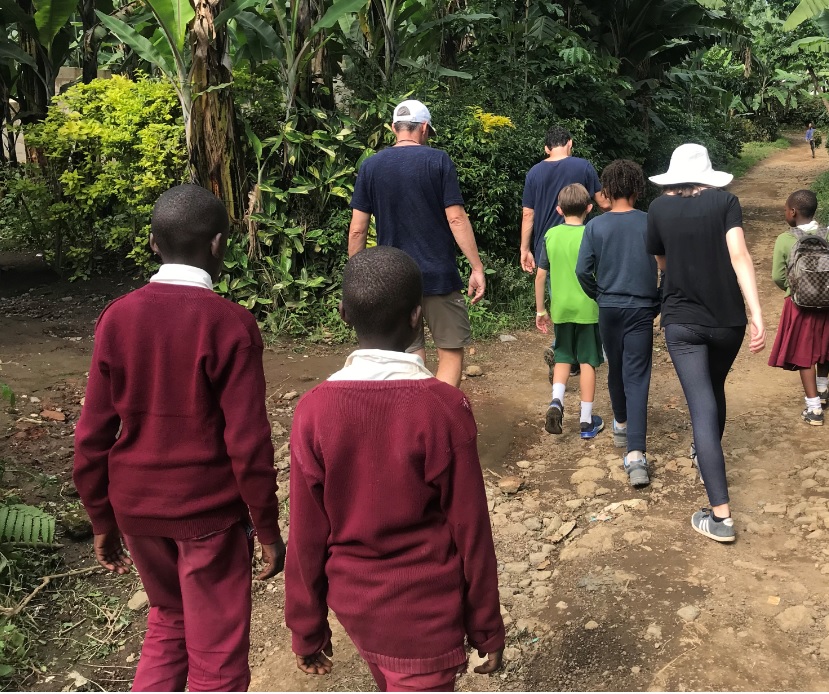
From Zanzibar we flew to Arusha. While walking around a village outside of Arusha, we saw many local kids who had just gotten out of school and were wearing school uniforms. They were all very interested in us and shouting and calling at us, “Hello! How are you?” and “Jambo!”, which means “hello” in the Swahili language. A group of kids shouted something in Swahili, and then started to laugh and point. To this day I do not know what they said. There were a bunch of kids who were following us as we walked. One time a kid said, “I speak the English” and was clearly trying to mimic us in our accent. Later, our friend noted that we probably were saying things that sounded funny to them. “When we say jambo, to them it probably sounds like rambo or something”. But really the people in Arusha are just very friendly.

SAFARI

After Arusha, we went on safari. The word safari in Swahili (the local language) means journey. We did a lot on our Safari Journey:

  • Maasai Village
  • Olduvai Gorge
  • Tarangire National Park
  • Ngorongoro Crater
  • Serengeti National Park

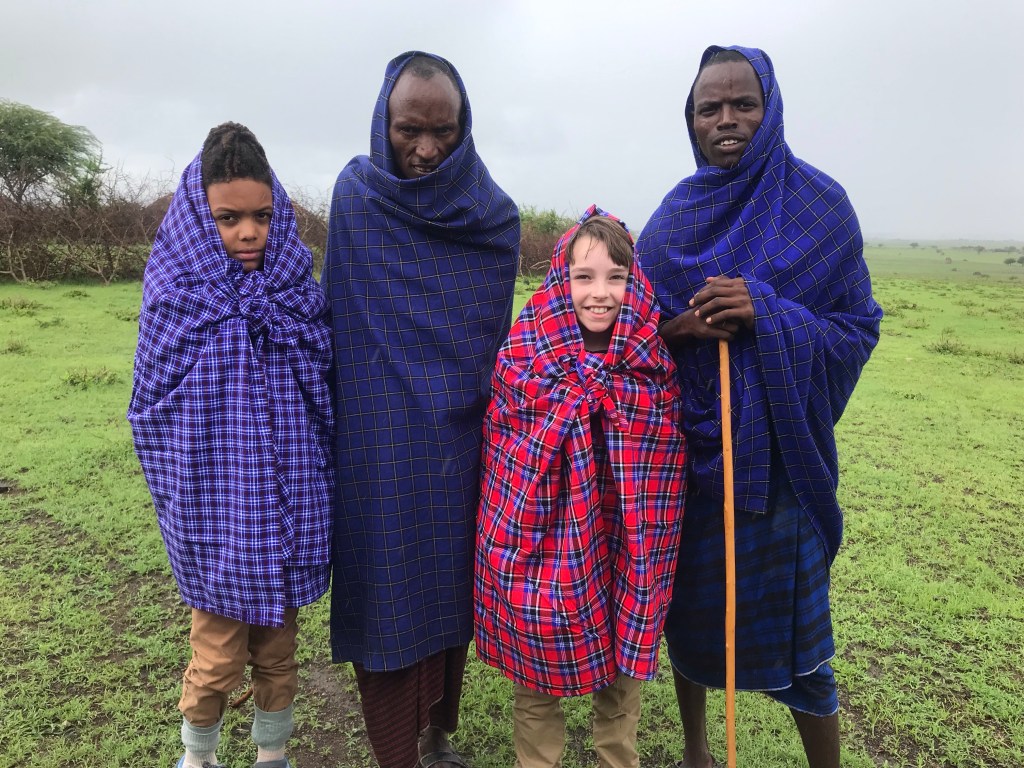
The Maasai are people who have been living in Kenya and Tanzania for hundreds of years and they still live today a lot like they did hundreds of years ago. We visited a village, saw a school, talked to a village leader, and saw some amazing singing.

Olduvai Gorge is one of the most important archaeological sites in the world and has been very important in understanding the evolution of our human ancestors.

We then went to three safari parks: Tarangire, Ngorongoro, Serengeti. Each of these national parks are unique in their own way. The Tarangire has a huge amount of elephants, the Ngorongoro hosts a large concentration of animals in an amazing crater, and the Serengeti is huge and has the most animals to see.

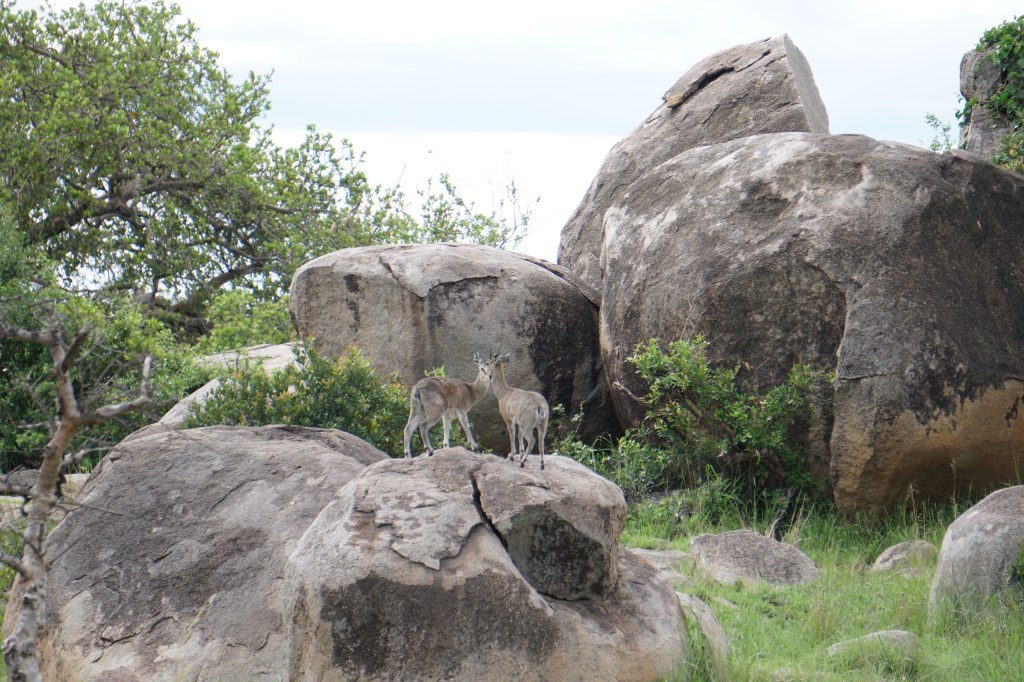
There were so many amazing animals we saw in these national parks during our 6 day safari. For example we saw 36 lions and 9 cheetahs. Safari was awesome overall. We even saw some clip springers kissing! (A clip springer looks similar to a dik-dik, and is very cute). If you want to know more about the landscape of these places, then go to my Safari in the Ngorongoro post and Lily’s post Deep in the Serengeti.

Clip Springers

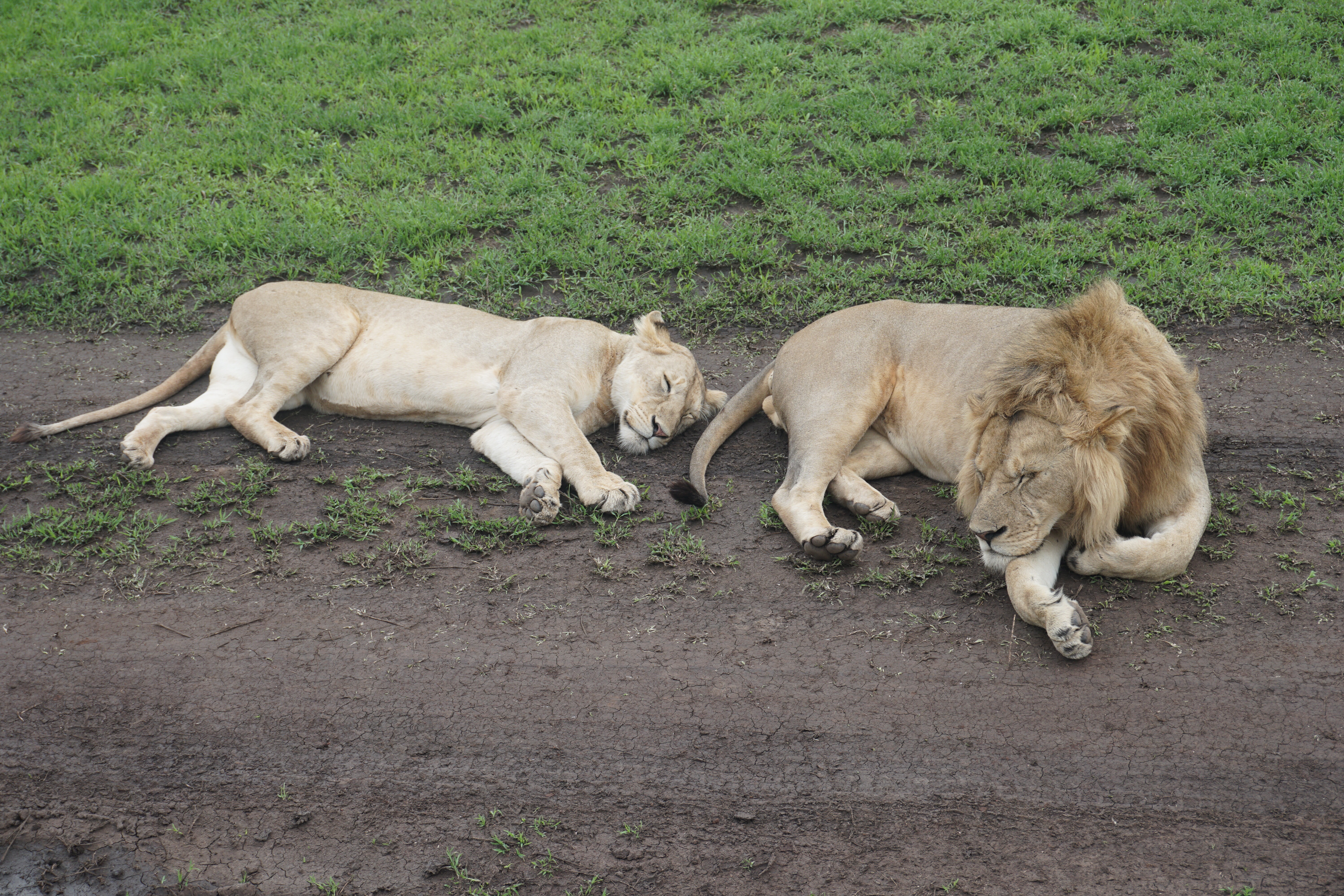
Let me tell you about one of our lion encounters. This one time, we saw about 4 lions. We noticed 3 of the lions huddled up behind a tree, then one of them moved up to the front, keeping its eyes on something as if following it. Finally we realized what was going on. A fourth lion at the front of the group was crawling towards an oblivious group of zebras. “The zebra does not know there is a lion”, said Anin (our guide). The lions in the back were apparently supposed to give backup to the one on the front, who was the main hunter. But the zebras were pretty far away from the lions. So eventually, that front lion jogged back to his pack. We almost saw a lion hunt. But nope, that’s how it goes!

SOUTH AFRICA

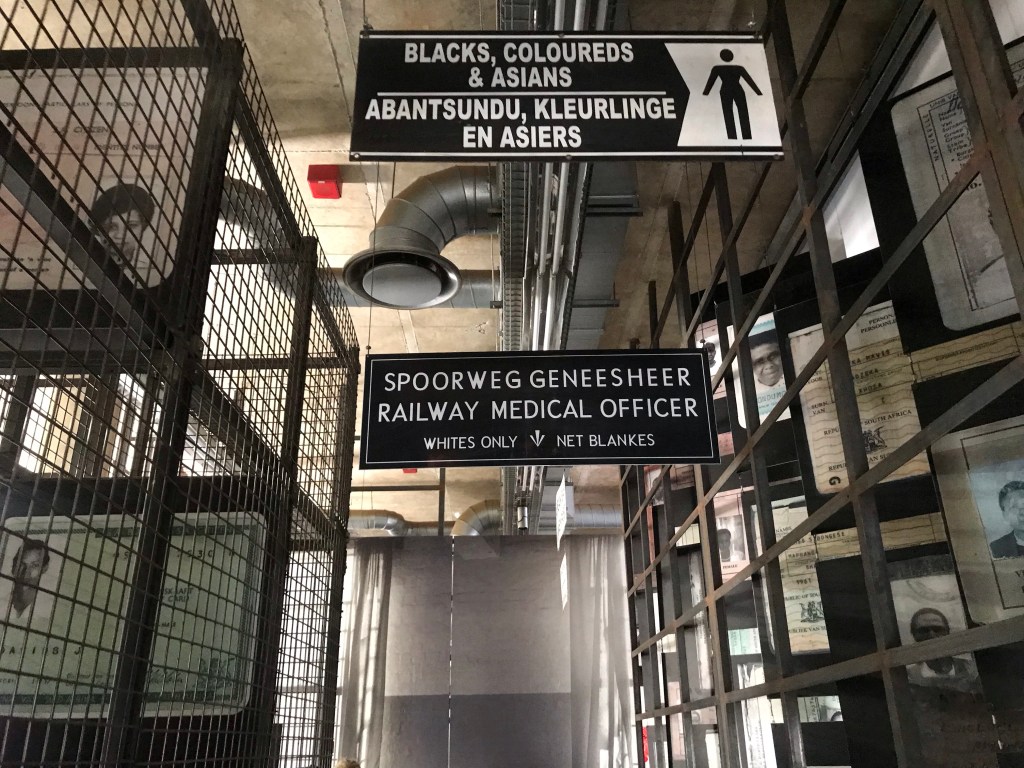
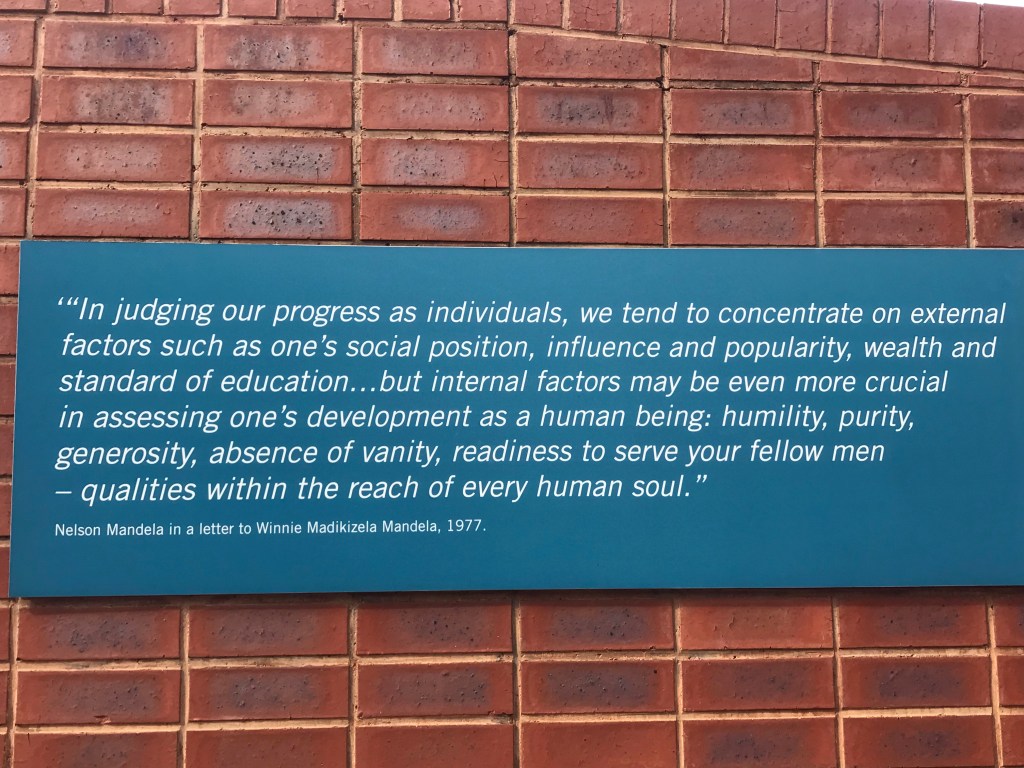
Our next stop was South Africa. South Africa is a beautiful country. There are so many hikes to go on and natural places to visit. I learned about Apartheid. Apartheid is a word in the Africaans language and it means apart. Apartheid separated humans just due to their race, meaning that people with lighter skin had more privileges than the rest of the South Africans. We wanted to learn about how apartheid impacted the nation of South Africa and what it did to its people. So that is one reason we decided to go to Johannesburg. There is a museum there called “The Apartheid Museum” that we had to visit. We ended up liking the museum for its courageous amount of info but also found parts of it very, very disturbing. Seeing this really gave me a feel of what it would have been at that time, and it also made me sad for all those people who died. We also visited Soweto, a township, and it seems to me that the majority of people are still living separately in the entire country.

The entrance to the Apartheid Museum.

Road trip in South Africa

We went to several other places in South Africa before leaving the African continent completely. All these places were part of a 10 day car trip we took through the country.

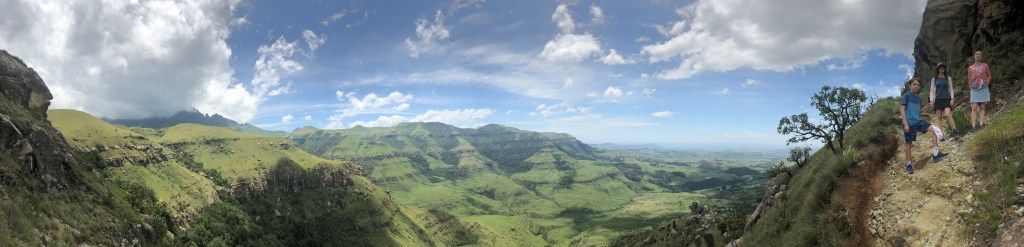
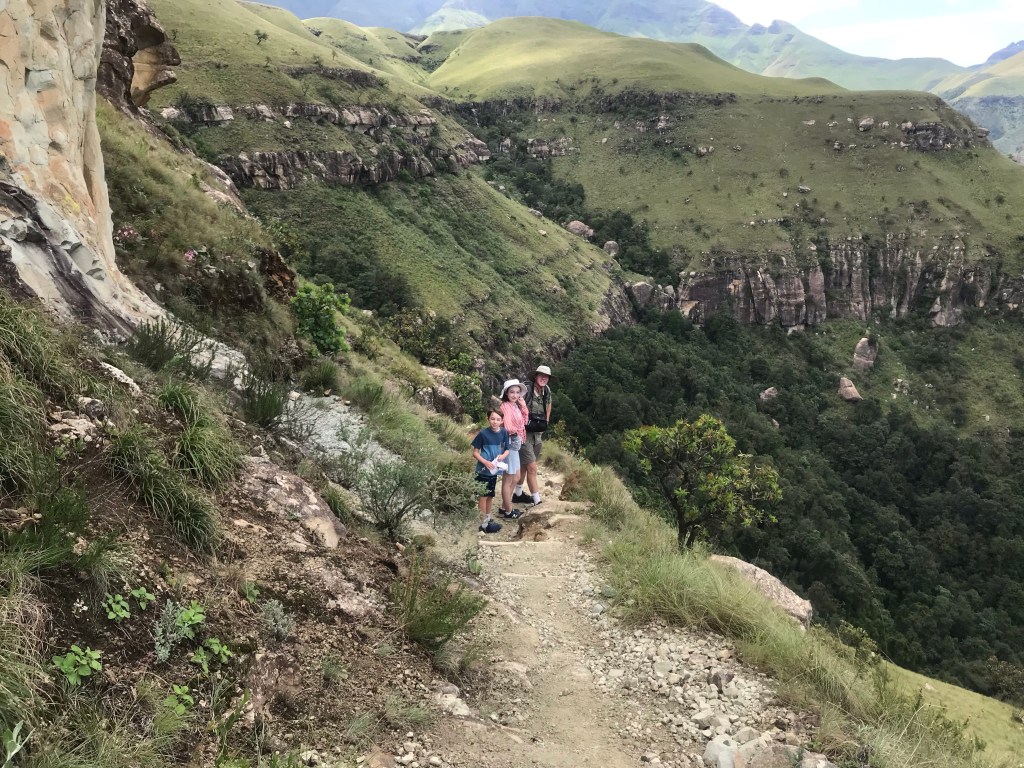
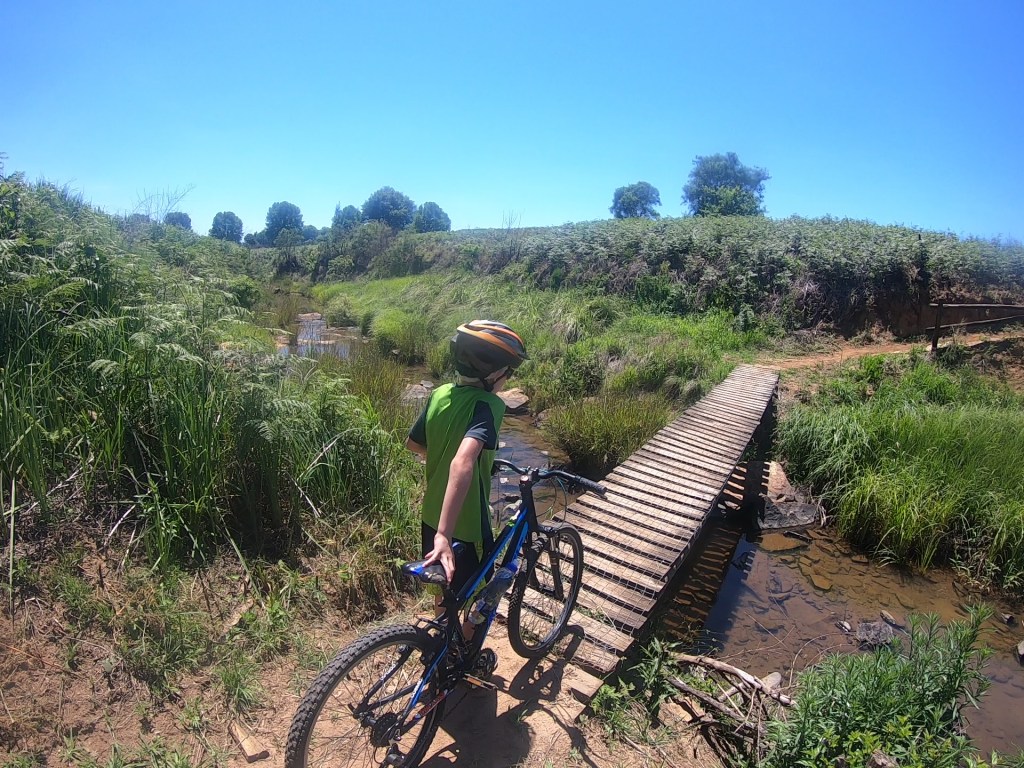
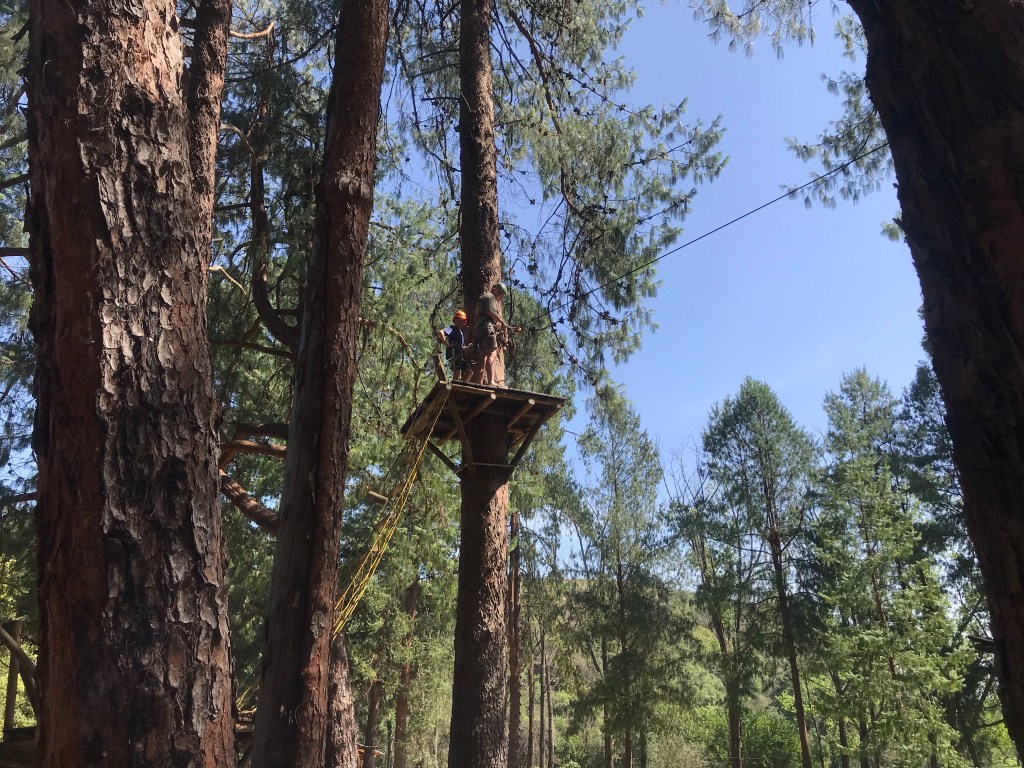
The Drakensberg: The name of this place means “dragon mountains”. This place is huge and awesome. We mountain biked, took a hike up into the boulders, zip-lined with my Dad, ran with my Mom, and spent time doing other outdoor activities.

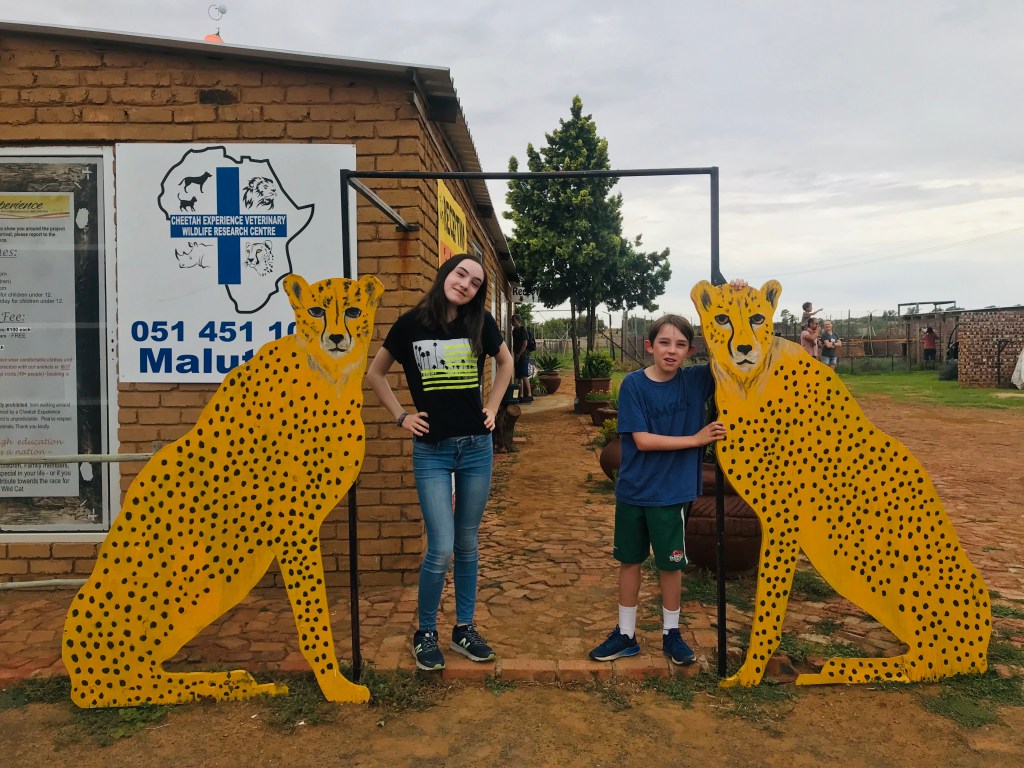
Cheetah Sanctuary: We visited a Cheetah Sanctuary in Bloemfontein, called Cheetah Experience.

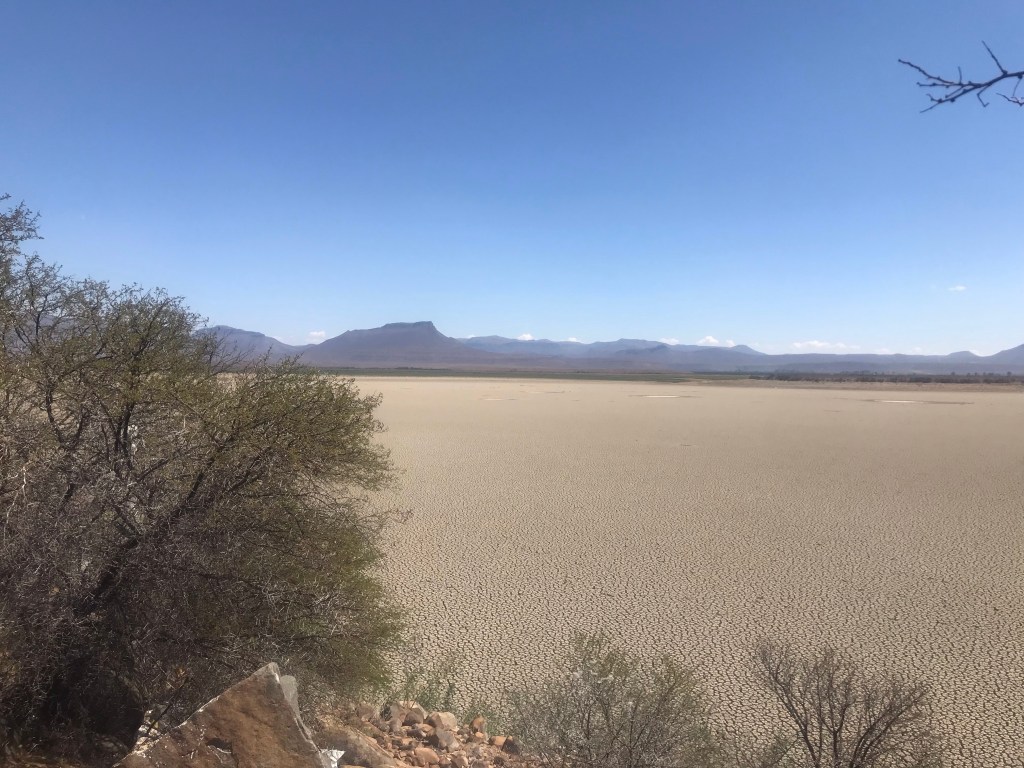
The Karoo Desert: We visited a town here called Graaff-Reinet and saw a completely empty water reservoir. This place is in the middle of a four year drought, the worst in 1000 years!

An empty reservoir above the town of Graaff-Reinet

Garden Route: We then drove the famous Garden Route, between Storms River and Cape Town.

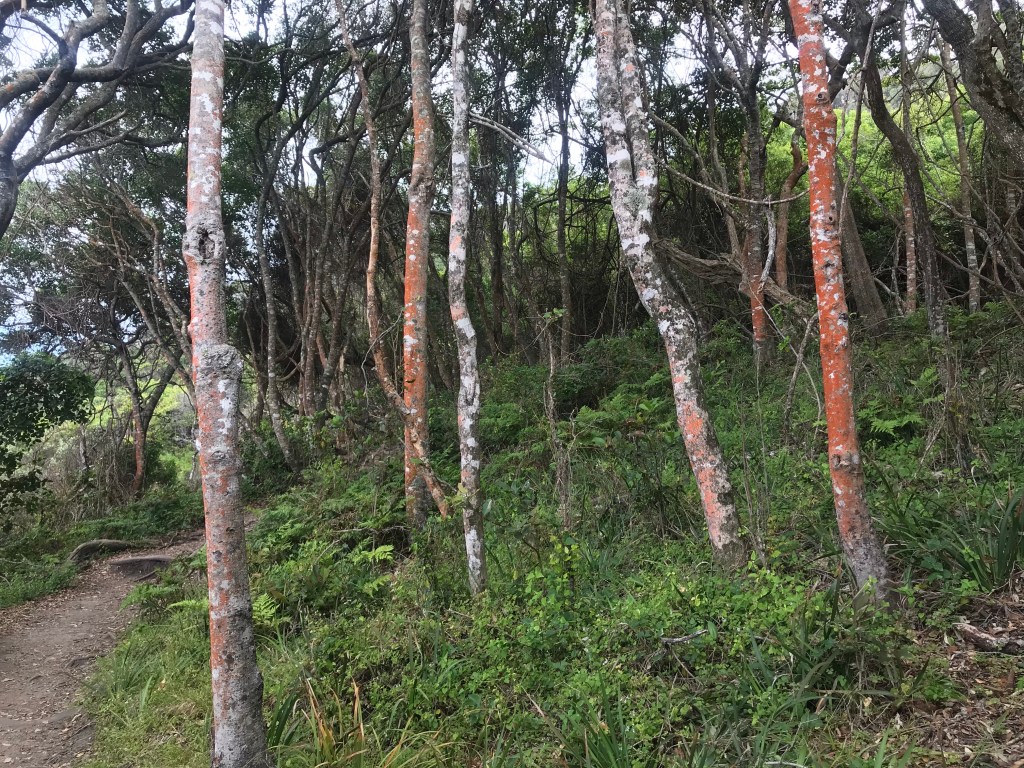
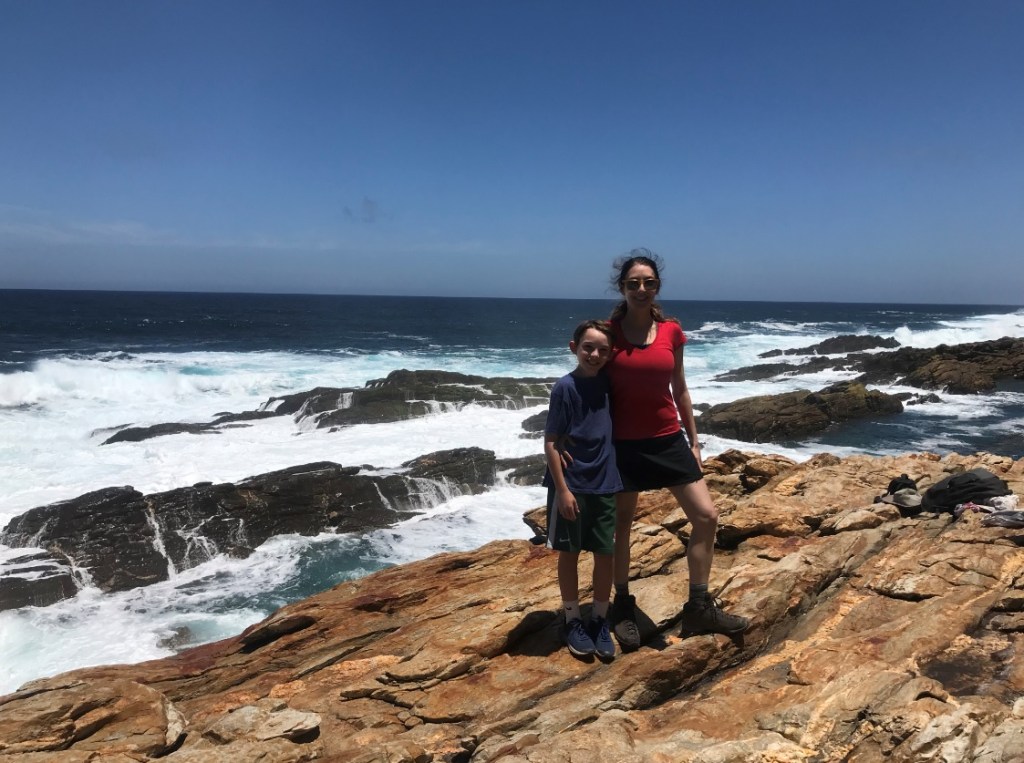
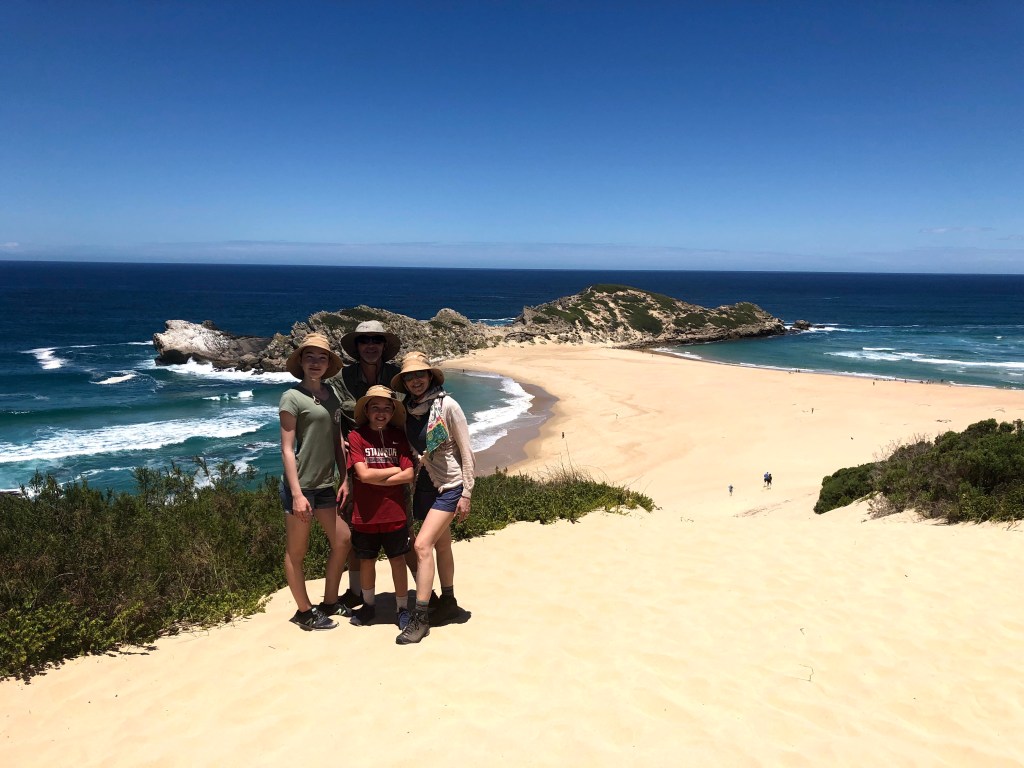
Storms River: In Storms River we went on the most epic hike of all time by the ocean on boulders! It was in a park called Tsitsikamma National Park and the hike was called The Waterfall Hike.

Knysna: We spent Christmas in Knysna, visited many beaches and hiked.

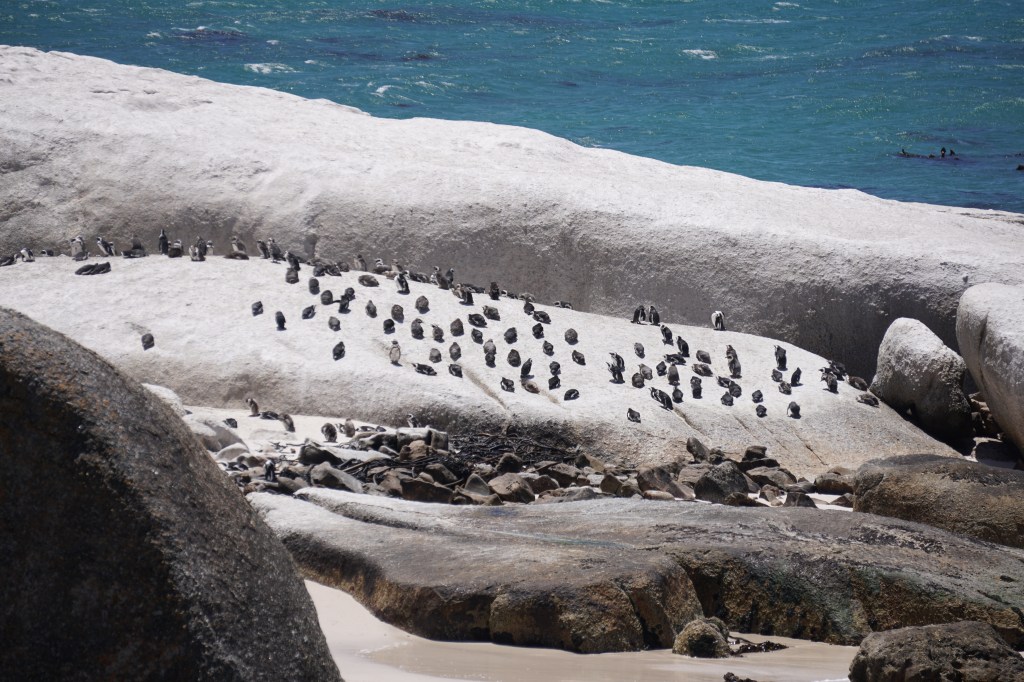
Cape Town: I recommend the Cape of Good Hope for its hikes and seals, though if you don’t get there early, the line to enter the park can go up to a few miles long! (No…really)

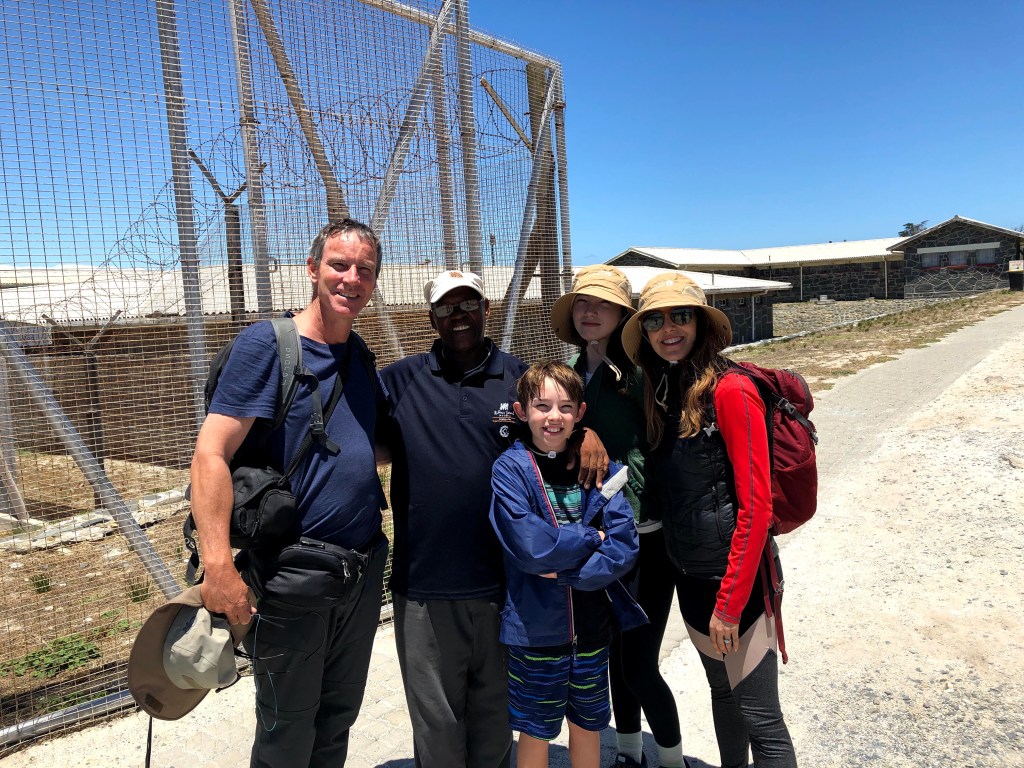
Robben Island: This is an island off the coast of Cape Town and it is famous for being an Apartheid political prison. Nelson Mandela was imprisoned there for 13 years. He was released when Apartheid ended and he became the first black president of South Africa. Now, since Robben island is a museum, people can visit it. In the prison, we visited the jail where Nelson Mandela was held captive for most of his stay in Robben island. We took a tour and our tour guide was a former political prisoner for 11 years and so we got the real story. The real story is sad.

Thanks for reading. Please feel free to leave a suggestion, or just a note in the comment section below. On a final note, if you haven’t already, please subscribe and like the post. Also, we have a YouTube channel called ON THE ROAD WITH LJ so please also check that out and subscribe there.

Here is a link to our YouTube Channel page ⬇
On the Road With LJ

We will have a new video and post soon, and thank-you for reading worldschool.travel.blog.

-Jack👌

OUR AFRICA JOURNEY PART I – MOROCCO & EGYPT

Welcome back to the blog! This is Jack, and you’re reading worldschool.travel.blog

This new blog post by me is going to show you what we did in Africa in two parts. Make sure to check out our videos about these places which will pop up at the end of some paragraphs. This is only part one, and the second addition will come soon: Tanzania and South Africa.

A few posts back, I made a report like this one. The thing is, it was one about what we did in Europe on the trip, not Africa. But now, we have finished visiting Africa and so, this is my time to start writing about our experiences in the second largest continent of the world… AFRICA.

This might be a long one, so please take your time as you read. Whenever you see something highlighted in blue, pressing it will open a link to a blog post, so you won’t have to search up our posts after every paragraph. Our youtube videos from On the Road With LJ will be embedded.

MARRAKECH, MOROCCO!

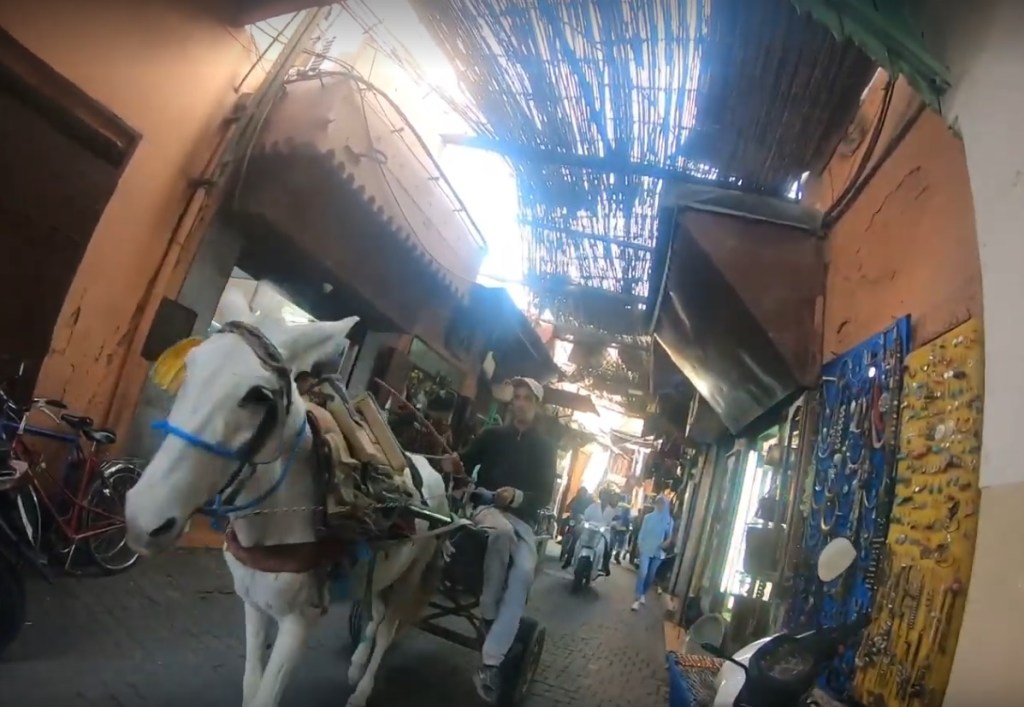
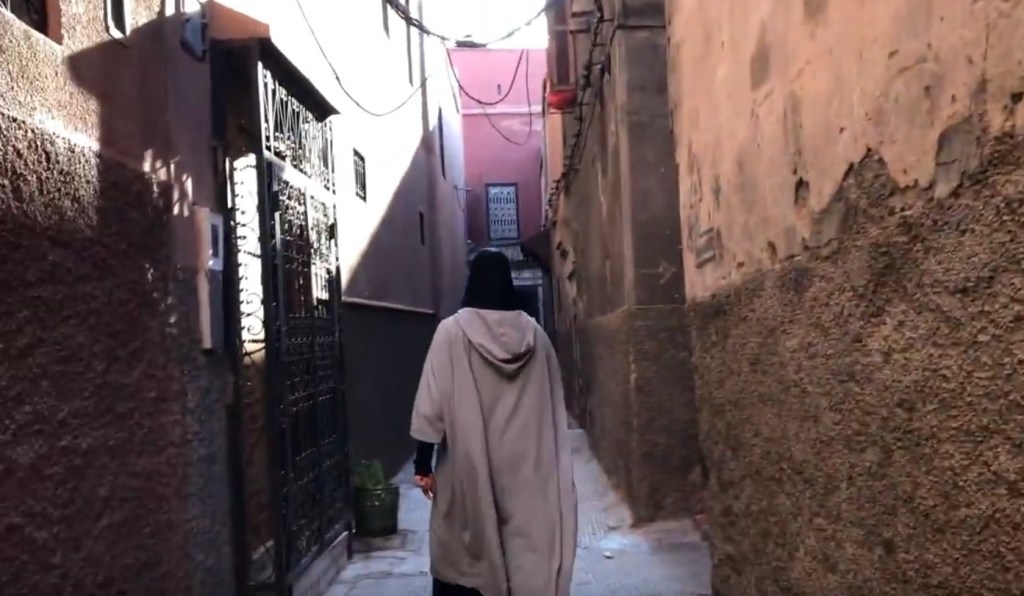
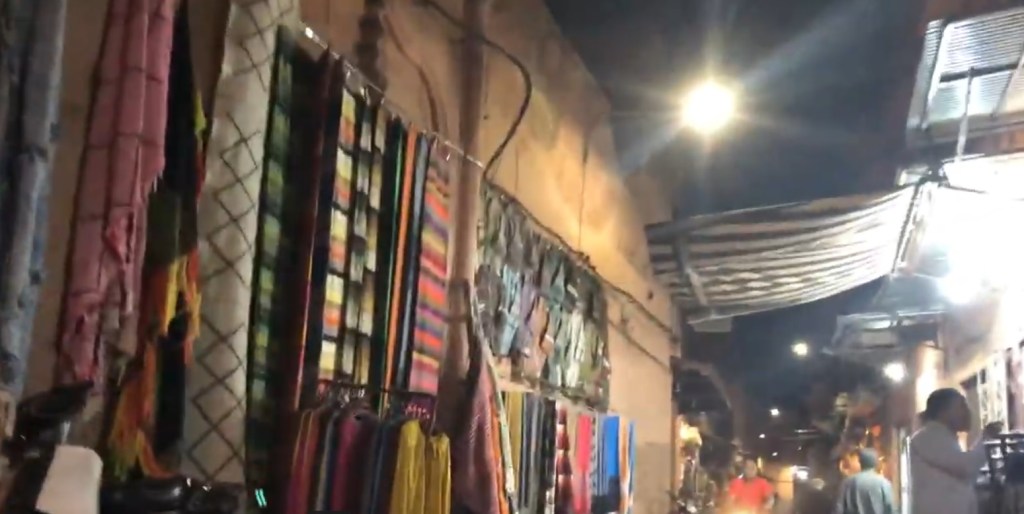
Marrakech was the first place we went in Morocco and the first place we went in Africa. Marrakech is nothing like any other city I’ve been to in my 10 years of life. I really did not know what to expect from Marrakech. Parts of this city were different than others. Most of the streets and roads we walked on were very bustling places, filled with different aromas (including lots of motorbike gas) and small businesses lining the edge of the road. In Marrakech, some of the streets are crammed, and some are not. The crammed ones are just… CRAMMED. We stayed in a “Riad” (a traditional house with an interior garden) in the “Medina”, which means the old city. When my family walked down the street leading away from our Riad we would always encounter plenty of motorcycles to freak mom out and merchandise being carried down the road by a few guys, sometimes wearing a traditional headdress (called a Fez or a Tarboosh). It’s easy to find cheap clothing or merch in the city because they literally take up most of the streets. Also, there are so many historical sites, royal palaces, and culture here in Marrakech.

Shopping in the Medina was interesting. The thing is, it’s kind of annoying when the shop owners are giving you the price they want, rather than putting up standard price tags. A lot of the time it’s very hard to decide on a deal, though it is pretty cool to watch. We did this a few times in a variety of shops. This way of shopping is called bargaining. There are no listed prices in bargaining.

Marrakech was a really exciting city.

MORE OF MOROCCO!

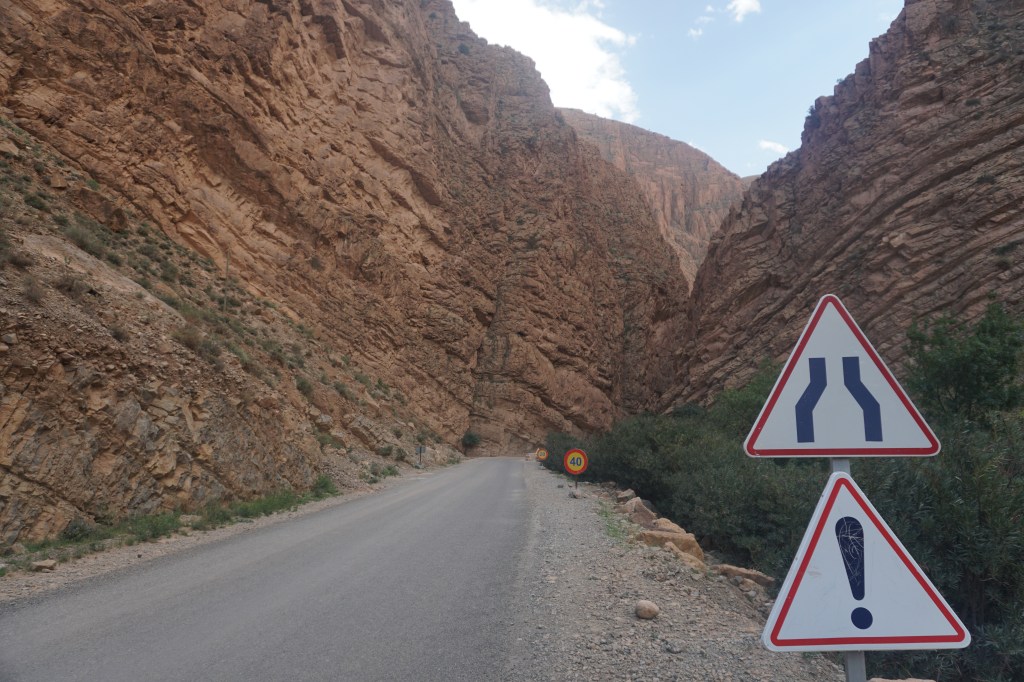
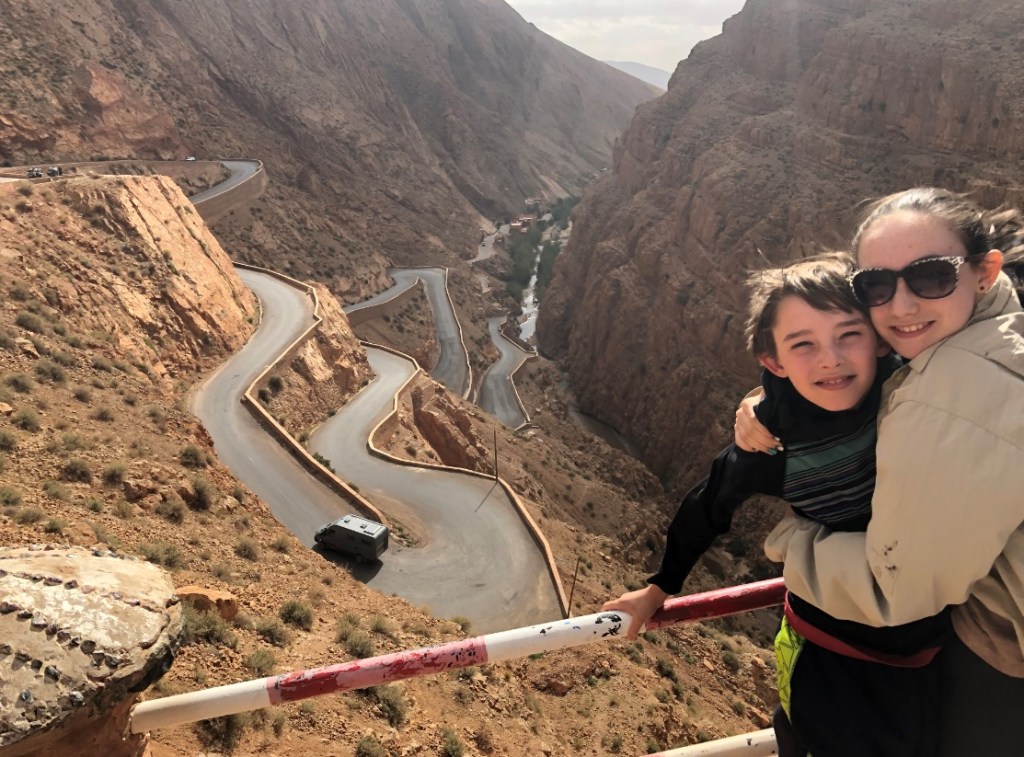
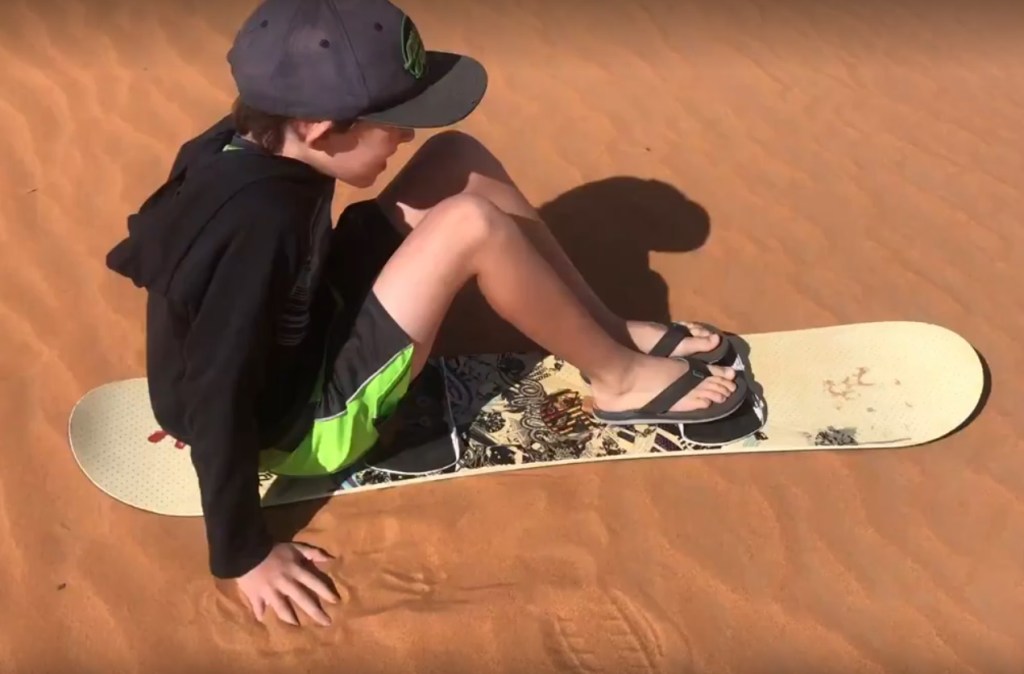
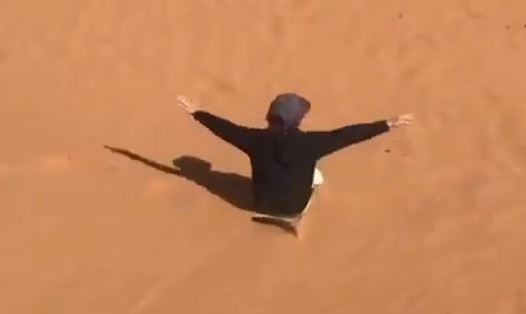
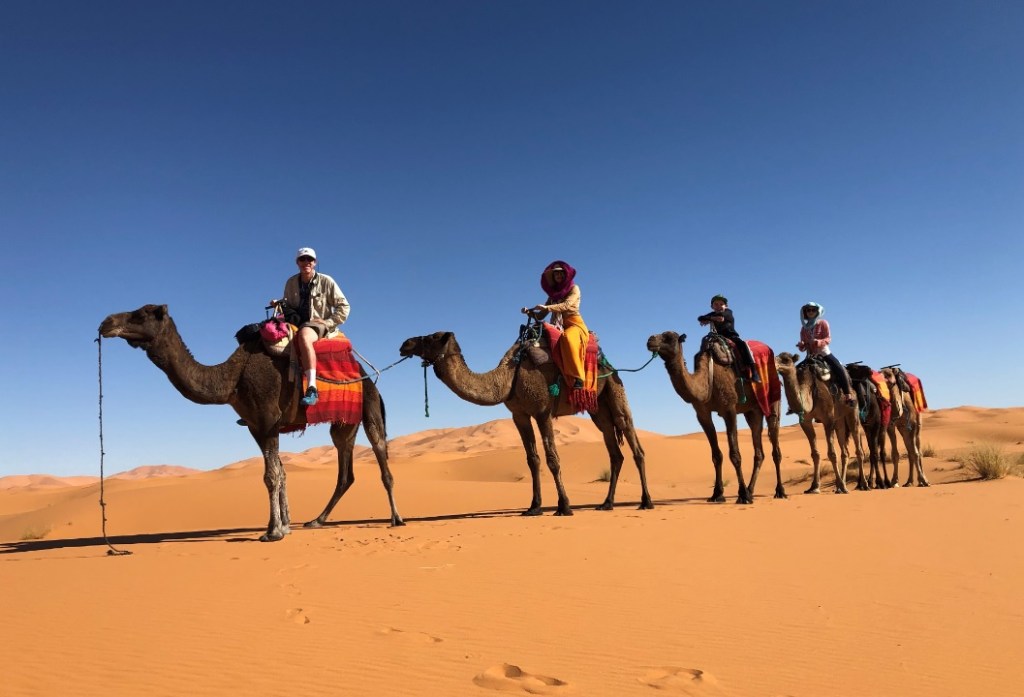
After Marrakesh we took a road trip around Morocco. We drove to two canyons: Dades gorge and Todra gorge. Both canyons are completely amazing. While on the road trip we took a variety of hikes, including one where we saw caves. We also traveled to a very famous recording studio called Atlas Studios. The studio is in the Atlas Mountains of Morocco, and so there is the explanation for its name. Lastly in Morocco, we settled in the beach town of Essaouira. Slaver’s Bay, of Game of Thrones, was filmed here. Also we got to visit an amazing place in the Sahara desert near the town of Merzouga. We went on dune-buggies, rode camels and sand boarded across the soft desert dunes.

CAIRO, EGYPT!

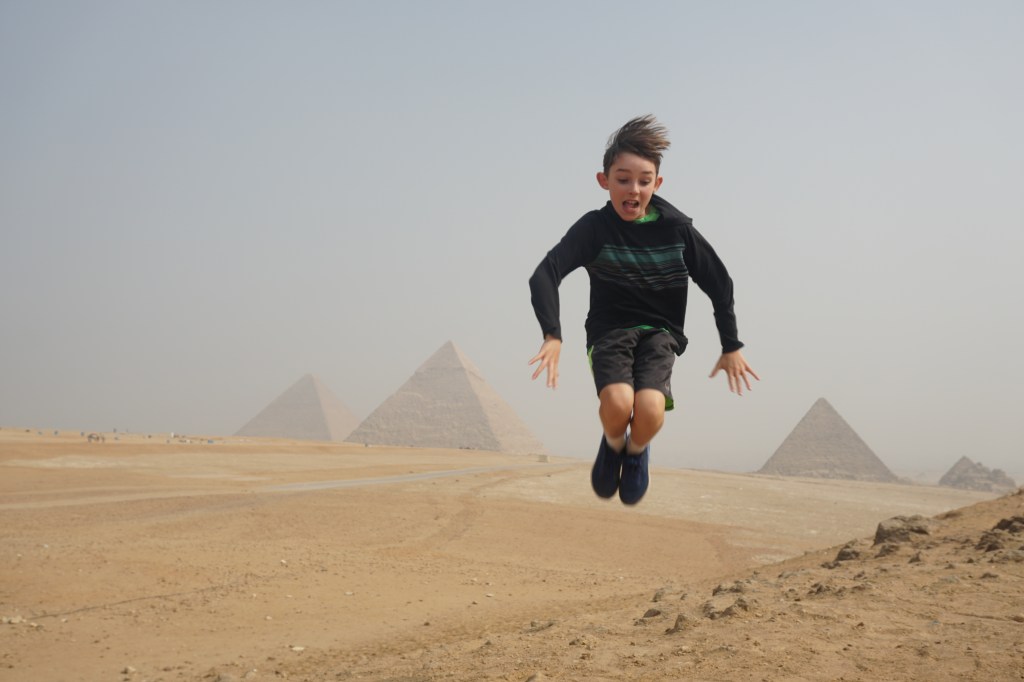
In Cairo, there are some very famous ruins known all around the world. The pyramids of Giza! The great sphinx is also in Giza. This was the first city we decided to visit in Egypt. We would be spending a few weeks in Egypt, and so, of course, decided to go see one of the seven wonders of the world. The Great Pyramid is also a UNESCO World Heritage site.

The Egyptians started to built the Great Pyramid in 2589 BC, but only many years later was it finished. The pyramids were built by workers and artisans. They were all made for a father, a son, and a grandson. All of these three people were Pharaohs, or kings of Ancient Egypt. The father and first of these men made the first of the pyramids. His name was Pharaoh “Khufu”, and his lead architect was a man name Hemiunu (also known as Hemon). This pyramid is now called the Great Pyramid, because it is the first and largest of the three. The reason for this is because Khufu’s son and grandson wanted to show respect for their ancestors by making smaller pyramids. The pyramids were made out of large limestone blocks. Granite used to cover the surface of the pyramid making it sparkle and shine, but that rock was taken hundreds of years ago to build the city of Cairo. The tombs usually took a few decades to build, depending on how deep or large.

But why did the Pharaohs make pyramids? A pyramid is always a monument. In most circumstances, (for example the three pyramids of Giza) a tomb is inside or under the monument. Deep in the depths of the temple, a mummy lies wrapped in cloth, drizzled in oil, with lots of coffins surrounding the body. And yes, the three relatives, one after the other, made the pyramids for themselves, so when they died, that is where they would lay, forever, until archaeologists found them, or until thieves stole them.

LUXOR, EGYPT

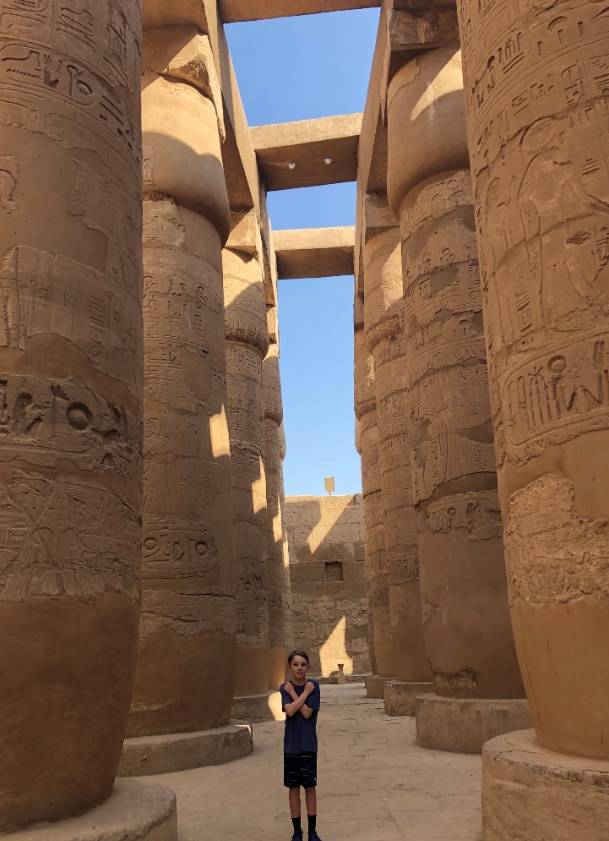
We went to Karnak Temple and to the Valley of the Kings in Luxor. I really think it was pretty amazing. It is even possible to see the mummy of King Tut, which is a little disgusting. But I do suggest to go there, since there are over 60 tombs, and more are being found.

Karnak Temple, Luxor

What is the Valley of the Kings?

As the kingdom of ancient Egypt rose to a larger empire, the threat of mummies being stolen increased along with it. And as Egypt became more rich with gold and jewels, more of those very valuable objects were put inside tombs of the Egyptian pharaohs. All of this made the thieves want to steal from the tombs. And so as more gangs began to make their way into pyramids, and stealing every valuable thing in the tombs, the Pharaohs started to become worried.

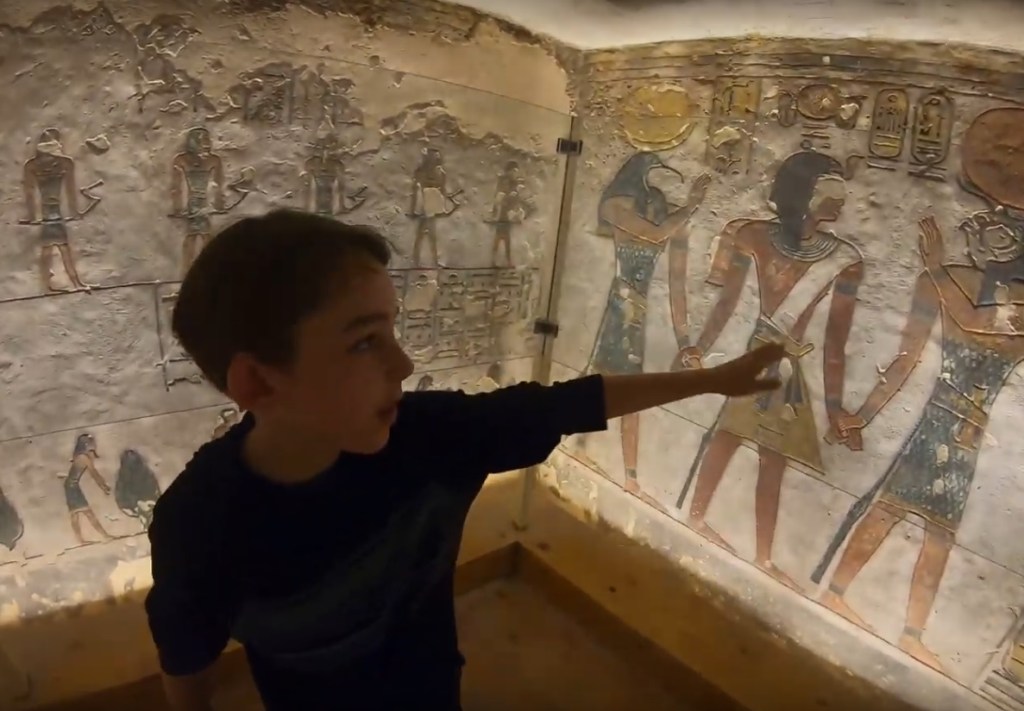
The Valley of the Kings was a secret burial place for the Pharaohs, on the outskirts of Luxor. Amenhotep was among the first Egyptian pharaohs discovered in the valley of the kings. Thousands of years ago, pharaohs needed the royal tombs to be hidden from the rest of the world, where few people would know about them, so the riches buried within would not be plundered by thieves. And so the large, breathtaking monuments were hidden. People did know who to trust – the tombs of the Pharaohs were buried deep into the earth- and it was all a mystery. Who stole this, who stole that. Someone took this, someone took that.

The real reason all this work was put into a tomb was because of the afterlife. The ancient Egyptians believed in a special world after death called the afterlife. When pharaohs go to the afterlife, they become gods, unlike any others. Entering the afterlife without some things is a problem. You need your prized possessions, and also items for survival. The most important things the Egyptians believed you would have to take into the afterlife was your body and your name.

Let’s start with the body. Why so important? Because just like in real life, without a body, you die. Now without a name, nobody would know who you are! You would not want to be a nobody. What else would be needed to survive the afterlife? Pharaohs would usually take lots of gold, charms, and diamonds. Also for the rich, small finger-sized dolls would be made to represent your slaves (yes, slavery was allowed in ancient Egypt). But out of necessity, probably food, water, and any prized possessions were also needed. If you’re wondering if all of this was actually put into the tombs, then yes. No seriously, it’s true. Oh wait, I forgot something! To carry the dead person to the afterlife, he or she would need a boat. Usually they were just toy sized boats, but in the case of a pharaoh, huge life sized triremes (boats) have been found. These tombs can get big.

In the Valley of the Kings, we saw King Ramses the 2nd’s tomb and it was huge. A long corridor with chambers on every side, with a huge burial complex at the bottom. It turns out this tomb, although not the deepest, was the biggest in area in the Valley of the Kings, covering 8,800 square feet. Among the most famous of the mummies found in the Valley of the Kings, was one of a young Pharaoh named Tutankhamen. His nickname is King Tut. He was found in the Valley of the Kings in 1922 by Howard Carter. Supposedly, King Tut had not so much of a nice life. He had problems with his spine, and other parts of his body, and he had special chairs designed for his spine problems. Tut was born about 1343 B.C. and died at the age of 19. Our tour guide in Luxor thought that king Tutankhamen died of malaria. The New York Times also says that malaria “is a likely killer of King Tut” since some studies have shown those results, and also because back in those times, malaria was very common.

ASWAN, EGYPT

Aswan is a town in Southern Egypt, where we stayed on the way to visiting the Abu Simbel temple complex.

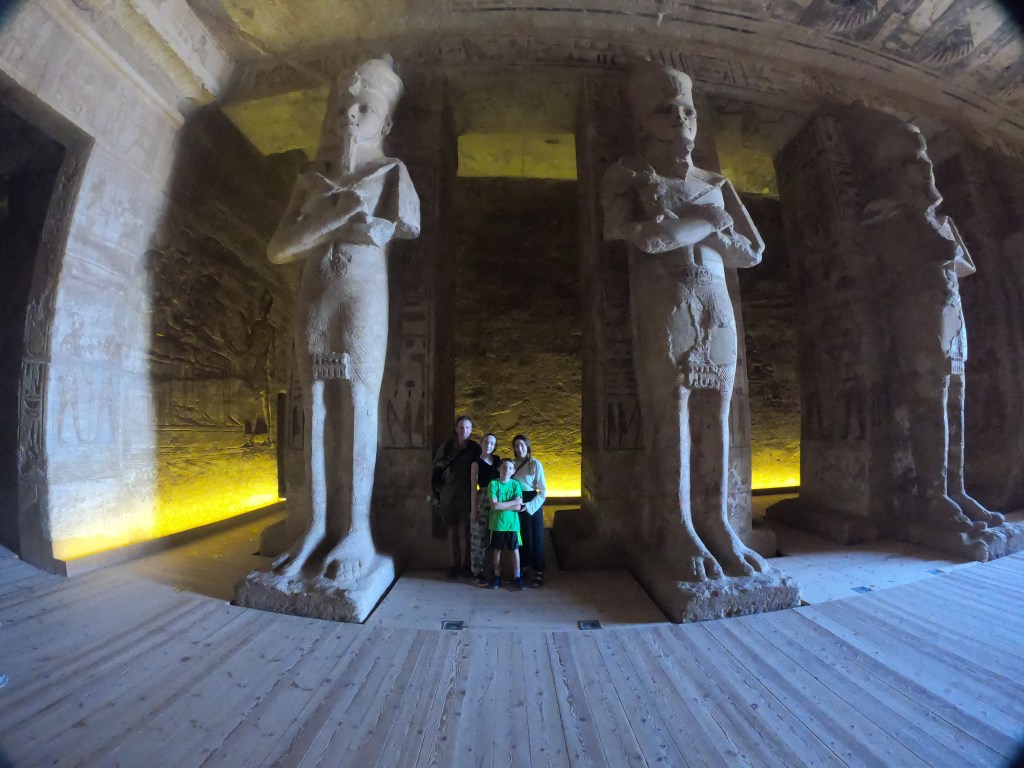
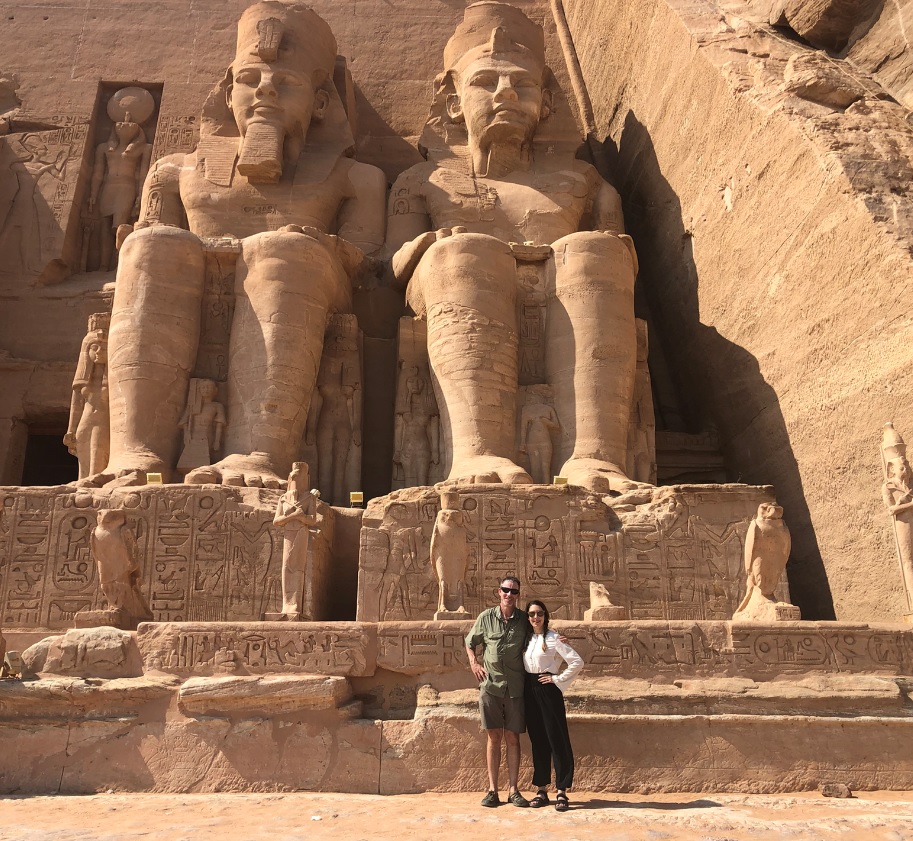
Abu Simbel. The story we were told is that this Egyptian temple complex was named after the little boy who “found” it while playing in the sand. King Ramses II created the two temples of Abu Simbel. He dedicated one to his wife (Queen Nefertari) then dedicated the other to himself. Lots of large (both sitting and standing) statues of the royal couple line the entrance to the temples. The entrances themselves estimate at around 69 feet high. King Ramses II’s temple is larger, to symbolize that he is the pharaoh of Egypt. Inside of the temples, there are many paintings showing Egyptian kings and gods slaying their enemies. In 1979, the great Abu Simbel temples of King Ramses II entered the world heritage list by UNESCO.

Egypt has always had a large flood almost every year from a large river called the Nile. Actually that stopped happening in 1970. This is because the Egyptian government made a large dam (called the Aswan High Dam because it is stationed here in Aswan) to stop the floods. This dam helped the majority of Egypt. For example, in ancient times people had to rebuild their house in a different place after a flood, because the flood would destroy their original home. There are many pros and cons about this dam. Many landmarks would not be destroyed, as they would if there was regular flooding. But the problem was, the Nubian people had to flee their homes. The dam would not only be stopping floods but also it would be creating a large final one. One of these areas in the final flood was a place in Egypt called Nubia. After leaving the city, the Nubians were offered to be relocated to a new place. But many of the Nubians did not want to leave their homes and there were large protests at that time in the late 1960’s. Some other places were threatened to be left underwater too. That’s where the temples of Abu Simbel come in. Yes, these temples could have been submerged in water if the government hadn’t realized it. Many countries helped move the temples of Abu Simbel to a location 220 yards from the original one. It was a huge project and countries who helped were rewarded with small Egyptian temples. Go see the one in Madrid or at the Metropolitan Museum in New York City.

To take apart the temple, a small dam had to be built to protect Abu Simbel from minor floods. Then builders would cut the temples up into smaller blocks using big saws. Then those blocks had to be carted up to the new location. I think it must have been hard for those architects to do this next part. They had to literally recreate the temples of Abu Simbel. I saw photos at a mini-museum in Abu Simbel of the moving project. There were trucks, cranes, and scaffolding all around. In a short film, there were workers wielding huge saws and cutting away at the sandstone. This project cost 21 million U.S. dollars at that time. But all of this work was worth something, because in 2017, it was estimated that over 800 people visited Abu Simbel every day! Probably now in 2020 this number is a lot bigger, as more and more people start to visit Egypt.

THANKS FOR READING OUR AFRICA JOURNEY PART I – MOROCCO & EGYPT

Remember that this is only the first Africa post and the second and final one will come soon: Tanzania and South Africa

Please subscribe, and leave a comment. And finally, Check out our youtube channel:

https://m.youtube.com/channel/UCheQcg1OwJ-v-eUV4SNhVwA

-Jack👌

Ngorongoro Crater Safari, Tanzania

When I first heard of it, I thought Ngorongoro was some little crater with a few animals. Oh but I was sooo wrong. But what I never expected, was a 102 square mile wildlife crater with a mega selection of animals!

Ngorongoro. Why would something have a name like that? The Masai people of Africa gave the name to this crater. Ngorongoro is named after the cowbell sound ngoro ngoro. But why? Whenever a group of cows was going out to graze, the Masai would tie a cowbell to the lead cow. That way, the village could always hear where the cows were. And since that cowbell was so important to them, they named the area after the sound, Ngorongoro.

But how big is the crater? It is around 10 to 12 miles of length and measures at about 102 square miles area. So now that we have covered that, let’s get deep down to the center of this story…

A crater is usually a piece of land that caved mostly due to volcanic activity. When the ground explodes with magma, the ground will shatter, caving the area into the earth. When rubble clears away, all that is left is a large hole in the ground. That hole in the earth is called a crater. And that is the story of the Ngorongoro. Two and a half million years ago, a huge volcano lay at the place of the Ngorongoro. Some now think that it rose at a similar height of Mount Kilimanjaro, one of the highest peaks on the face of the globe. I think it maybe would make sense for it to be that big, because just looking at the Ngorongoro crater made my ears pop from massiveness. But now the Ngorongoro mountain is no more, because at that time it was very, very active. Two and a half million years ago the massive Ngorongoro peak exploded in ash and lava, not only creating a home for thousands of animals and plants, but also- millions of years later- expanding tourism to a new level of safari.

The first European who visited this area was an Austrian explorer named Oscar Baumann. Oscar, born in 1864, attended natural history classes at the University of Vienna. He visited the Ngorongoro in the year 1892. Many people tried to destroy and take over this natural habitat. This includes two German brothers, Adolph and Friedrich, who farmed in the crater until the outbreak of WWI in 1914. The two brothers killed many buffalos to keep them from eating the grass and crops of the Ngorongoro. During these years proceeding WWI, the Ngorongoro crater was in grave danger. Once the two German brothers left the Ngorongoro, many other people began realizing how much of a perfect habitat the Ngorongoro was, and came mostly to poach animals and to farm on the Ngorongoro land. Eventually the government got involved. So much was happening in the area, that they could not help but check up to if this was okay. So in 1921, the first preservation act was put into use. But the problem was, that hunting was still allowed in the crater. So they passed another ordinance in 1928 to prohibit poaching in the area.

In 1948, people started thinking about a new way to have this crater in the world. 1951, was the year in which the famous Ngorongoro became a very important and protected, national park of Tanzania. Nobody knew that later in its lifetime, the Ngorongoro crater would become a world heritage site, known all around the world.

Life is not always happy in a natural habitat. I know I already told you about the two German brothers killing buffalo in the Ngorongoro crater, but let’s get more animal-wise. Imagine I am a happy Impala, eating nice grass on a good day. I never knew that there was a lion creeping up behind me, and then it lunges up and I get killed. Yep, that’s life! One of the most important things on a wild animal’s mind, is survival. You have to eat, and not get killed. Or you have to kill the other animals, and not get killed by them. There are over 20,000 creatures, both carnivorous and herbivore, who have to think about this every day. Yes, that many.

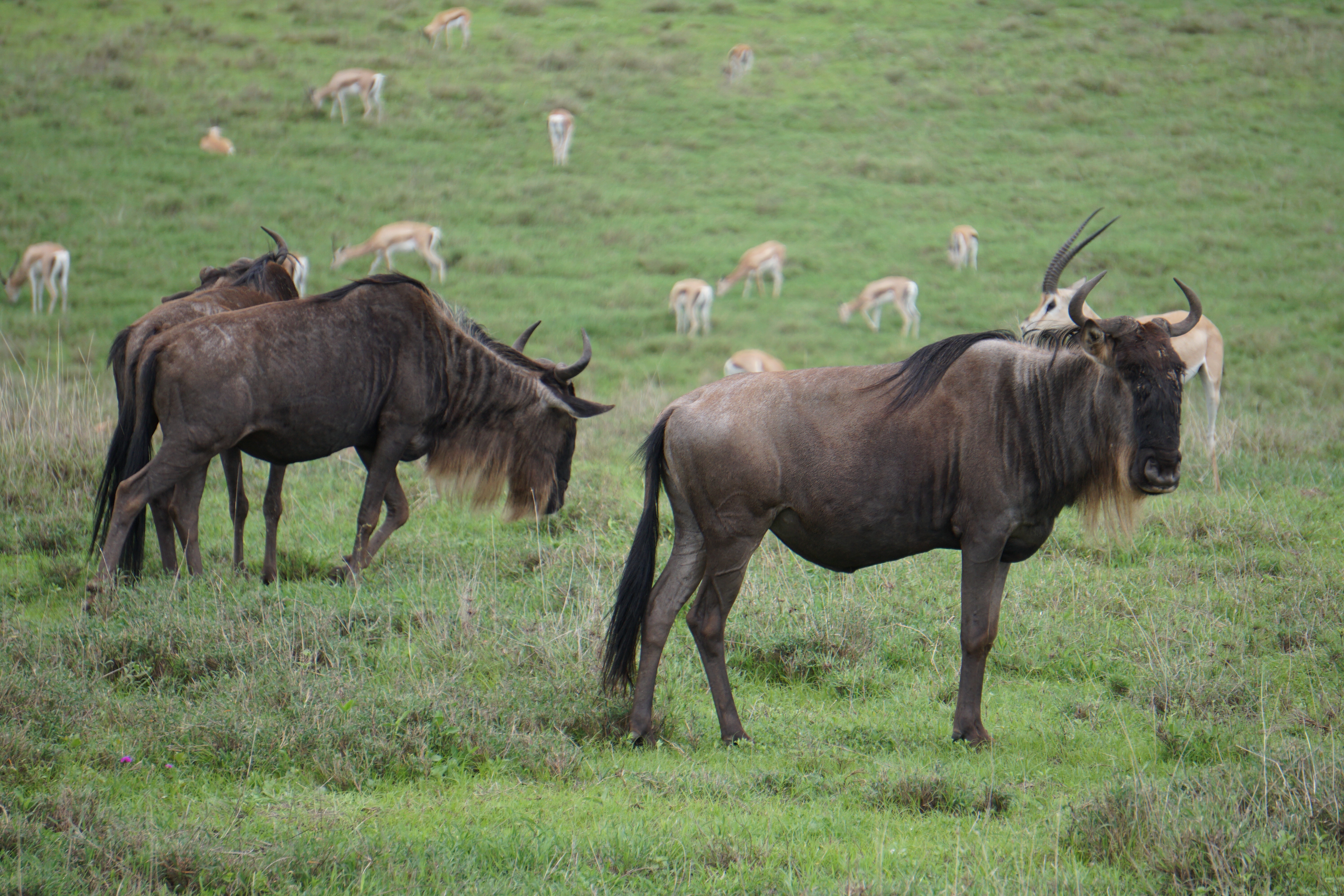
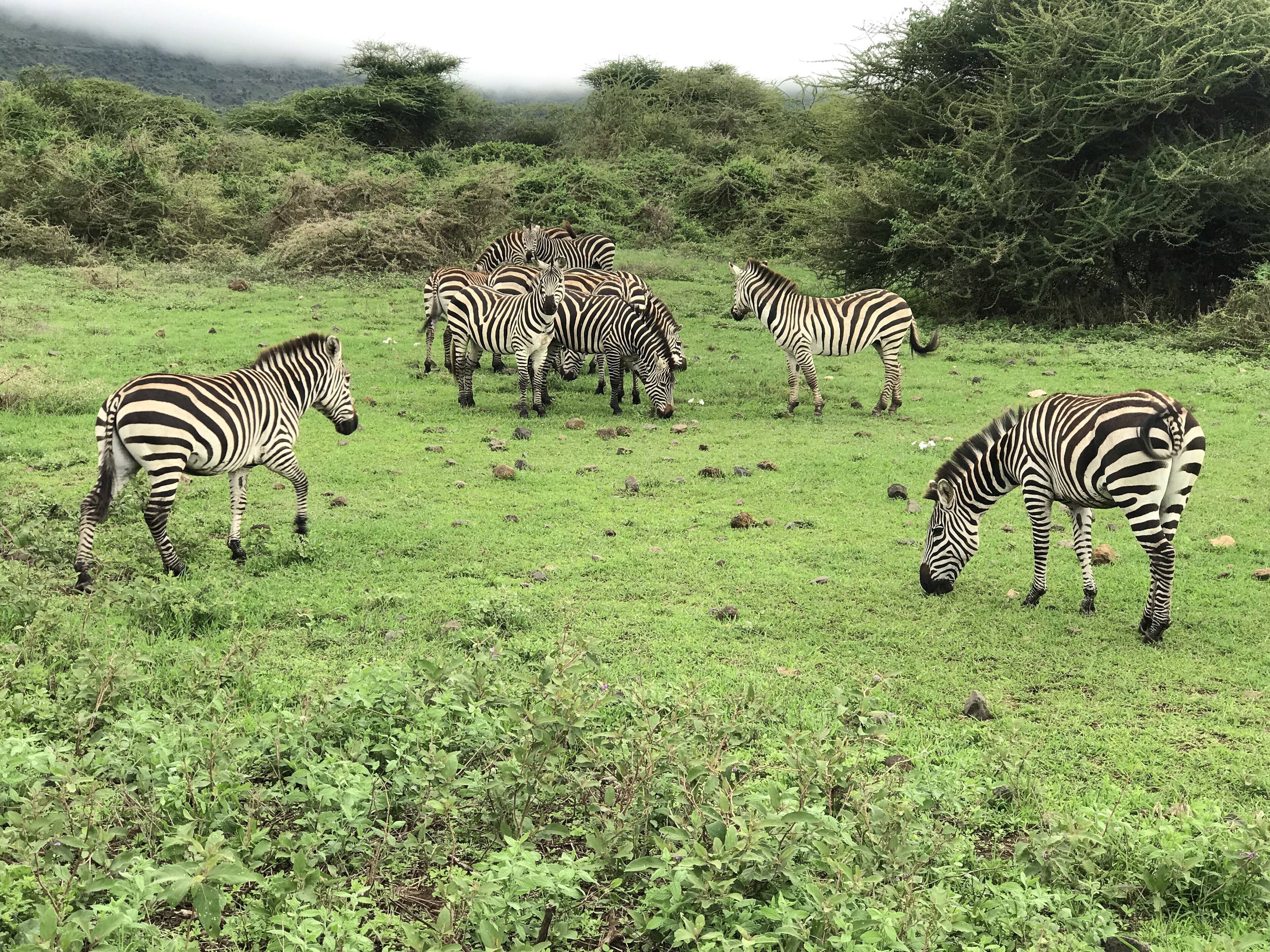
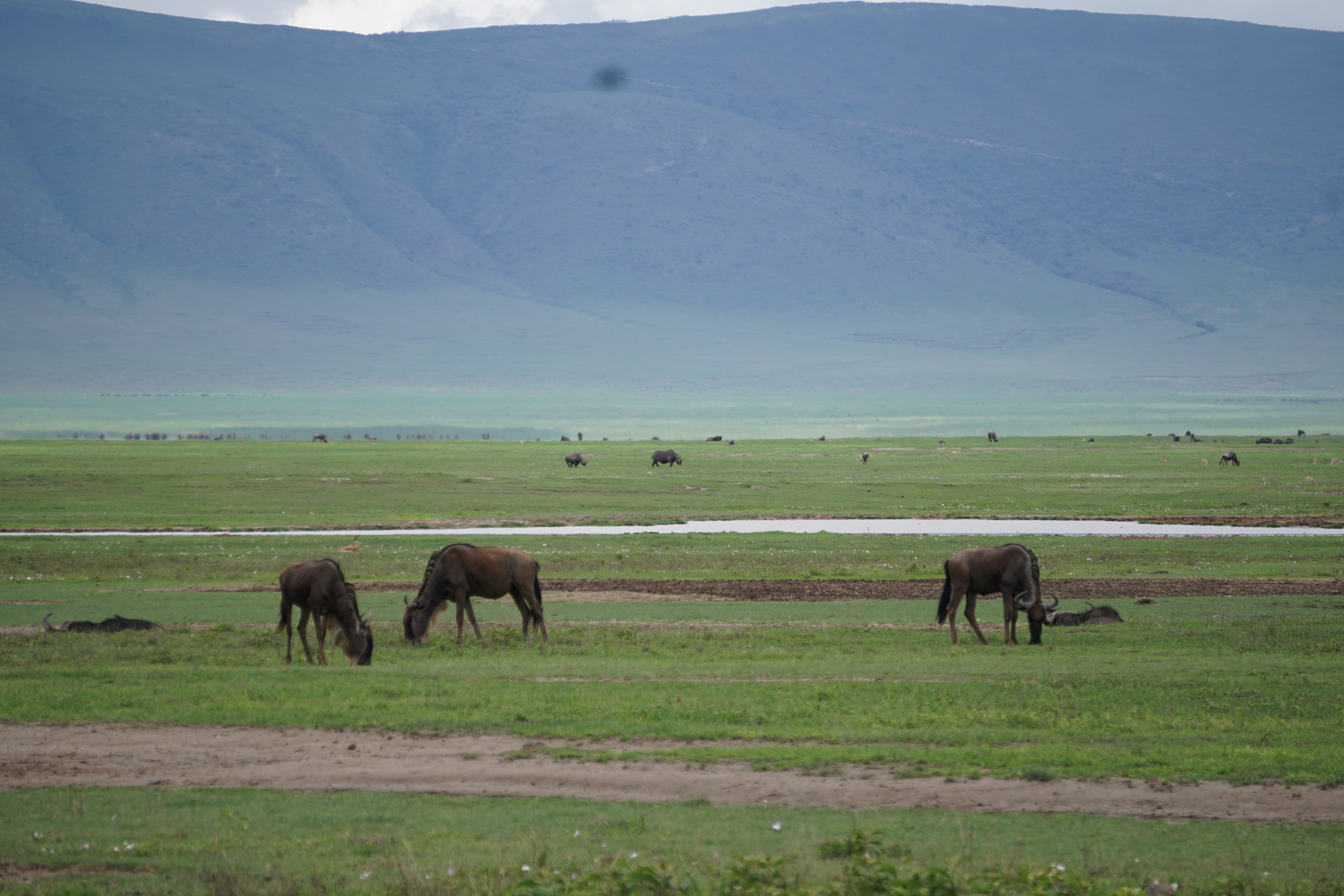
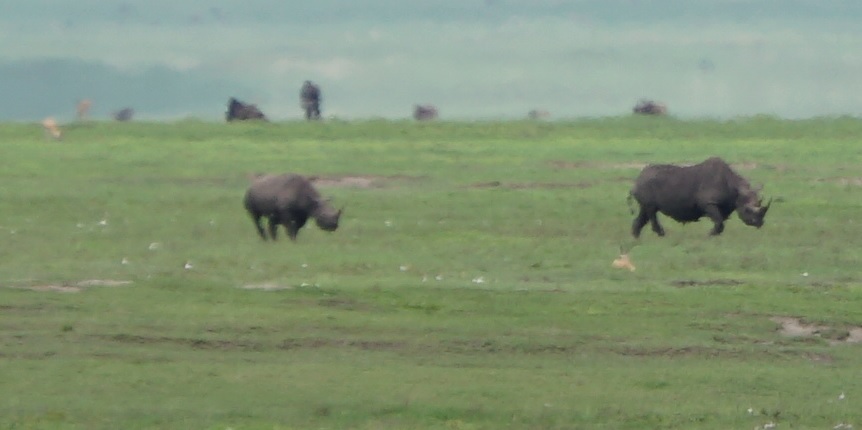
There are so many animals in the Ngorongoro crater. There are around 20 to 26 black rhinos, Among 7,000 wildebeests, 4,000 zebras, 3,000 elands, 3,000 gazelles. Did you know that the Ngorongoro crater has the densest known population of lions? In 2016, there were 70-75 lions.

At the end of our safari in the Ngorongoro, we had seen no black rhinos. Apparently there were and still are some in the crater. But as we started to drive out of the area, our driver guide Anin suddenly stopped the truck. “Black rhinos!” he shouted. Even when he pointed to the right of the vehicle, I did not see anything. Finally, I saw two blurred shapes moving from very far away. When I put my eyes to a pair of binoculars, I saw the shape of two rhinoceros walking slowly in our direction. One was large, and one was a lot smaller. It turned out that the two black rhinos, were a mother and a baby. I did not know then, but seeing black rhinos was slightly rare in the Ngorongoro since there are only around 20 left in it. In fact there are only 5,500 black rhinoceros in the whole world! I know that might not sound like a lot, but think of it this way. There are 7 billion humans in the world. But there are only 5,500 black rhinos on the globe. Now you should realize how they are critically endangered. There was a program in 2019 to save black rhinos from extinction by moving some out of South Africa and into Tanzania. In September 2019, nine black rhinoceroses where successfully relocated to Tanzania.

With all that said, I still wonder to this day how Anin our safari guide spotted those black rhinos in the first place, without binoculars, when they could have been miles away.

A pack of lionesses speed fiercely toward a brown dot in the distance. As they gain speed, a crowd of vultures eye them from the tree tops. The lionesses are on their own, with no males to help catch dinner. But that’s just normal for the lionesses, because the males just lounge around and eat, but only help in the hunting if their extra force is needed to bring something heavy down. And that is why the female lions often live for many years longer than males aging up to 19 years. Males barely live to 12. The lionesses get exercise, but the males not as much. Once this pack of female lions finally bring down their prey, it comes into view. A full grown buffalo. The hyaenas smell this from up to 4,300 yards away. The jackals will smell this soon too. Vultures and condors circle the kill in the sky. But everyone waits until the lions are gone. If a scavenger tried to challenge a lion for food, they would not survive it. The lionesses make a loud sound to alert the males of a kill. And finally, once all the lions have no more appetite, the fun begins. Hyaenas stride up to the kill, surveying the amount of meat left for them. The lions have eaten most of the animal, but there is plenty for the other animals to feast on. But not everyone eats at once. All the scavenger animals take turns eating their share, the most powerful of the animals eating first. While the hyaenas eat their share, Jackals take their stance. They are among the second of the scavengers. Finally, the birds get to eat. There’s rarely any meat left for them, so it is usually the bones which these scavengers feast on. When a bone is too large for the vulture to swallow, that is no problem. The bird can just fly up high and drop the bone to the ground so it lands on a sharp rock. So when the vulture swoops back down, it will find its bone split into pieces, ready to be eaten.

Seeing a scavenge is a very rare thing to see in the wild, but it is truly possible. In the wild, seeing a lion outrun another animal and bring it down, is rare, but truly possible. In fact, anything is possible in the crater, of the Ngorongoro.

DO YOU EVER THINK ABOUT CURRENCY OR MONEY?

Have you ever thought about currency before? Well, I haven’t, until now. If this is complicated, I don’t blame you. So after you read this, I would suggest looking up “currency” on the internet because I will not be able to include everything. Or you can just click this: https://www.scholastic.com/teachers/articles/teaching-content/money-0/

But if you just want a brief lil’ thing, here you go…

In this report, I’m including a short currency outline, and a historical timeline of money.

CURRENCY RATES:

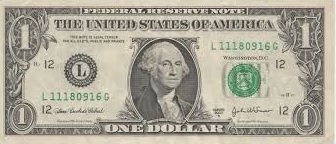
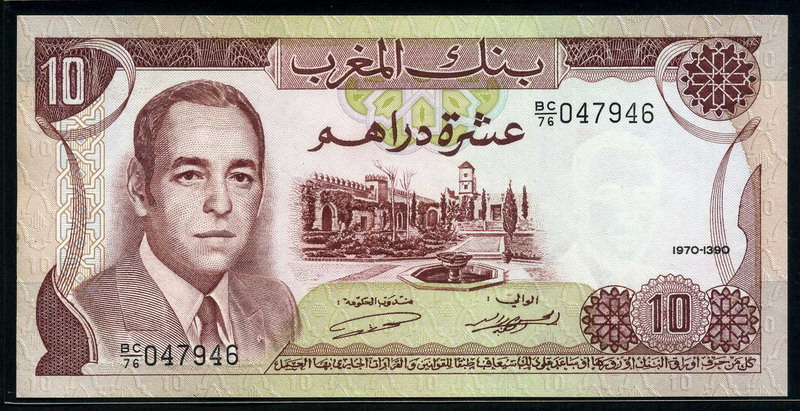
Currency is pretty complicated. Not all money has the same value. For example, when we were in Morocco, 1 US dollar was 10 Moroccan Dirhams. So that means that a Dirham is 10 percent of a dollar. When the Great Depression hit in the late 1920’s in the U.S., it was the currency rates that fell overnight to a very low percentage. That is why suddenly a U.S. dollar did not mean much at that time. When currency rates fall, people can lose their jobs, and even all the value of their money! So lots of countries have to be careful about currency, its value can dive deep in only hours.

One U.S. Dollar…
…is worth about 10 Moroccan Dirhams

Some of the highest currency rates on a normal basis are:

Euro
British pound
US dollar

TIMELINE HISTORY OF MONEY:

(Just so you know, the following is all approximate so you might find slightly different answers on different internet articles)

THE CAVEMAN TIME:

First there was just barter where one person would try to exchange a product for another, for example: 2 sheep for a cow, or milk for honey. Bartering is still used in many countries today.

~7000 B.C.:

Starting from about 7000 B.C., there were many different things used as money. For example, in the beginning of this age, cattle was used. Cattle at this time did not only mean cows, but also bulls, sheep, camels, and lots of other livestock.

~1200 B.C.:

Later, in approximately 1200 B.C, something else was also used as money. They were called cowrie shells, and they were first used around the area of Asia and Africa.

~500 B.C.:

Coinage started earlier in Turkey, but it was about in 500 B.C. that silver and copper coins were being used all around the world. Ancient Greeks, the Persians, and eventually the Roman Empire, were some of the first large cultures to use modern currency.

~7th century A.D.:

Even though it came into general use back in the 1600’s, there is evidence that paper currency was used all the way back to the 7th century. It was most likely started in China about 900 A.D. Paper money was a little hard to put into use because people at that time were not used to having their currency in the form of a piece of paper. They thought it made more sense to value money in rare, shiny, precious coins of silver and gold, or leather. But paper currency obviously won that battle because it is now used in every country around the globe.

1816:

The gold standard officially began in England in 1816 and the United States started to use the gold standard not long after. The gold standard meant that the value of money was directly lined to the value of gold and that paper money could be converted into a fixed amount of gold. Due to the Great Depression in 1930, the gold standard fell in the 20th century.

THE PRESENT:

Now, modern money is all over the globe in coins, paper cash, and bank cards. In many indoor and outdoor markets around the world, people bargain until they agree on a fair price. For example, a local may pay $1 for 20 mangoes and a tourist may pay $1 for only 1 mango. Partly the idea of bargaining is so the seller can change the price of a product easily depending on who is buying and how much they have to sell. It’s complicated.

Thanks for reading my journal entry on Currency. Please feel free to leave a suggestion, or just a note in the comment section below.

On a final note, if you haven’t already, please subscribe and like the post. Also, we have a YouTube channel called ON THE ROAD WITH LJ so please also subscribe to that.

Here is a link to our YouTube Chanel: https://m.youtube.com/channel/UCheQcg1OwJ-v-eUV4SNhVwA

We will have a new video and post soon.
-Jack👌