We just posted our latest video, you can check it out, link down below – LJ
Author: gregmalley
The Clifftop Monasteries of Meteora, Greece
We just posted our latest video, you can check it out, link down below – LJ
Time Magazine’s Mother of the Year! Happy Mother’s Day Mommy!



Learning How To Sail (by Lily)
TENNIS CAMP IN CROATIA —August 31-September 7—
LEARNING HOW TO SAIL
We went to a camp in Biograd na Moru, Croatia for a specific reason. To play lots of tennis. And we did. But in addition to that, my brother and I got to learn how to sail too. Near Biograd na Moru, there is a beach that you can swim at, and unlike Seattle the water is warm, so it was the perfect place to learn how to sail. Today I’m going to to be telling you what it was like to learn how to sail in the Adriatic Sea.
We learned how to sail in four days. Every day at 2:00PM, we got dropped off in Pakostane at a boat renting place where we met our sailing teacher for private lessons. From 2:00 to 4:00 we were out on the Adriatic.
When we got there, we put our life jackets on, and got the 14 foot catamaran ready to set sail. In order to get a small catamaran prepared, all you have to do is put both sails up, make sure the halyard and the capsize line are tucked away in the pockets on the boat, and prop the boat up on a trailer so that you can roll it into the ocean.
The first day we started off with our sailing teacher on the boat with us. The winds were pretty calm for what we had ahead of us. That day we practiced jibing (turning the boat downwind), and we practiced stopping the boat. Turning the boat downwind means that the wind is pushing the boat from behind when you turn. When stopping the boat, you turn the boat upwind, or to the direction the wind is coming from, so that there is no wind pushing on the sail, causing the boat to stop.
There are two jobs on a small catamaran like the one we were on. The Skipper; who steers the boat and who is in charge of the main sail, and the crew; who is in charge of changing the smaller sail. These jobs are very important when jibing or stopping the boat.
HOW TO JIBE
Step One: The skipper throws the driving stick into the water and starts to turn the boat downwind
Step Two: Both the skipper and the crew get on their knees, ready to move to the other side of the boat when the main sail changes with the wind
Step Three: The main sail changes wind, and both people move to the other side of the boat, opposite the sail, so that there is an even amount of weight on both sides and the boat doesn’t tip over
Step Four: The skipper grabs the driving stick out of the water and continues steering the boat in the right direction
Step Five: The skipper pulls on the main sail in order to get more wind in the sail
Step Six: The crew changes the smaller sail by releasing the rope of the side the sail is on, and pulls on the rope that is already released, making the sail change sides, catching the wind
The second day, Jack and I went sailing on the boat by ourselves. Our sailing teacher went on a motor boat nearby, and watched us. Our dad also got on the boat with him to takes videos of us sailing. We practiced what we had done the first day with our teacher (how to turn and stop the boat), but this time by ourselves. We had two landmarks that we used to sail to and turn around. We used a red pole that stuck out of the water that was specifically meant for boats to use, and the motor boat that my dad and our sailing teacher were on. We sailed across the water toward the red pole, then turned downwind around it, and sailed back across the water going the opposite way we came from, turning downwind around the motorboat. We mostly did this for the whole two hours, every once in a while practicing stopping the boat.
HOW TO STOP THE BOAT
Step One: The skipper releases the main sail
Step Two: The crew releases the smaller sail
Step Three: The skipper turns the boat upwind or in the direction the wind is coming from
Step Four: The main sail will change and both sails will be on opposite sides of each other. Therefore, no wind will be able to push the boat and it will stop
Now, it was day three when things got a little crazy. Our teacher decided it was time for us to go out in stronger winds. Unlike the other days, the wind was 12 knots. He also decided we were ready to try going on the trapeze. When you go on the trapeze, you have to put on a harness that’s sort of like if you were going zip-lining. On the sailboat there are some ropes with metal hooks on them that connect to the hooks on your trapeze harness. When they are connected, you put your feet on the side of the boat and slowly lean out of the boat, into the wind. Some tips that I learned from our sailing teacher: Spread your legs apart, bent, with your feet planted on the side of the boat, and if you want you can also hold on to a rope in case you end up capsizing.
Our parents also decided to come with us in another small catamaran, and our teacher of course was on his motorboat. He lead us out farther into the ocean then we usually would go (we usually stayed close to the shore because it was easier to practice sailing), but this time we were going to practice what we had learned in higher winds. This was a big step up, and Jack and I didn’t know what we were in for.
At the beginning, it was cool. Jack and I took turns. While one person was on the trapeze, the other was steering the boat. When you’re on the trapeze, it kind of feels like your flying with the wind. Then the wind got stronger as we progressed into the sea, and that’s when things got a little bit out of hand. The waves got bigger, especially when we were following our teacher on his motorboat (which created more waves), and things turned from fun, to downright scary. I’m not sure which was scarier; being on the trapeze and not being in control of the boat, meaning feeling kind of weightless, while big waves splashed you from the sea below. Or, being in control of the boat; meaning, it was your job to try to avoid the bigger side waves from the motorboat, and stick to the middle, where there was a lot of strong wind.
I think I got my answer when it was my turn to drive the boat, or I guess in this case, control it. While my brother was yelling at me, and I was trying to avoid big waves, the boat kept on leaning to one side. I guess you could say this was the tipping point of the story, because suddenly the boat tipped over just like that and we capsized. I fell off first because I was closest to the edge, and my brother held on to the trapeze rope (he wasn’t actually on the trapeze) for a whole two seconds before joining me in the warm Croatian water. If this was the Titanic, I wouldn’t have had much luck.
Our sailing teacher came for us in his motorboat, and our parents had watched every second of it from their sailboat. They brought our Go pro to get some clips for our YouTube channel, but sadly didn’t get our capsizing moment. While our sailing teacher worked on getting the sail boat upright, we lifted ourselves up onto the motorboat, shivering slightly. Although the water was warm and we had swam in it on our first sailing class, the wind wasn’t exactly the warmest. Not only that, but the sailboat we were sailing on had a trampoline as the part you sat on, which was pretty cool when you could swim under it and wave to the person sitting above (It was like a bridge). But it also meant that the waves could lap up from under you every once in a while.
The catamaran was fully flipped over. The white bottom of the boat was all that was showing on the surface of the water, and if you looked below the surface, you could see the bright orange sails from above the water. The boat was still floating (thankfully), and our instructor reached toward it, grabbing the nearest sail and pulling it so that the boat now laid on it’s side. He found the end of the tip of the main sail and pushed, using his strength to finally upright the boat. As we climbed back on to it, the sails, the trampoline, everything was wet. Which was fine of course because it was a sailboat, it was meant to be on water. But, not exactly fully submerged in water though.
Jack and I both made mistakes that day. Jack sharply turned the boat once and when I was on the trapeze, I got knocked back onto the boat. And I capsized the boat. Oops. Turns out I had pulled on the main sail too much and since the wind was so strong, the force turned the boat over. It was pretty scary actually because Jack and I aren’t exactly what you would call pro sailors. We’re still pretty inexperienced. Actually, in my opinion I think it was a little too soon. We only had two days of learning how to sail, and then BAM! We were out in our own sailboat, in high winds just like that. It probably would have been a much more enjoyable and way less scarier experience if we had been practicing sailing on our own for longer. My dad has sailed a lot in his life (he used to own a sailboat) and when he was in the sailboat business, he wouldn’t let people rent one of his boats out unless they showed him that they could capsize the boat, and push it back up again.
On the forth day, our sailing instructor pulled us into the back of the room where all the life jackets were kept. There was a small table and chalkboard. On the table was a small wooden model of a sailboat. He took a piece of chalk and drew a large circle with a piece cut out of it on the chalkboard. He explained that the circle was the cake, and that the piece was a slice someone had eaten. The piece of cake was where the wind was coming from, so if we sailed into it, the boat would stop. He took the model of the boat and moved it across the table, showing different angles from which the wind was coming from. We were going to learn how to sail towards the wind—at a slight angle so that the boat wouldn’t stop.
Once we got onto the boat and sailed out a little ways (we stuck close to the shore since we were learning something new), our teacher explained the objective of the day. There were buoys on the water, placed there to tell boats that they were close to the shore, and we were going to practice sailing at an angle in order not to land in the piece of cake. The “piece of cake” was code for stopping the boat, but wasn’t useful if you were trying to actually make the boat move (or in other words sail). I thought of it like this; the piece of cake was the part that was gone and all used up. It wouldn’t make sense to sail into it because there would be nothing left to eat. In order not to land in the piece of cake and be able to get to your destination (which was in this case a floating buoy), you would have to sail in a zig-zag pattern. The way to do this is to sail at a 45 degree angle, then tack, (meaning you turn slightly without jibing) going in the opposite direction at a 45 degree angle and if you keep on doing the same thing, it’s like your zig-zagging across the water.
We practiced this technique of sailing for a while, but after trying two times to sail to a buoy, tack, sail to the next buoy, tack again, and then sail back the way we came, we ended up not fully succeeding at the task, and our teacher gave up on us, so we did something else with our remaining time. Personally, I would have been fine with continuing to practice tacking, I wanted to keep on trying until we did it without any mistakes. It was a bit confusing because when you sail downwind you have to loosen the sail, and then you have to tighten the sail when you tack.
On our last day of sailing, our dad and Jack and I decided to go sailing on our own. We brought the GoPro to take footage and we tacked to a small island. Then we sailed closer to land, and Jack and I jumped into the Adriatic Sea. It was a way calmer two hour period than any of our other sailing lessons.
In the end, it was a pretty cool experience, and now Jack and I can say that we learned how to sail—in Croatia.
- Lily🍦
“On the Road to Bosnia” – On the Road With LJ
We just posted our latest video: “On the Road to Bosnia”
You can check it out, link down below – LJ
Drawing of Jack [By Lily]
I drew this by using my apple pen. In my opinion, you can do way more things by using an apple pen than a pen with ink in it. For example, you can add way smaller details with an apple pen, and its a lot easier to switch colors or different kinds of pens or brushes.

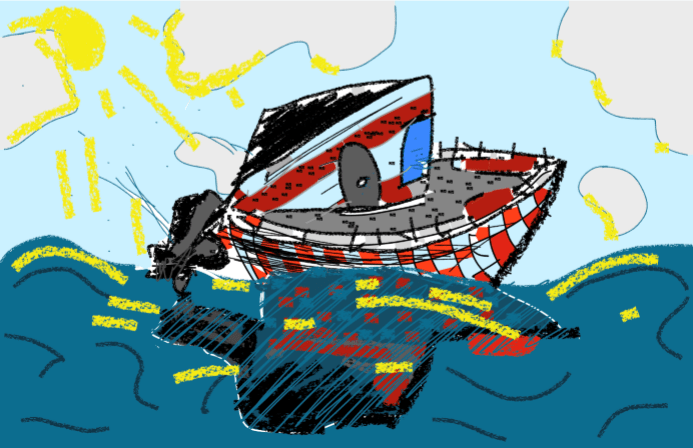
The Little Sailor [By Jack]
In Croatia we took sailing lessons and learned a lot about sailing boats. I was inspired and wanted to draw a picture of a boat. So here is my drawing of a boat, its called “the little sailor”. The reason I named it that is because if I had a boat, that’s what I would name it. This drawing was made on a app on a computer. That’s why it might look cartoon like.
“Destination: Split, Croatia” by On the Road With LJ [Lily & Jack]
Hi – We just posted our second video on our channel: “Destination: Split, Croatia” by On the Road With LJ
You can check it out, link down below – LJ
Diocletian: A History Lesson [By Jack]
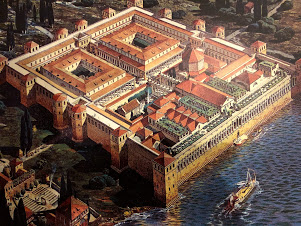
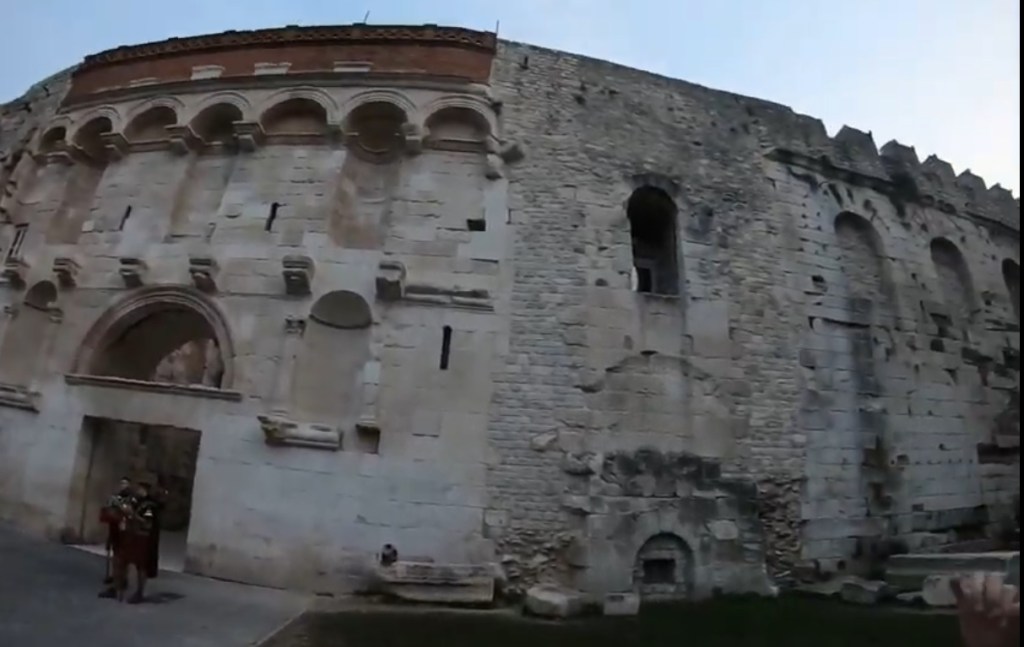
My family went to Croatia and now we are headed to Greece. In Croatia my family visited Split and saw a huge nice palace made by someone named Diocletian. Diocletian? That’s just weird. But not until we took a tour did I understand late century Romans.
FALL OF THE EMPIRE:
The Romans were one of the most amazing and talented ancient civilizations. Until the empire fell. The Romans were conquering huge amounts of land, building temples, Colosseums, palaces, houses, and even water aqueducts. Their empire was growing and stretching all over the area of present day Europe, North Africa, and Asia Minor. But eventually, it started to fall apart. And how did it it fall? The empire got too big. The Romans split their empire into multiple parts because of this conflict. For example, there would be an emperor ruling from the north side, and another ruling from the south. But that did not settle the fighting, different Romans wanted to make separate rules. Someone had to create a better empire for his people, and that person was a man named Diocletian.
WHO WAS DIOCLETIAN?:
Barbarians were anyone that was not a Roman. Many of these barbarians were swarming in from outside of the Roman territories. Among these people, was Diocletian. And no, you could not just go build a nice house on the water, you had to join the army to become a Roman citizen! Sure, joining the army sounds bad, but being in the army for 25 years sounds worse! As a barbarian, you would have to join the army for an estimate of 25 years! And as Diocletian was a Barbarian, he went to the military to train and fight his share of two and a half decades.
ABOUT DIOCLETIAN:
Diocletian was born supposedly at about 245 AD but his childhood is mostly clouded with guesses since he is from thousands of years back. He was probably from Salona, Croatia, outsides of Split. One of these educational guesses is that his dad was a slave under a senator named Anullinus but almost nothing is known about Diocletian’s mom. Diocletian was originally named Gaius Aurelius Valerius Diocletianus.
HIS RISE TO POWER:
Diocletian was a supposedly a commander of a guard unit which was to protect the current emperor. It is thought that Diocletian murdered the emperor he was supposed to protect, because that was one of the only ways to become the emperor. So Gaius Aurelius Valerius Diocletianus became emperor. But not only did he take the throne, he split it with a few others. He was the main of these emperors, but it was probably one of the only times this happened in history!
DIOCLETIAN’S PALACE:
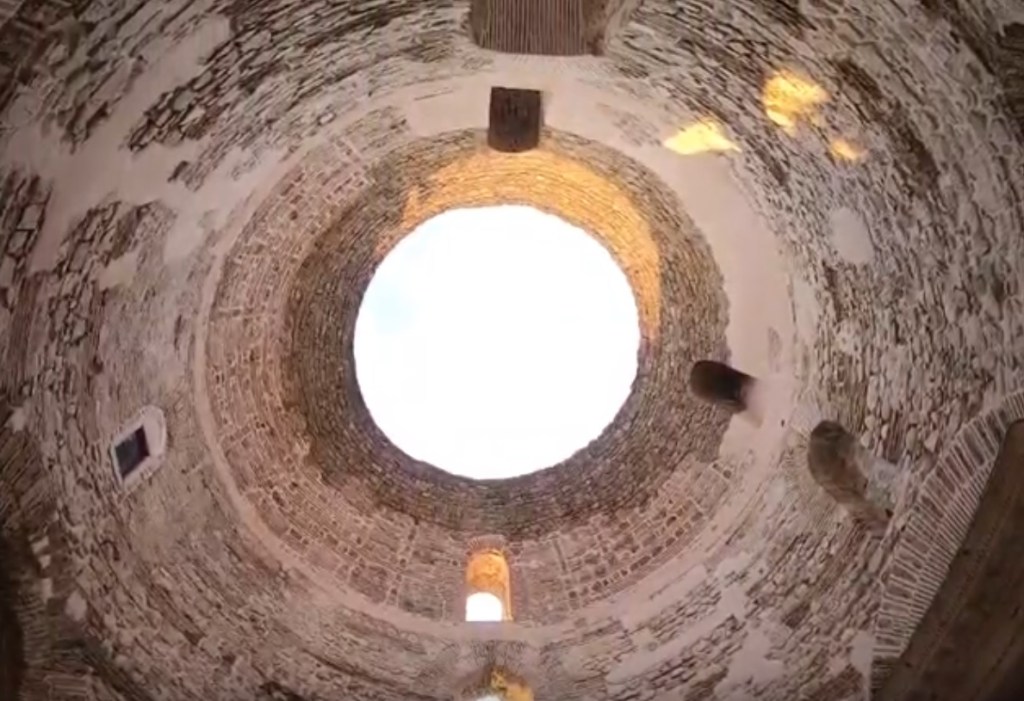
Diocletian retired. It was the only time in Roman history that an emperor retired. And why did he do this when had all that power? Well, nobody knows. One theory is that he was very sick and just wanted to end his life in peace, but little information remains. To retire, he needed a home. But in Roman perspective, everyone wanted a palace, so that’s just what Diocletian did. Clues show that he had been building the palace for many years before he moved in, so maybe Diocletian was planing to retire early! He had a huge beautiful palace built for himself. The palace was a city itself for hundreds of years after Diocletian and still is today!
THE FALL OF THE EMPIRE:
The Romans were one of the most amazing and talented ancient civilizations. Until the empire fell. The Romans were conquering huge amounts of land, building temples, colosseums, palaces, houses, and even water aqueducts. Diocletian was a man who changed things after the empire started to fall. He brought traditions back and built one of the most amazing palaces I have ever seen. But after his death, things resumed. The barbarians burnt down cities and everything got crazy. Not long after Diocletian died, the Roman Empire was destroyed forever.
Please feel free to leave a suggestion, or just a note in the comment section below.
On a final note, if you haven’t already, please subscribe and like the post. Also, we have a YouTube channel called ON THE ROAD WITH LJ so please also subscribe to that.
We will have a new video and post soon.
-Jack
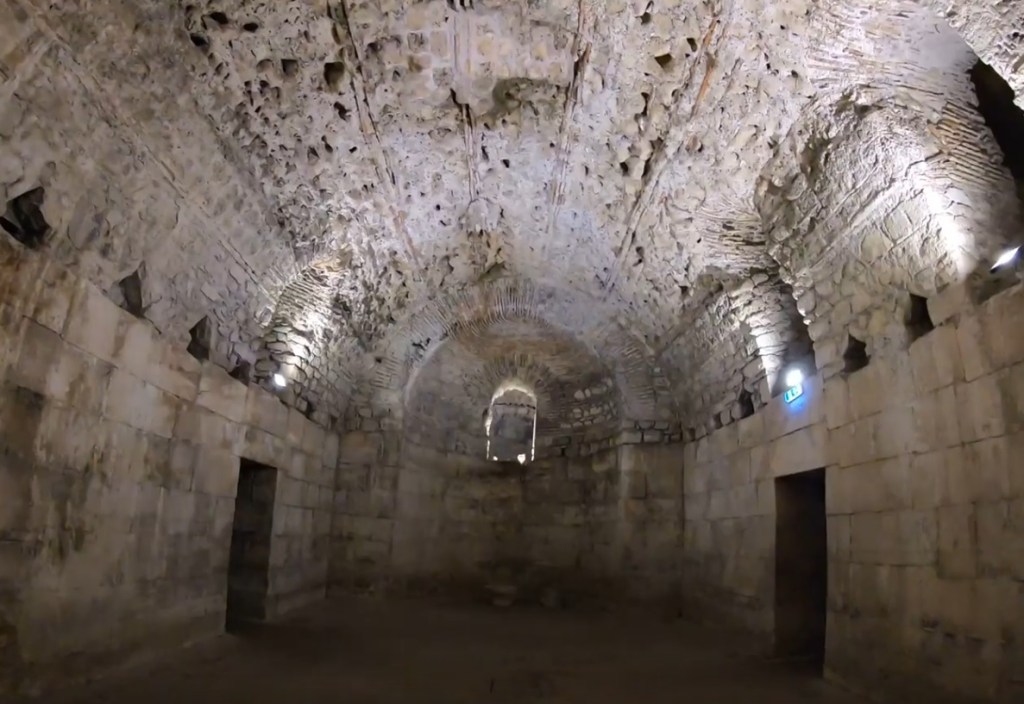
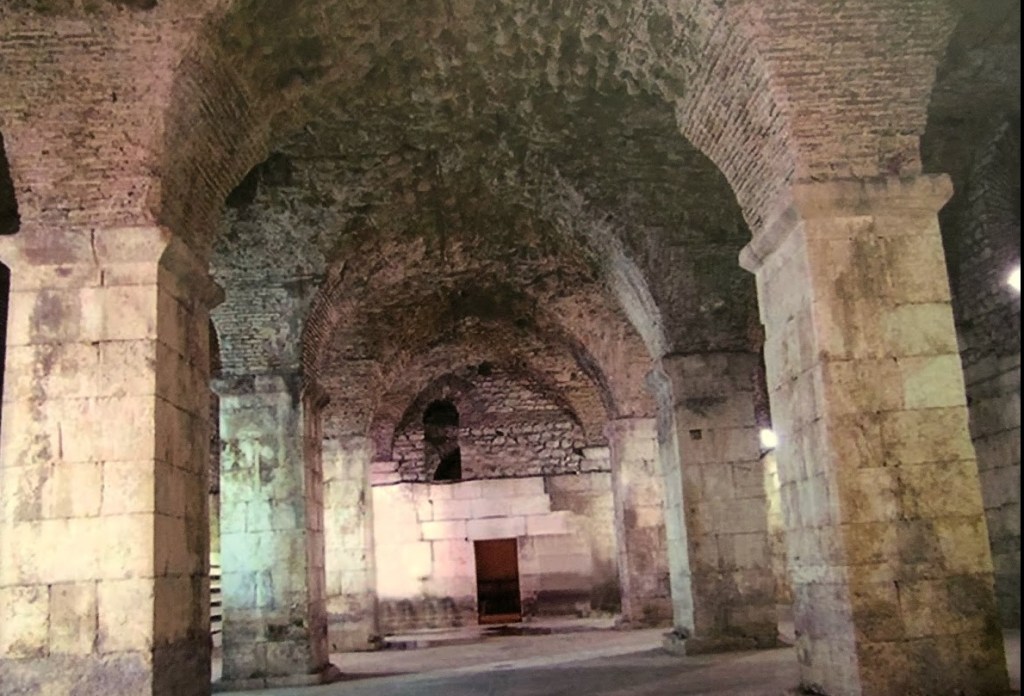
Photos from our visit to Diocletian’s palace:

Why Is There Salt in Ocean Water? [By Lily]
In this blog post, I’m going to be writing about a question that has pondered me many times. My question is, why is there salt in the ocean? And, more specifically, why is there salt in the ocean, but not in freshwater? I decided to write this post because I really have been wanting to know the answer to this question, and I thought this would be a good time to do that since we’re in Croatia and there’s plenty of opportunities to go to the beach and swim in salt water.
When you were little, your parents probably told you that there was salt in the ocean and you might not have stopped to think why, because you knew your parents were right. Or, you found out on your own by coughing up a mouth full of it by accident. But whatever way you learned about salt in some water, and no salt in other water, you’ve probably asked yourself how salt got into water in the first place. Today I’m going to be giving you the answers to all those questions. But before you continue reading, I will challenge you to think of an answer to them if you don’t know the answers already.
The process of how salt gets into water is pretty complicated and I’ll try to explain it the best I can, but if you get confused, you can read it over again or do more research. I Feel free to read as slowly as you want so that you can process everything. So without further ado, this is how salt converts it’s way into water.
A long time ago, there probably wasn’t as much salt in the ocean as there is now. The reason for that is because salt moved into the ocean through minerals in rocks… So that means that the salt in the ocean mostly comes from rocks on land. But not just any rocks. Specifically rocks on land. Why on land?
Well technically it all starts with rain. Rain contains dissolved carbon dioxide from the air around it. When carbon dioxide and water mix, this creates carbonic acid, making the rain water acidic. When it rains, the rain water falls onto rocks ON LAND. Again, why rocks on land? Since rain can’t fall on rocks through the water, the obvious explanation is that salt can only come from rocks, or minerals, on land.
Continuing on, when rain water falls onto rocks, this causes erosion, and the acids in the rain break the rock down. All this creates ions to form. Ions are micro sized particles that have electricity inside of them. So in other words, they are “electrically charged”.
These ions get carried with streams from rivers and eventually land in the ocean, where most are used by tiny creatures, or organisms living in the ocean. The ions that are used by organisms end up being removed from the ocean. But the lucky ions continue to be part of the process of creating salt water. These ions that are not used, are left on their own for such a long time that other ions continue joining the group until there is a whole concentration of ions in one area.
The two biggest groups of ions are Sodium and Chloride, which are presumably “salty”. On an average, there are 35 parts of salt in ocean water every thousand concentrations. This means that 3.5 percent of the weight of ocean water is salt. Another fact about how much salt there is in the ocean is, according to some estimates, if you took all of the salt out of the ocean and layered it on top of the perimeter of the earth, it would be even thicker than 500 feet, or, in height, about a 40 storied office building. That’s as tall as a skyscraper that you could find downtown.
Okay, now that we’ve got salt water covered, there’s one more question that I’m going to answer today. Why is there salt water in the ocean, but not in rivers or lakes? Well, it turns out the answer is simple.
Do you remember when I told you that the ocean started off not being very salty? And it got saltier through the minerals in rocks? Well, how do you think those minerals traveled to the ocean? Through rivers and streams that left from lakes of course. The lakes and rivers themselves got filled back up with fresh rain water, and the minerals in the lakes and rivers escaped through streams running back into the ocean. So, the cycle continues to stay like this. The minerals end up in the ocean through streams, making the ocean salty, and the rain fills the lakes back up with freshwater. Every year, rivers around the world convert approximately 4 billion tons of dissolved salts from rocks into the ocean.
So now we’ve covered salt water and fresh water. You would think we were done right? Wrong. There’s still one thing that doesn’t quite make sense. See, if the streams that run into the ocean carry salt, well if you want to be exact 4 billion tons of dissolved salts every year, then wouldn’t the ocean just get saltier? And even saltier? You would think. But again, no.
Here’s why; Every year, around the same amount of salt that runs into the ocean (4 billion tons), is most likely deposited on the ocean floor as sediment. So all in all, there’s about an even amount of salt that makes it into the ocean and stays there, and an even amount of salt in the ocean that ends up becoming waste. Which means that the ocean gains and loses around the same amount of salt, and the ocean doesn’t get any saltier than it already is.
As it turns out, the salt water cycle (or process) can get pretty complicated. Today we covered the main topic of why salt is in the water, then we took on why there is no salt in rivers or lakes, and finally we ended with a question that came up during the salt water topic; if freshwater streams carry x amount of salt to the ocean annually, then wouldn’t the ocean get saltier? I hope you found your answers to these questions. If you want to learn more about these questions, or the salt water topic in general, you can always research more about it, and if you want to know where I got all this information, you can check out the links to these sources down below.
I don’t know about you, but I think learning about the cycle of salt water is very interesting and I would like to continue learning more about it. It was very fun uncovering this salt water mystery and I hope it was for you too. My next blog post is going to be about my experience learning how to sail with Jack in Croatia, so make sure to stay tuned for that.
Bye for now, Lily🍦
https://oceanservice.noaa.gov/facts/whysalty.html
https://oceanservice.noaa.gov/facts/riversnotsalty.html
 Worldschooling