Welcome back to the blog! This is Jack, and you’re reading worldschool.travel.blog
This new blog post by me is going to show you what we did in Africa in two parts. Make sure to check out our videos about these places which will pop up at the end of some paragraphs. This is only part one, and the second addition will come soon: Tanzania and South Africa.
A few posts back, I made a report like this one. The thing is, it was one about what we did in Europe on the trip, not Africa. But now, we have finished visiting Africa and so, this is my time to start writing about our experiences in the second largest continent of the world… AFRICA.
This might be a long one, so please take your time as you read. Whenever you see something highlighted in blue, pressing it will open a link to a blog post, so you won’t have to search up our posts after every paragraph. Our youtube videos from On the Road With LJ will be embedded.
MARRAKECH, MOROCCO!

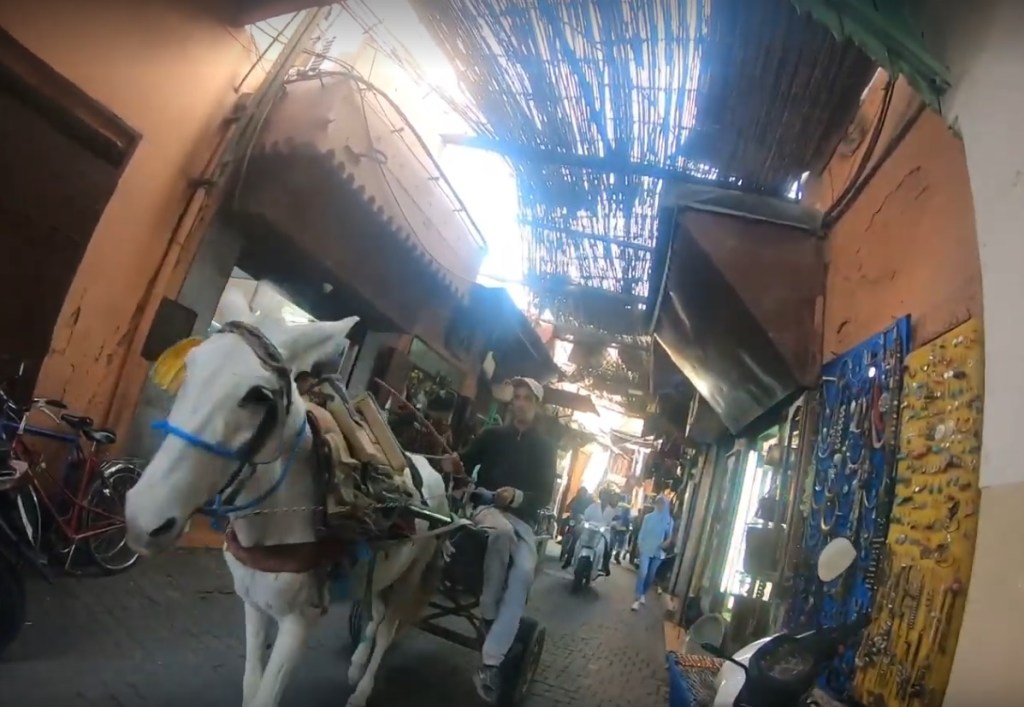
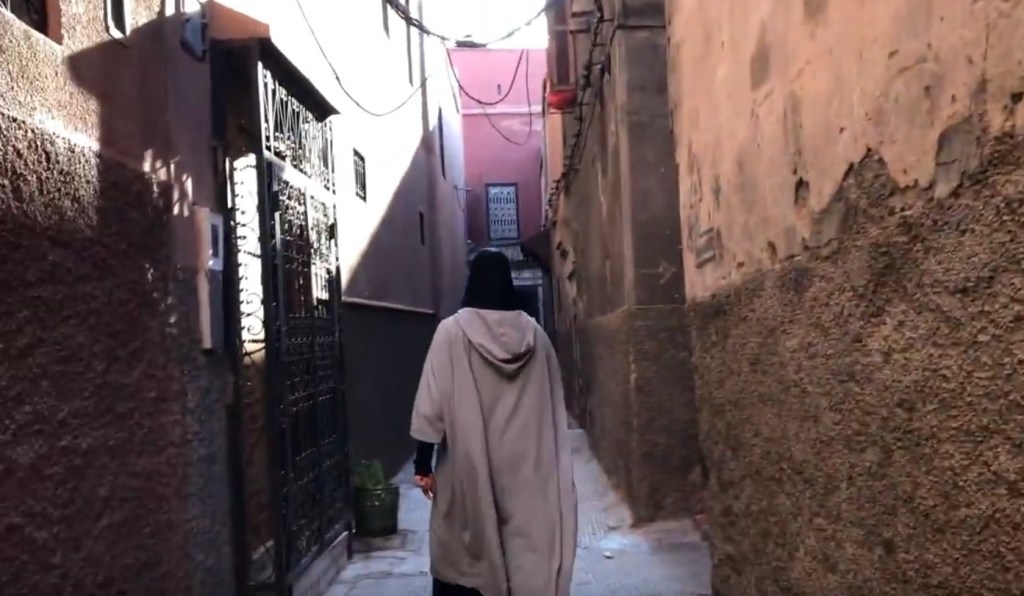
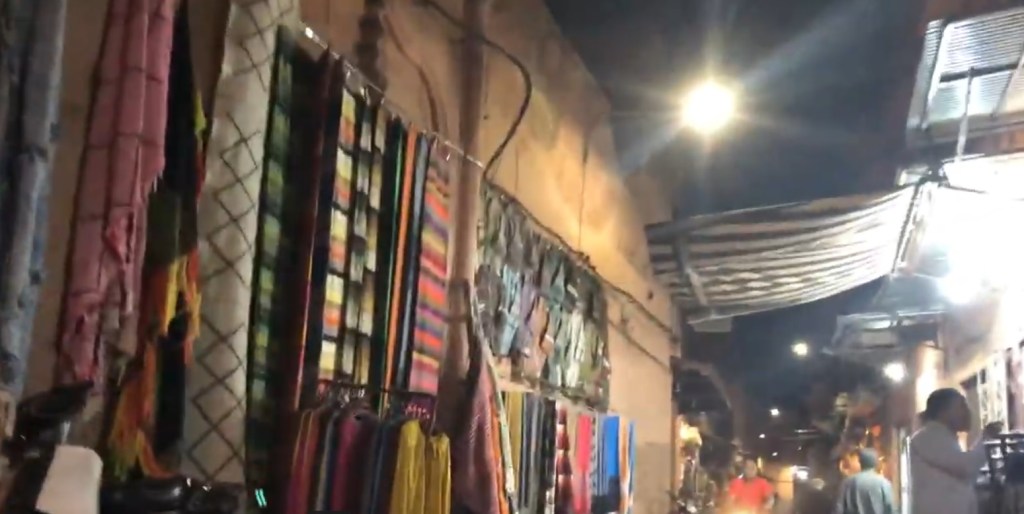
Marrakech was the first place we went in Morocco and the first place we went in Africa. Marrakech is nothing like any other city I’ve been to in my 10 years of life. I really did not know what to expect from Marrakech. Parts of this city were different than others. Most of the streets and roads we walked on were very bustling places, filled with different aromas (including lots of motorbike gas) and small businesses lining the edge of the road. In Marrakech, some of the streets are crammed, and some are not. The crammed ones are just… CRAMMED. We stayed in a “Riad” (a traditional house with an interior garden) in the “Medina”, which means the old city. When my family walked down the street leading away from our Riad we would always encounter plenty of motorcycles to freak mom out and merchandise being carried down the road by a few guys, sometimes wearing a traditional headdress (called a Fez or a Tarboosh). It’s easy to find cheap clothing or merch in the city because they literally take up most of the streets. Also, there are so many historical sites, royal palaces, and culture here in Marrakech.
Shopping in the Medina was interesting. The thing is, it’s kind of annoying when the shop owners are giving you the price they want, rather than putting up standard price tags. A lot of the time it’s very hard to decide on a deal, though it is pretty cool to watch. We did this a few times in a variety of shops. This way of shopping is called bargaining. There are no listed prices in bargaining.
Marrakech was a really exciting city.
MORE OF MOROCCO!
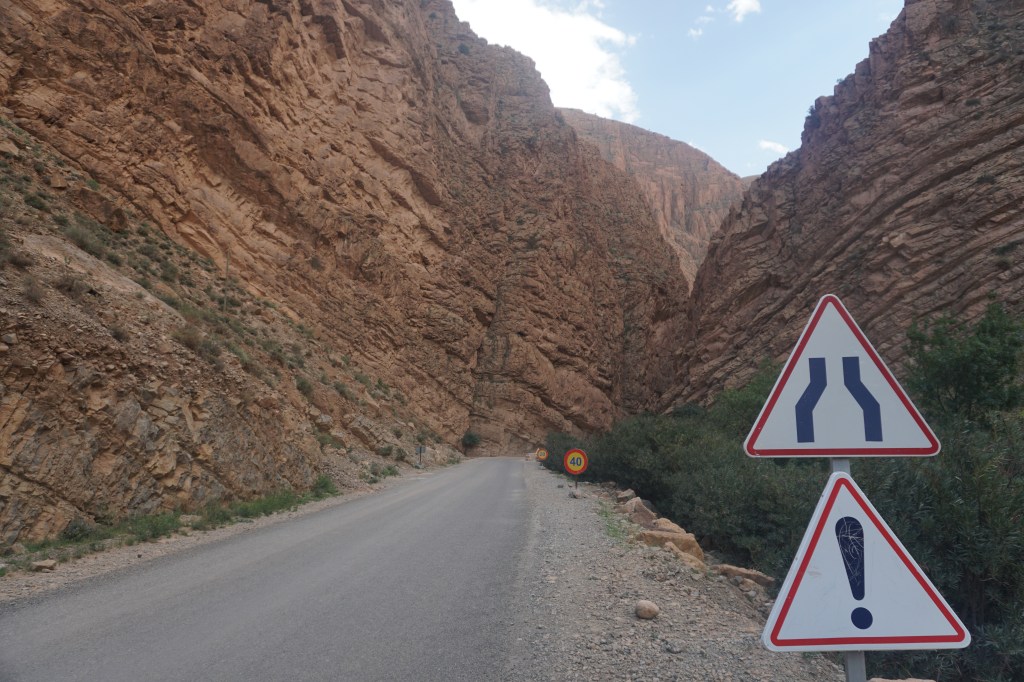
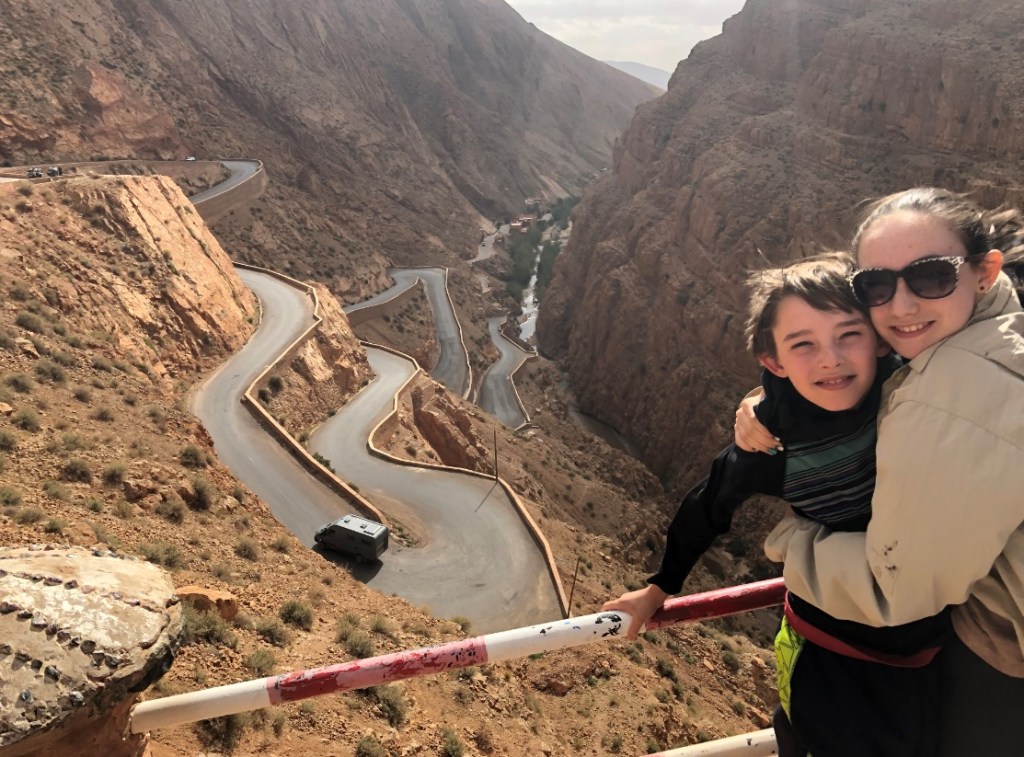
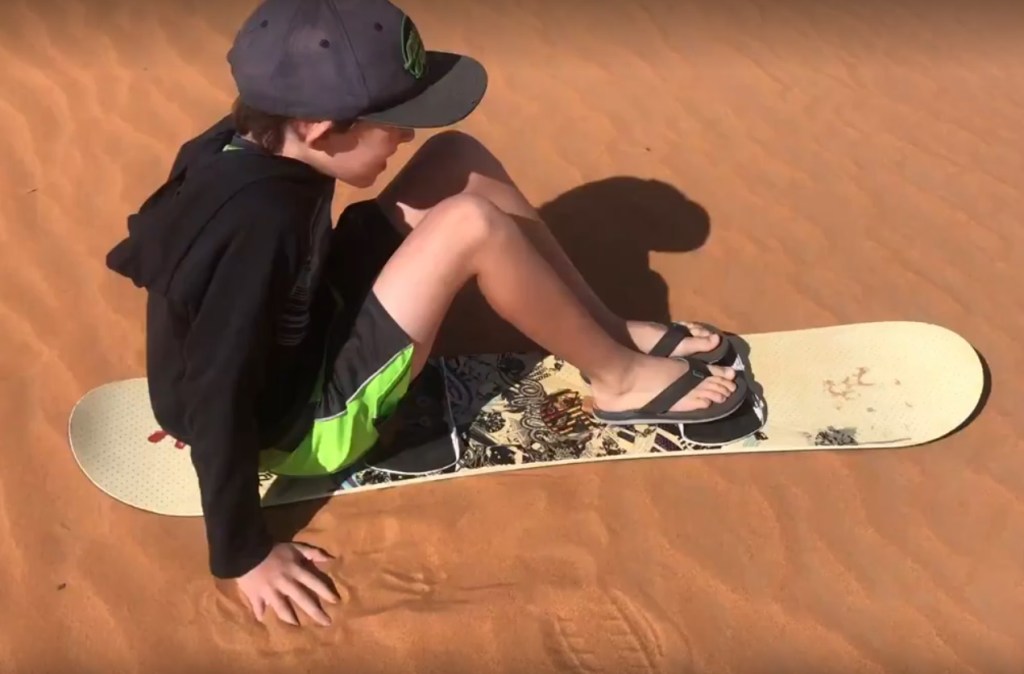
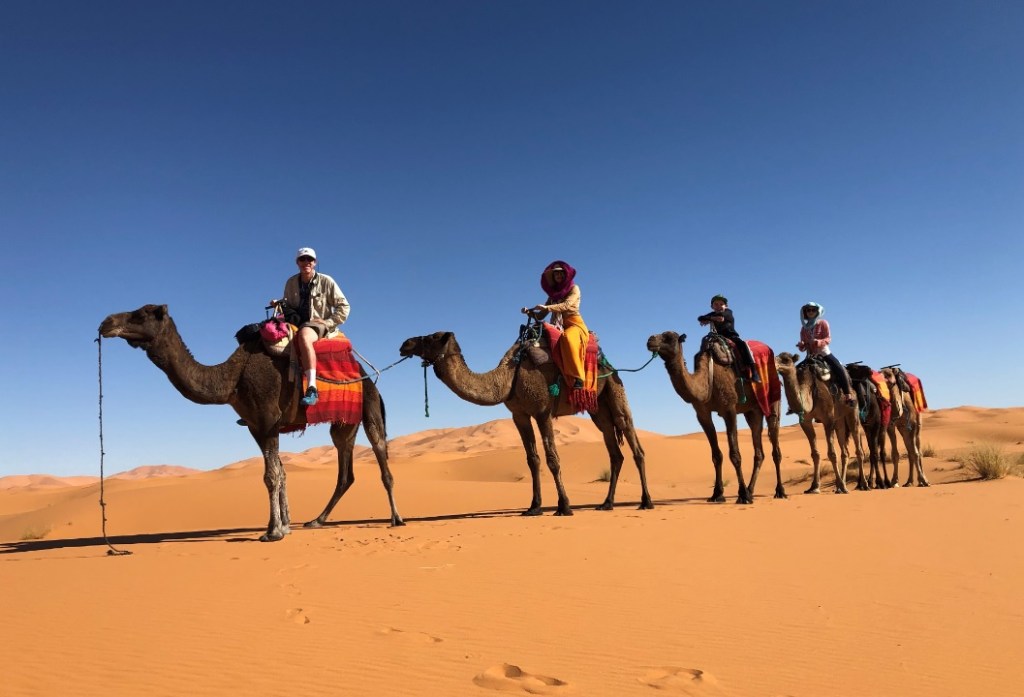
After Marrakesh we took a road trip around Morocco. We drove to two canyons: Dades gorge and Todra gorge. Both canyons are completely amazing. While on the road trip we took a variety of hikes, including one where we saw caves. We also traveled to a very famous recording studio called Atlas Studios. The studio is in the Atlas Mountains of Morocco, and so there is the explanation for its name. Lastly in Morocco, we settled in the beach town of Essaouira. Slaver’s Bay, of Game of Thrones, was filmed here. Also we got to visit an amazing place in the Sahara desert near the town of Merzouga. We went on dune-buggies, rode camels and sand boarded across the soft desert dunes.
CAIRO, EGYPT!
In Cairo, there are some very famous ruins known all around the world. The pyramids of Giza! The great sphinx is also in Giza. This was the first city we decided to visit in Egypt. We would be spending a few weeks in Egypt, and so, of course, decided to go see one of the seven wonders of the world. The Great Pyramid is also a UNESCO World Heritage site.
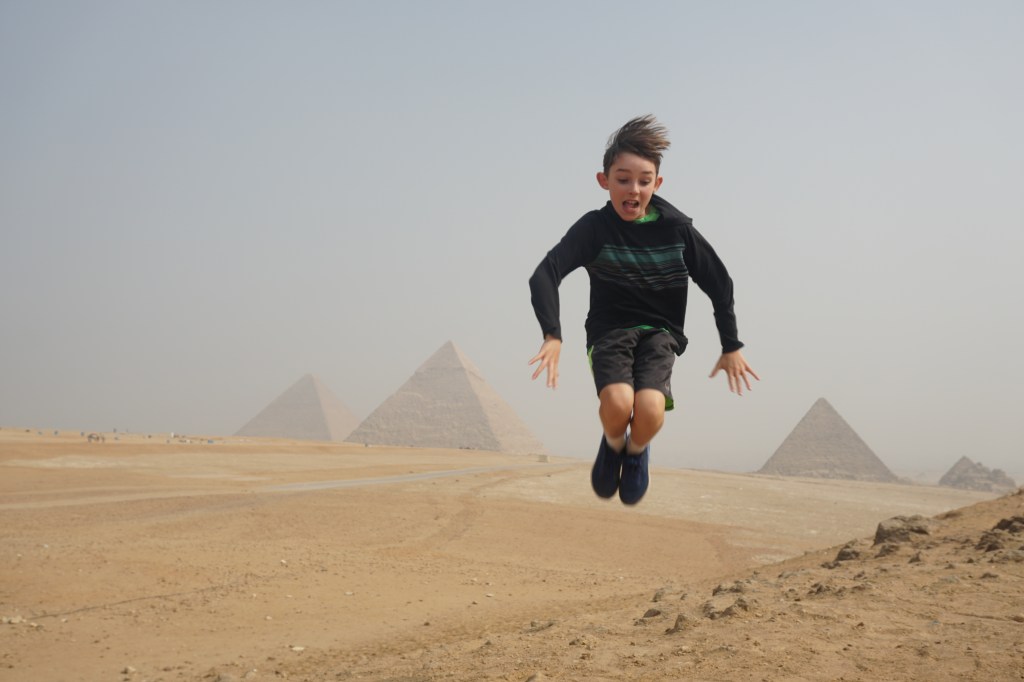
The Egyptians started to built the Great Pyramid in 2589 BC, but only many years later was it finished. The pyramids were built by workers and artisans. They were all made for a father, a son, and a grandson. All of these three people were Pharaohs, or kings of Ancient Egypt. The father and first of these men made the first of the pyramids. His name was Pharaoh “Khufu”, and his lead architect was a man name Hemiunu (also known as Hemon). This pyramid is now called the Great Pyramid, because it is the first and largest of the three. The reason for this is because Khufu’s son and grandson wanted to show respect for their ancestors by making smaller pyramids. The pyramids were made out of large limestone blocks. Granite used to cover the surface of the pyramid making it sparkle and shine, but that rock was taken hundreds of years ago to build the city of Cairo. The tombs usually took a few decades to build, depending on how deep or large.
But why did the Pharaohs make pyramids? A pyramid is always a monument. In most circumstances, (for example the three pyramids of Giza) a tomb is inside or under the monument. Deep in the depths of the temple, a mummy lies wrapped in cloth, drizzled in oil, with lots of coffins surrounding the body. And yes, the three relatives, one after the other, made the pyramids for themselves, so when they died, that is where they would lay, forever, until archaeologists found them, or until thieves stole them.
LUXOR, EGYPT
We went to Karnak Temple and to the Valley of the Kings in Luxor. I really think it was pretty amazing. It is even possible to see the mummy of King Tut, which is a little disgusting. But I do suggest to go there, since there are over 60 tombs, and more are being found.
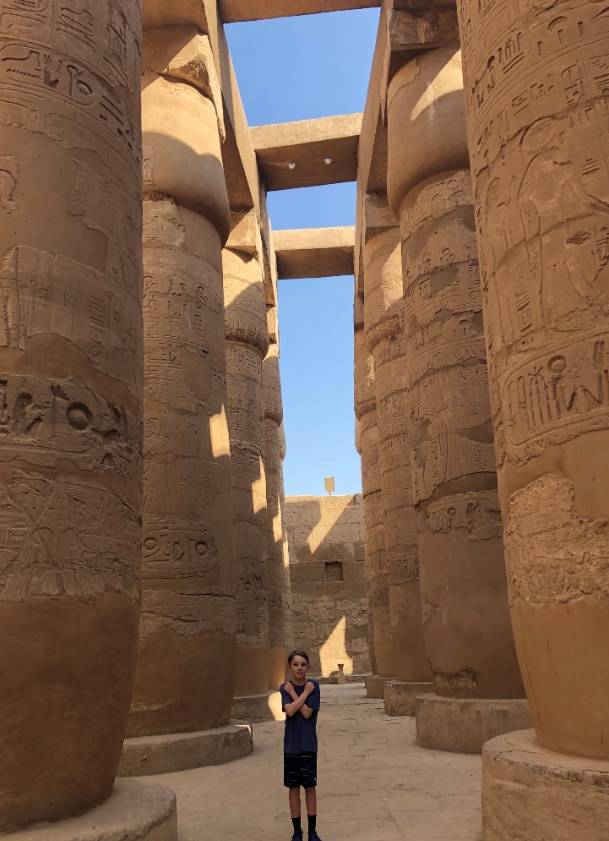
What is the Valley of the Kings?
As the kingdom of ancient Egypt rose to a larger empire, the threat of mummies being stolen increased along with it. And as Egypt became more rich with gold and jewels, more of those very valuable objects were put inside tombs of the Egyptian pharaohs. All of this made the thieves want to steal from the tombs. And so as more gangs began to make their way into pyramids, and stealing every valuable thing in the tombs, the Pharaohs started to become worried.
The Valley of the Kings was a secret burial place for the Pharaohs, on the outskirts of Luxor. Amenhotep was among the first Egyptian pharaohs discovered in the valley of the kings. Thousands of years ago, pharaohs needed the royal tombs to be hidden from the rest of the world, where few people would know about them, so the riches buried within would not be plundered by thieves. And so the large, breathtaking monuments were hidden. People did know who to trust – the tombs of the Pharaohs were buried deep into the earth- and it was all a mystery. Who stole this, who stole that. Someone took this, someone took that.
The real reason all this work was put into a tomb was because of the afterlife. The ancient Egyptians believed in a special world after death called the afterlife. When pharaohs go to the afterlife, they become gods, unlike any others. Entering the afterlife without some things is a problem. You need your prized possessions, and also items for survival. The most important things the Egyptians believed you would have to take into the afterlife was your body and your name.
Let’s start with the body. Why so important? Because just like in real life, without a body, you die. Now without a name, nobody would know who you are! You would not want to be a nobody. What else would be needed to survive the afterlife? Pharaohs would usually take lots of gold, charms, and diamonds. Also for the rich, small finger-sized dolls would be made to represent your slaves (yes, slavery was allowed in ancient Egypt). But out of necessity, probably food, water, and any prized possessions were also needed. If you’re wondering if all of this was actually put into the tombs, then yes. No seriously, it’s true. Oh wait, I forgot something! To carry the dead person to the afterlife, he or she would need a boat. Usually they were just toy sized boats, but in the case of a pharaoh, huge life sized triremes (boats) have been found. These tombs can get big.
In the Valley of the Kings, we saw King Ramses the 2nd’s tomb and it was huge. A long corridor with chambers on every side, with a huge burial complex at the bottom. It turns out this tomb, although not the deepest, was the biggest in area in the Valley of the Kings, covering 8,800 square feet. Among the most famous of the mummies found in the Valley of the Kings, was one of a young Pharaoh named Tutankhamen. His nickname is King Tut. He was found in the Valley of the Kings in 1922 by Howard Carter. Supposedly, King Tut had not so much of a nice life. He had problems with his spine, and other parts of his body, and he had special chairs designed for his spine problems. Tut was born about 1343 B.C. and died at the age of 19. Our tour guide in Luxor thought that king Tutankhamen died of malaria. The New York Times also says that malaria “is a likely killer of King Tut” since some studies have shown those results, and also because back in those times, malaria was very common.
ASWAN, EGYPT
Aswan is a town in Southern Egypt, where we stayed on the way to visiting the Abu Simbel temple complex.
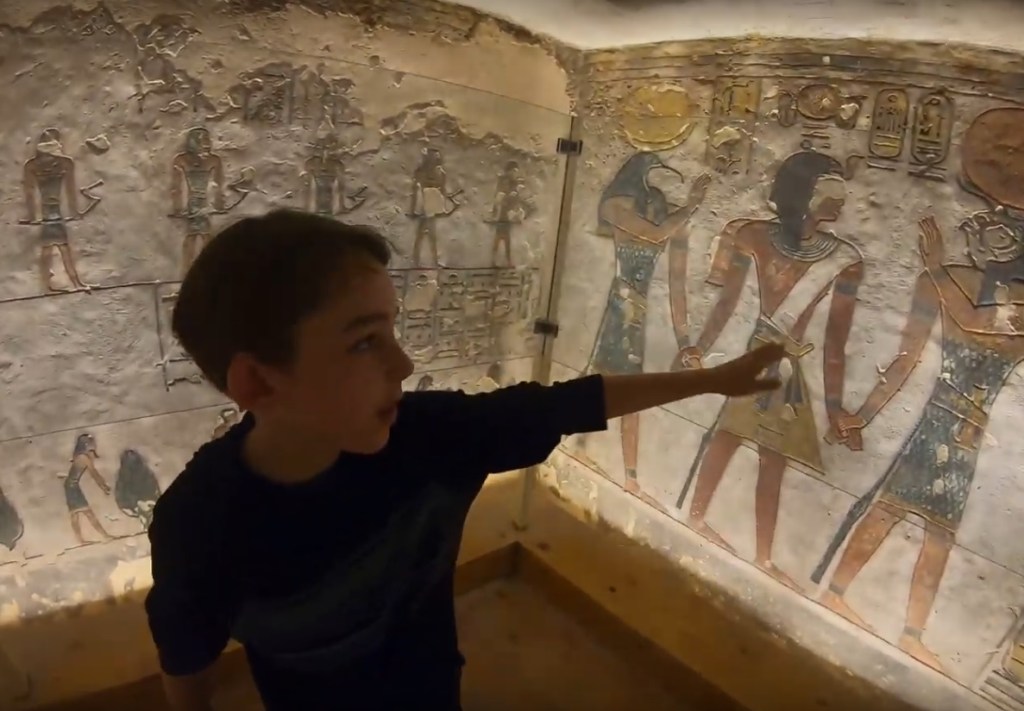
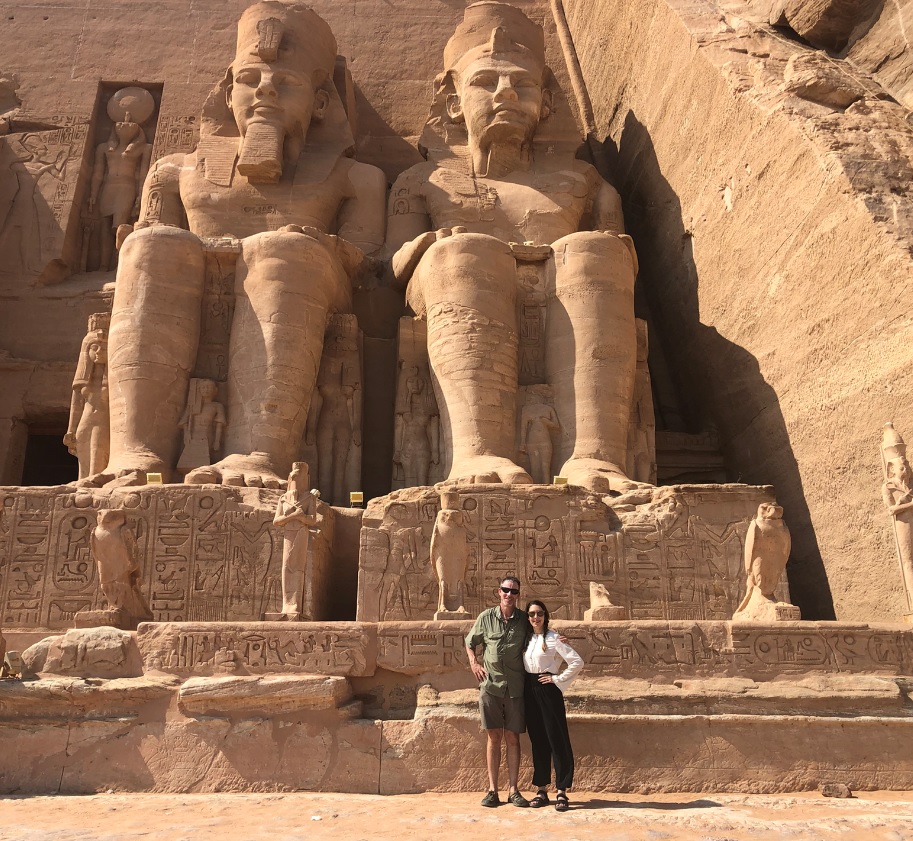
Abu Simbel. The story we were told is that this Egyptian temple complex was named after the little boy who “found” it while playing in the sand. King Ramses II created the two temples of Abu Simbel. He dedicated one to his wife (Queen Nefertari) then dedicated the other to himself. Lots of large (both sitting and standing) statues of the royal couple line the entrance to the temples. The entrances themselves estimate at around 69 feet high. King Ramses II’s temple is larger, to symbolize that he is the pharaoh of Egypt. Inside of the temples, there are many paintings showing Egyptian kings and gods slaying their enemies. In 1979, the great Abu Simbel temples of King Ramses II entered the world heritage list by UNESCO.
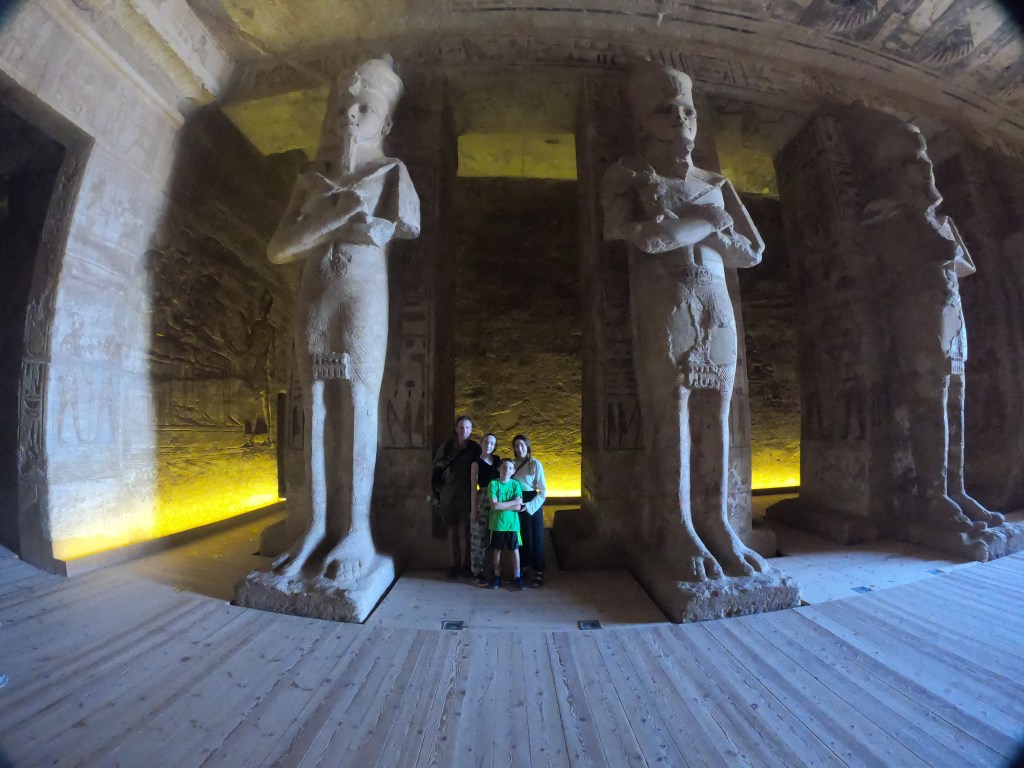
Egypt has always had a large flood almost every year from a large river called the Nile. Actually that stopped happening in 1970. This is because the Egyptian government made a large dam (called the Aswan High Dam because it is stationed here in Aswan) to stop the floods. This dam helped the majority of Egypt. For example, in ancient times people had to rebuild their house in a different place after a flood, because the flood would destroy their original home. There are many pros and cons about this dam. Many landmarks would not be destroyed, as they would if there was regular flooding. But the problem was, the Nubian people had to flee their homes. The dam would not only be stopping floods but also it would be creating a large final one. One of these areas in the final flood was a place in Egypt called Nubia. After leaving the city, the Nubians were offered to be relocated to a new place. But many of the Nubians did not want to leave their homes and there were large protests at that time in the late 1960’s. Some other places were threatened to be left underwater too. That’s where the temples of Abu Simbel come in. Yes, these temples could have been submerged in water if the government hadn’t realized it. Many countries helped move the temples of Abu Simbel to a location 220 yards from the original one. It was a huge project and countries who helped were rewarded with small Egyptian temples. Go see the one in Madrid or at the Metropolitan Museum in New York City.
To take apart the temple, a small dam had to be built to protect Abu Simbel from minor floods. Then builders would cut the temples up into smaller blocks using big saws. Then those blocks had to be carted up to the new location. I think it must have been hard for those architects to do this next part. They had to literally recreate the temples of Abu Simbel. I saw photos at a mini-museum in Abu Simbel of the moving project. There were trucks, cranes, and scaffolding all around. In a short film, there were workers wielding huge saws and cutting away at the sandstone. This project cost 21 million U.S. dollars at that time. But all of this work was worth something, because in 2017, it was estimated that over 800 people visited Abu Simbel every day! Probably now in 2020 this number is a lot bigger, as more and more people start to visit Egypt.
THANKS FOR READING OUR AFRICA JOURNEY PART I – MOROCCO & EGYPT
Remember that this is only the first Africa post and the second and final one will come soon: Tanzania and South Africa
Please subscribe, and leave a comment. And finally, Check out our youtube channel:
https://m.youtube.com/channel/UCheQcg1OwJ-v-eUV4SNhVwA
-Jack👌
 Worldschooling
This was great. Getting that picture of Jack midair was special. But then so was getting a picture of a camel nuzzling your neck, Emily. Did the camel really like you that much?? I’ve never seen a camel do that before, and don’t forget that I lived in the Middle East for five years! I think this was one your best. Congratulations, Jack!
LikeLike
Jack, this is very exciting! I am waiting for the next one. But you are now in Southeast Asia. Does it get confusing — writing about Africa while sightseeing in Asia? Love, Grandpa.
LikeLike
I guess it’s possible to get pretty complicated, but whenever that happens, we can just watch one of our videos or read a blog post. That’s kinda one of the main points on this blog!
LikeLike