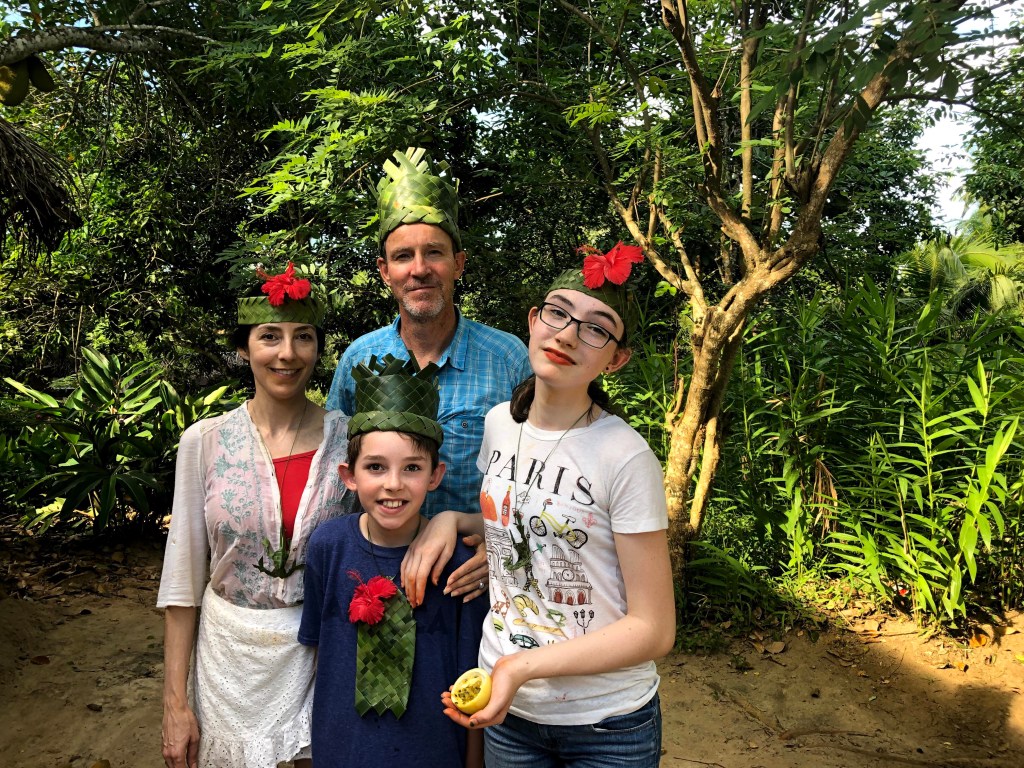
Get ready for your senses to be amazed by the color, texture, smell, and taste from the roots of Zanzibar! This blog post is going to consist of all the different spices and fruits we encountered during our tour at the farm, and I’m also including tons of pictures.
SPICES
There are many spices grown at the farm that you probably use in your daily life. Some of them look different before they’re processed and placed in stores. For example, when we saw turmeric, we thought that it was a carrot or a ripe mango because it has this bright orange color. The guide gave us a tiny piece to sample, and it lets off a really intense flavor.
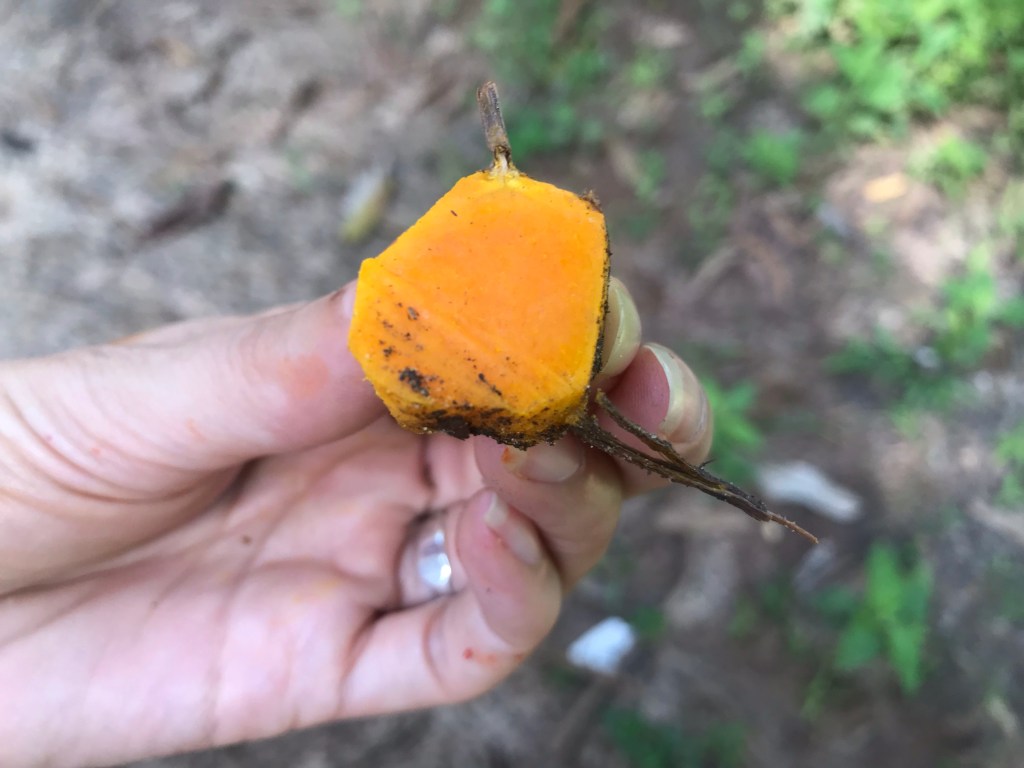
Can you guess what this is?
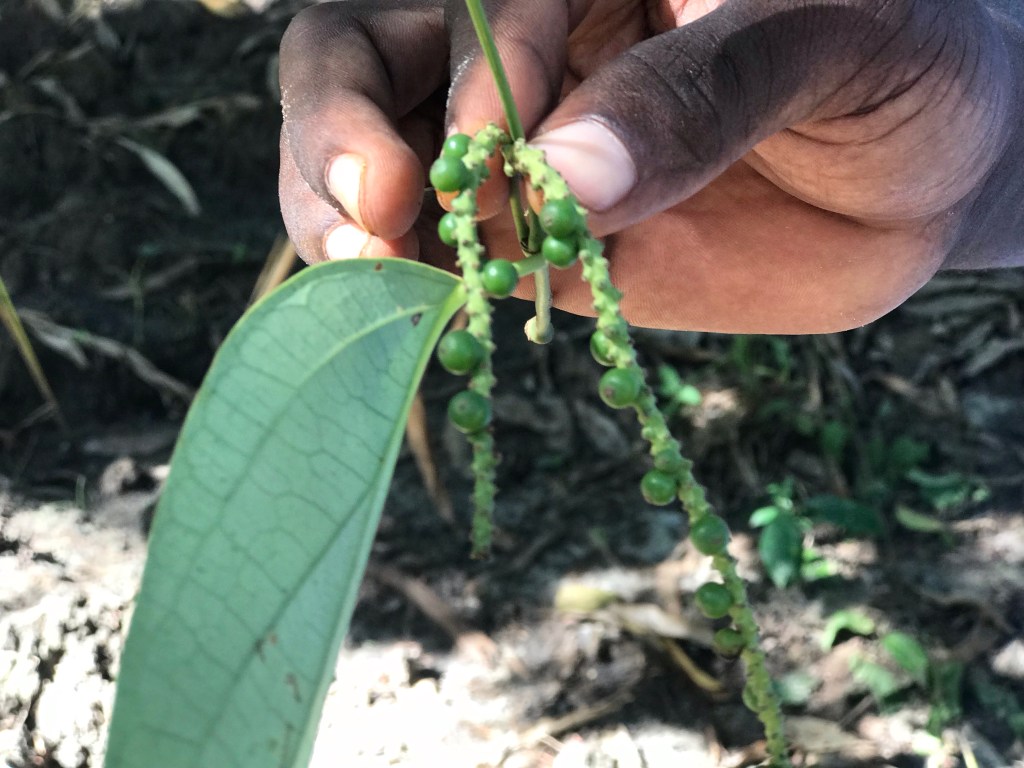
Ohhh, so that’s where the pepper inside your pepper grinder came from! These are peppercorn berries growing on vines. This is something I had never seen before. We learned that apparently all the peppercorns start off as the same kind, but get changed into either white, red, or black peppercorns, depending on how they are processed.
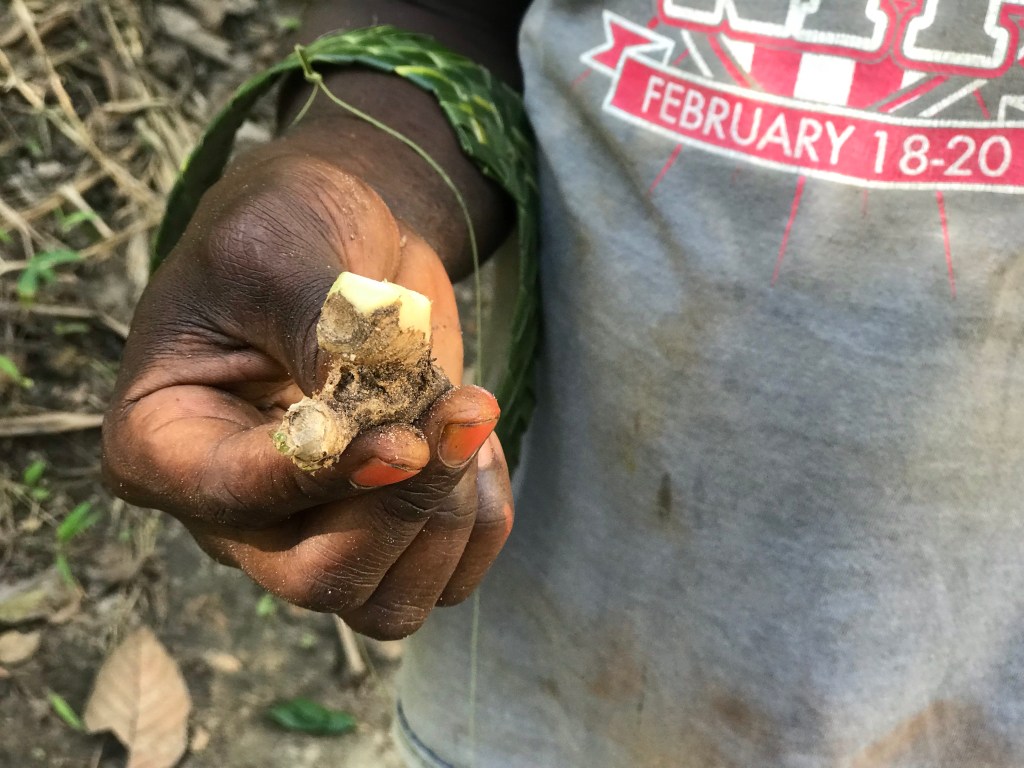
We saw some fresh ginger that we even got to try!
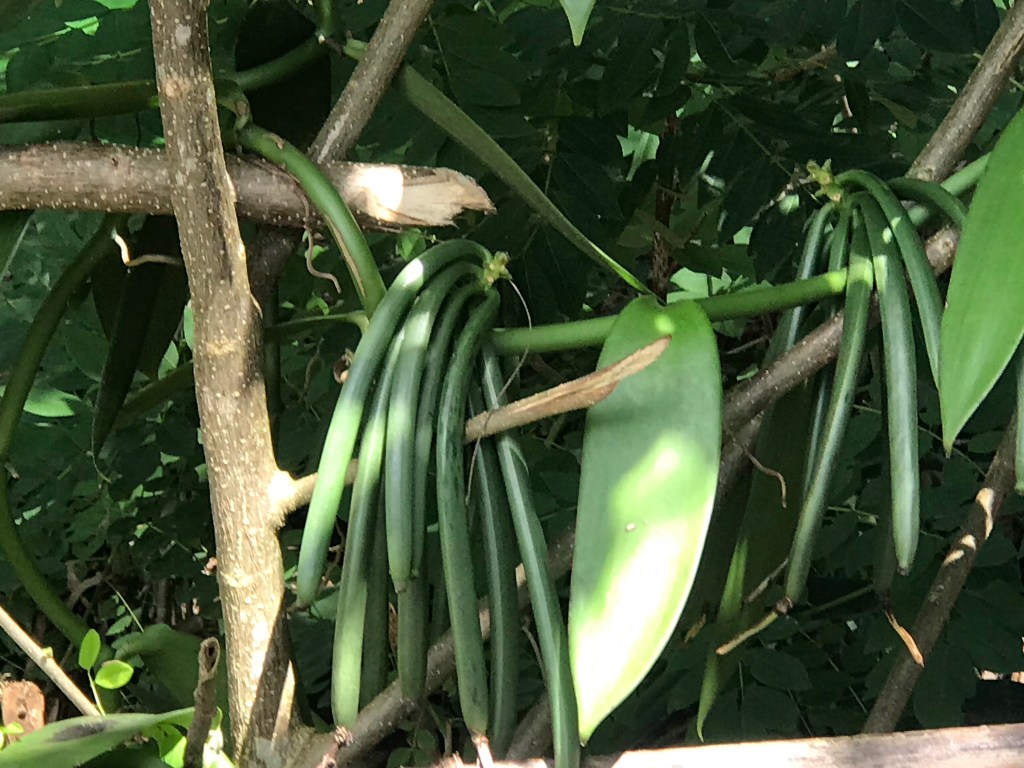
The farm also grew coffee beans, cacao beans (that come from cacao fruit), and vanilla beans that grow on vines, which were hard to define at first. We learned from Yahya that his family eats the cacao beans raw, which isn’t something I’ve ever done, but apparently they aren’t as bitter as the cacao itself.
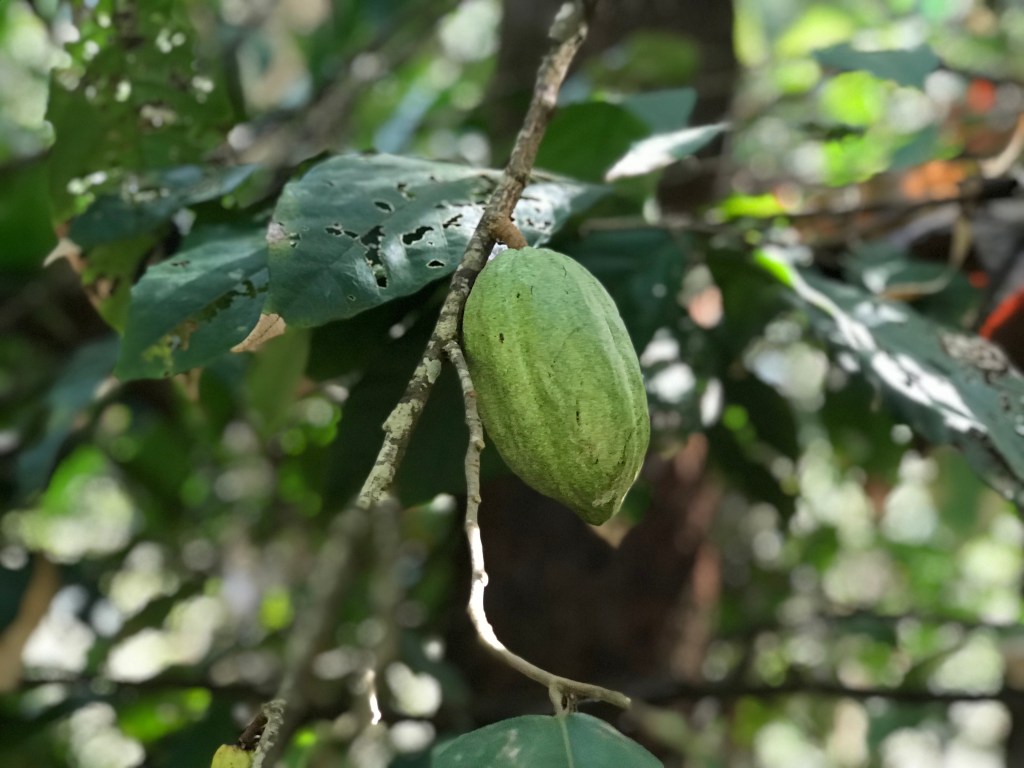
When our guide pulled a root off the base of a tree and handed it to us, I immediately guessed that it was cinnamon bark, judging by its familiar, and strangely comforting smell. The bark reminds me of cinnamon sticks, which are actually made from cinnamon bark itself.
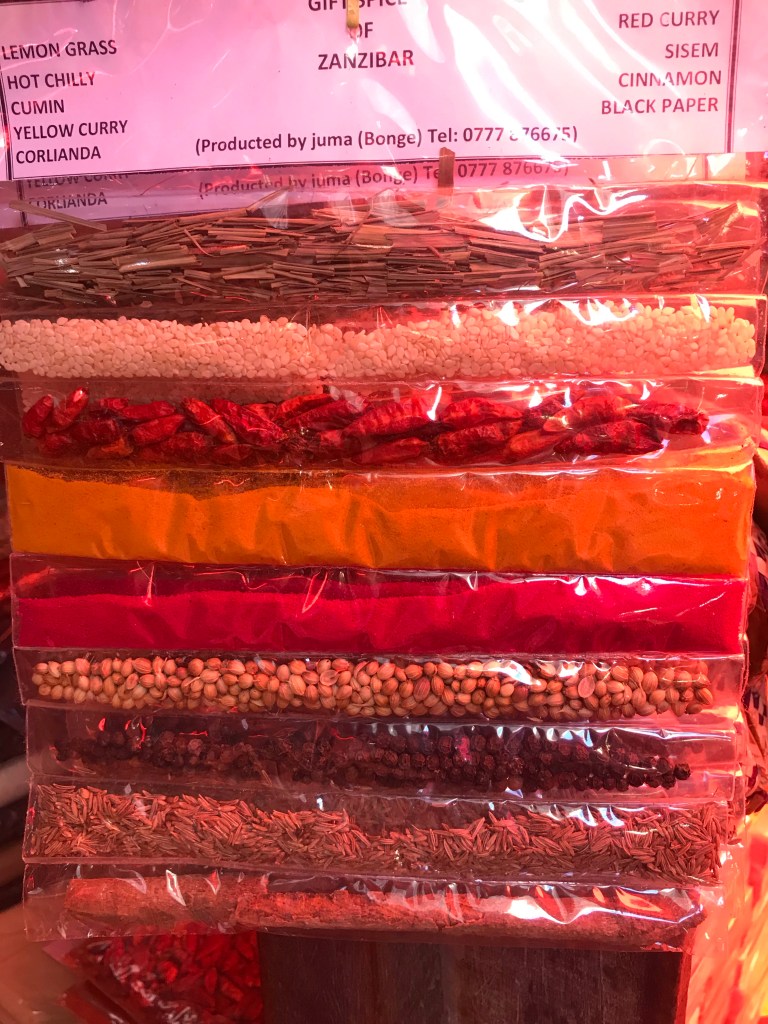
We saw and tasted other common spices such as clove, cumin, and cardamom. Each had interesting smells and/or tastes. The farm was selling different sample sized scents and spices, and we bought a bottle of vanilla perfume, and one of lemongrass, which we learned could be used as bug repellent. It actually works!
Since we’re on the topic of cinnamon, here’s a link on why CASSIA, a type of cinnamon sold at your local grocery store can actually be HARMFUL TO YOUR HEALTH, and why you should actually be buying CEYLON cinnamon instead.
FRUITS
Getting to see and/or taste all the exotic fruits typically grown in Zanzibar was personally my favorite part of the tour. Many of the fruits that grow there either aren’t even exported to the US, or you can find a similar variety at a Asian market such as lychee.
A lot of the fruits we saw were very different versions of the same fruit I’m used to, and there were even some that I’d never even heard of until coming to Zanzibar! There is such a wide variety of tropical fruits that grow there.
1.Jackfruit (Artocarpus heterophyllus)
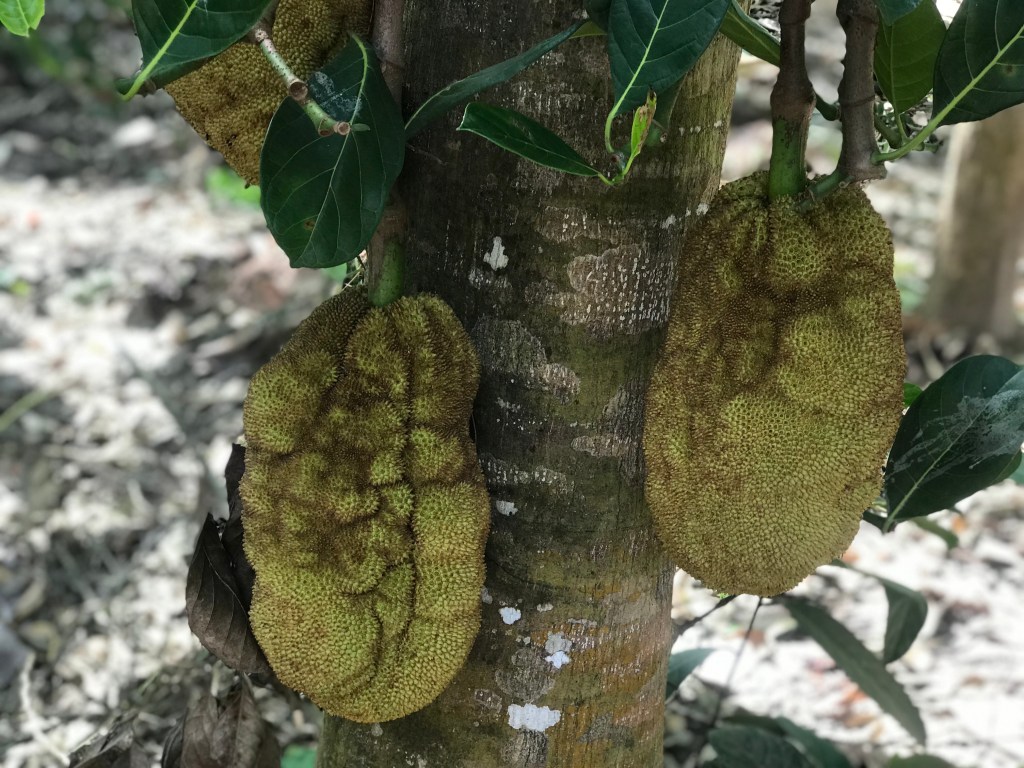
Immediately we saw big lumpy green fruits with hundreds of tiny, and I imagine prickly, bumps on them. The guide told us it was jackfruit, which is something I’ve never seen or even heard of before. Jack, naturally, had to do an entry for our video on Zanzibar about how he had found the fruit, named it after himself, and all that. We never got to cut the jackfruit open, but I’ve heard that it can be a very messy process and can take a long time to take out all the seeds and eat the yellow bulb-like fruit inside. I do want to try it some day though.
2.Breadfruit (Artocarpus altilis)
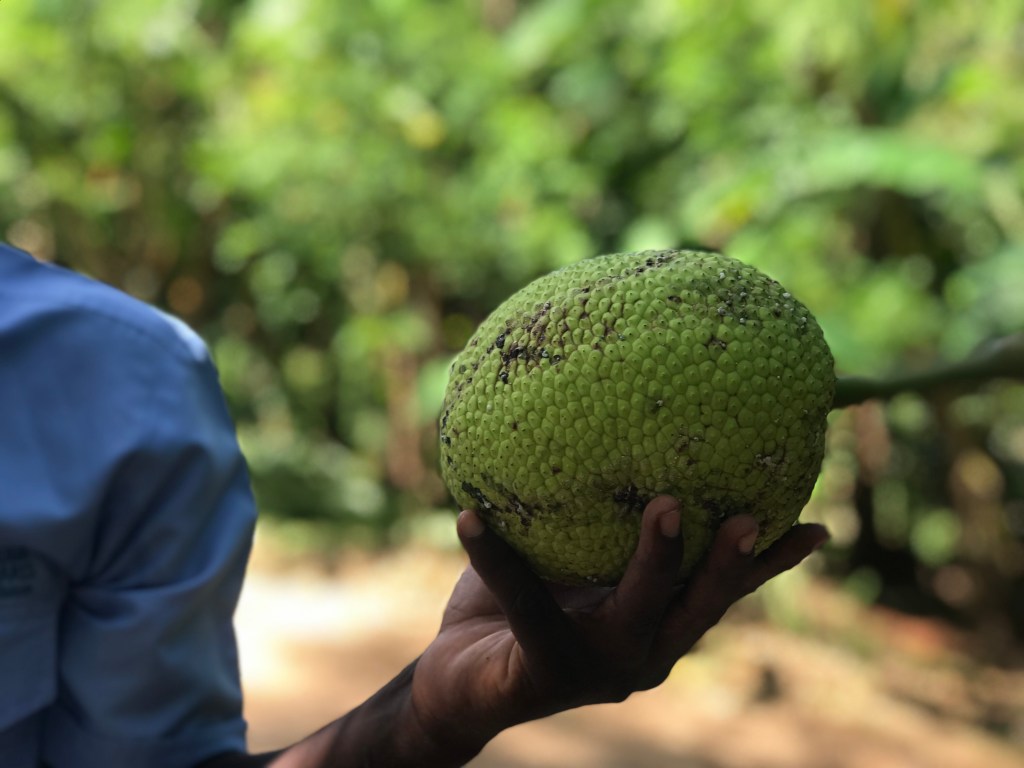
Breadfruit is a very unique fruit you may never heard of before. (I hadn’t until I went to Zanzibar) When our guide, Yahya told us that its name, I didn’t actually think it was a fruit; it looked more like a vegetable.
The first time I ever tried breadfruit was when we went to Yahya’s house for the Swahili cooking lesson, and breadfruit was part of our meal. I remember it being green in color, and having the same texture and similar taste to a potato. We actually ate the breadfruit in the same way you would eat a vegetable; by boiling it in hot water and then eating the slices warm. It took me a while to believe that breadfruit was actually a fruit, and not a vegetable. Now do you get what I mean about it being like a potato? I mean, besides the taste.
When we arrived in Zanzibar and we were driving to our hotel from Zanzibar airport, Yahya told us to look out for mango trees, and I incorrectly identified a breadfruit tree as one, thinking that the mangos weren’t ripe yet and that’s why they were green.
Later on at the spice/fruit farm, we did cut open breadfruit, but we didn’t eat it. I noticed that the outside of the breadfruit (and this was the first time I had seen breadfruit skin) looked similar to the skin of Jackfruit; because it had bumps covering the outer layer and was also green. Except, the jackfruit we saw was bigger in size and more lumpy than the breadfruit.
3.Passion Fruit (Passiflora edulis)
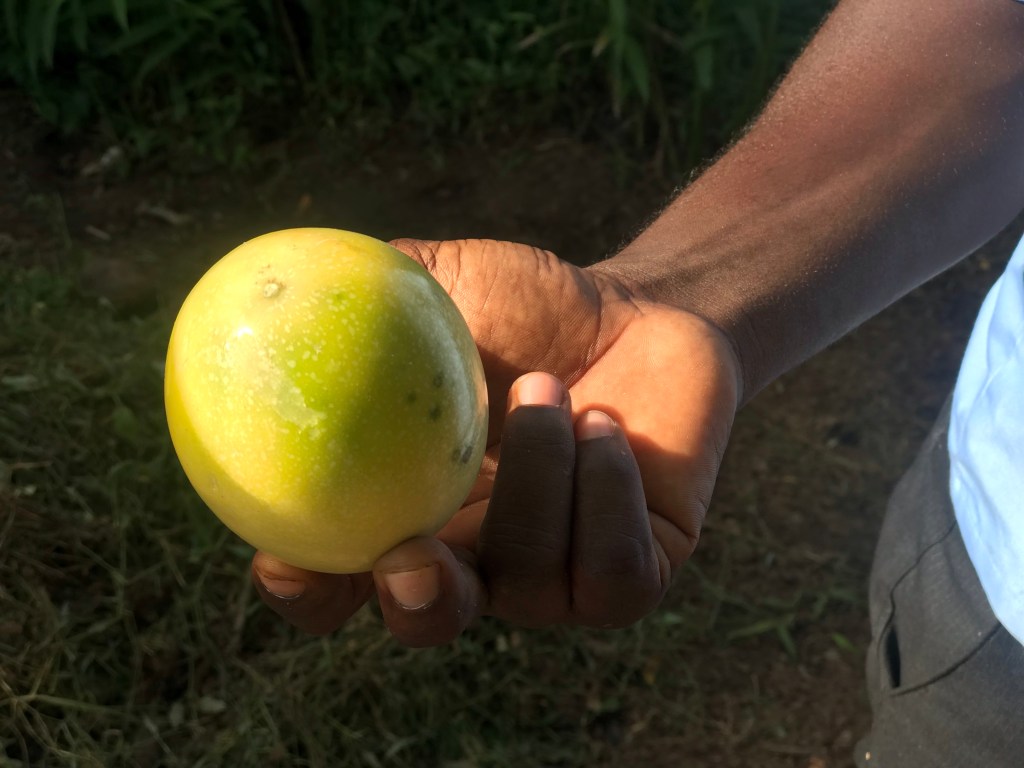
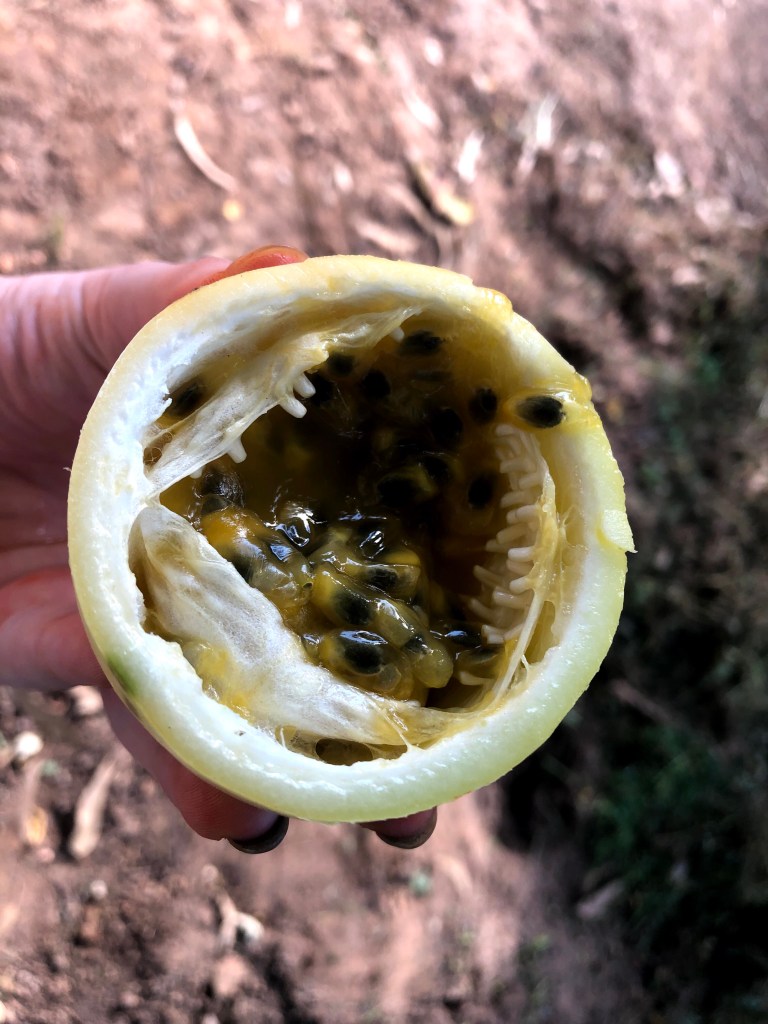
I’ve heard of passion fruit before, I’d just never tried it or even seen what it looked like until that day at the spice farm. So I literally had no picture in my mind of what to expect. All I knew was that I had passion fruit juice before a couple of days prior, and that it tasted tart, but kind of sweet too. So I was definitely in for a surprise, because when the yellow skinned fruit was cut open, what I didn’t expect to see was globs of a gooey consistency, and tons of seeds wedged in between. I did try the passion fruit, but I would say it wasn’t my favorite. I prefer passion fruit juice, because its easy to drink, and not slimy.
4. Raw Mango (Mangifera indica)
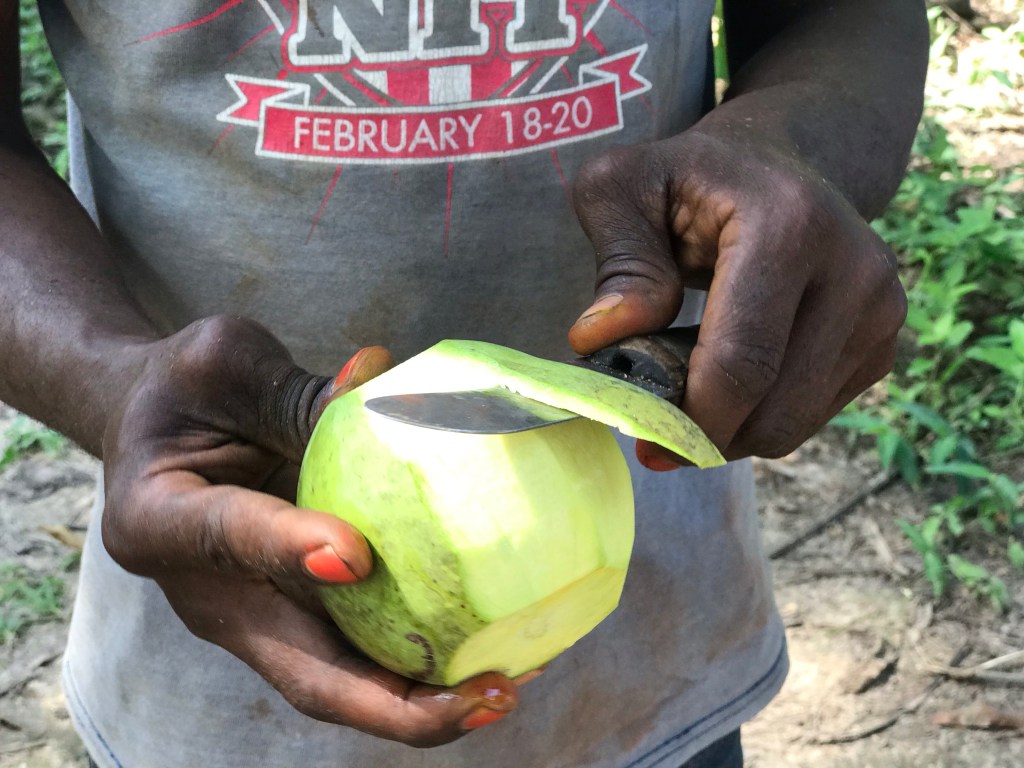
When we went to the spice farm I got to try raw mango for the first time, or, in other words, unripe mango. By the way, its not as bad as it sounds. Unripe mango is basically just a mango that’s green instead of the vibrant yellowish orange color it is when its ripe. It looks like a green apple, just one that’s extremely tart. My dad said he remembered eating unripe mangos when when he lived in Africa when he was five, and it was the first time he had them since then. My dad likes really tart and sour fruits like limes and lemons, (and I guess unripe mango, apparently) but I prefer the sweet version of mango over the sour one.
5.Pineapple Plant (Ananas comosus)
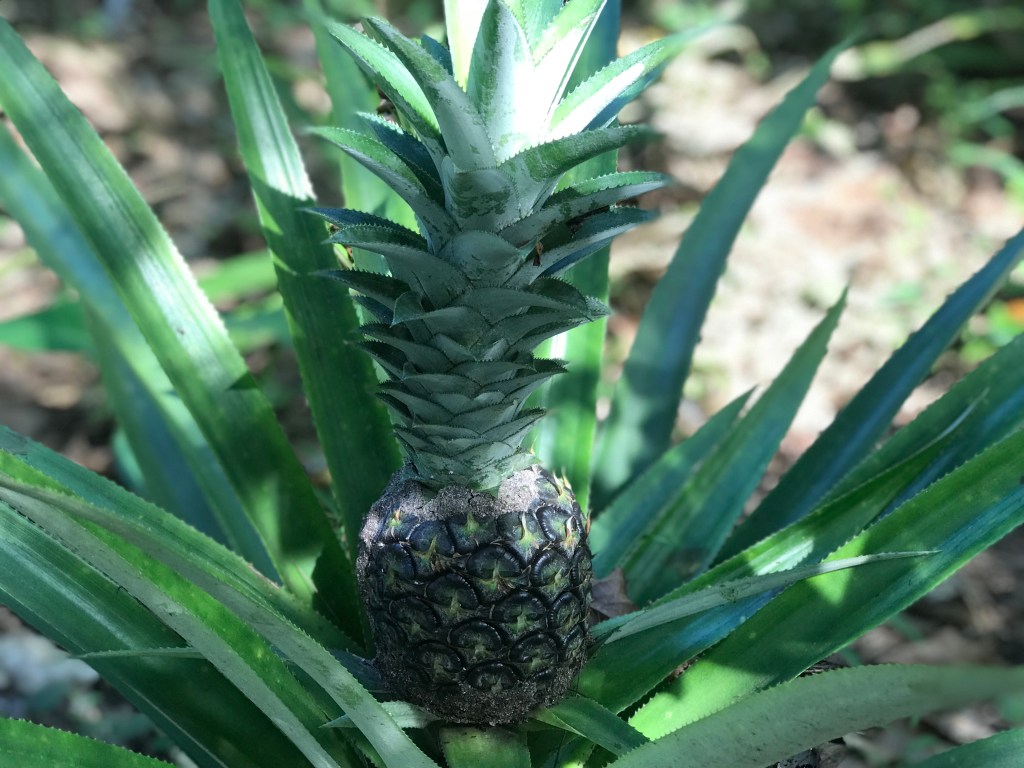
I never knew exactly where pineapples grew, but I never thought that they grew as a shrub on the ground!
6.Bananas (Musa)
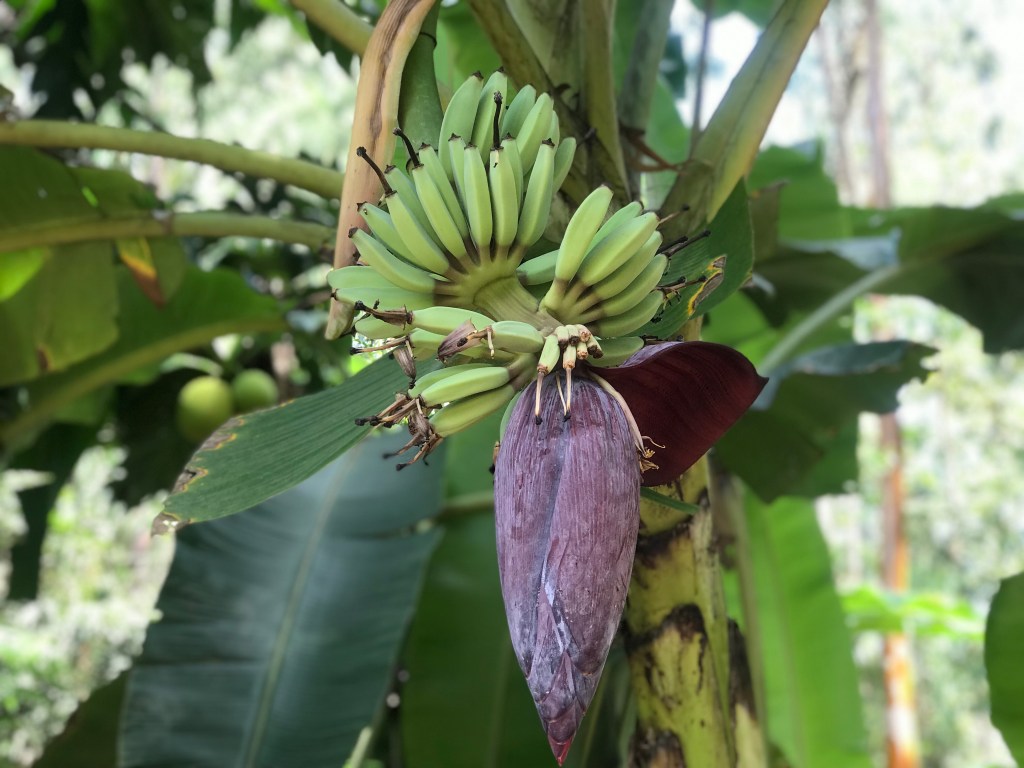
The cool thing about bananas in Zanzibar is that they grow out of a giant seed that kind of looks like a big purple light bulb. When the bananas aren’t fully grown, they look sort of like water balloons before being blown up.
7.Lemons (Citrus Limon) and Limes (Citrus aurantiifolia)
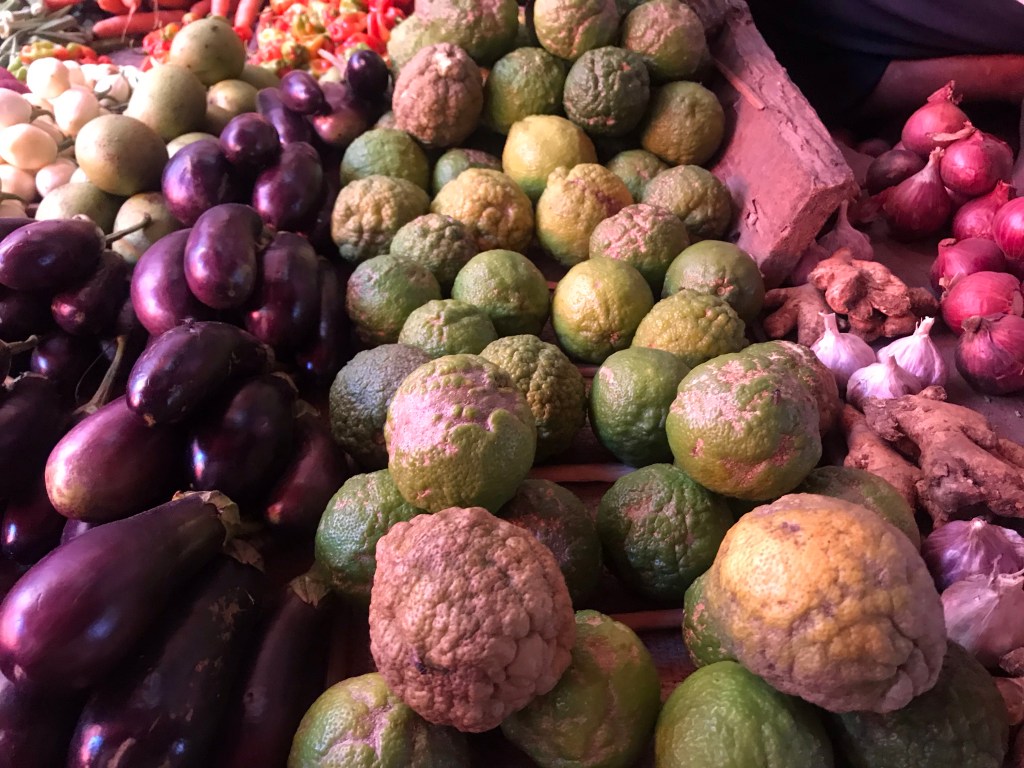
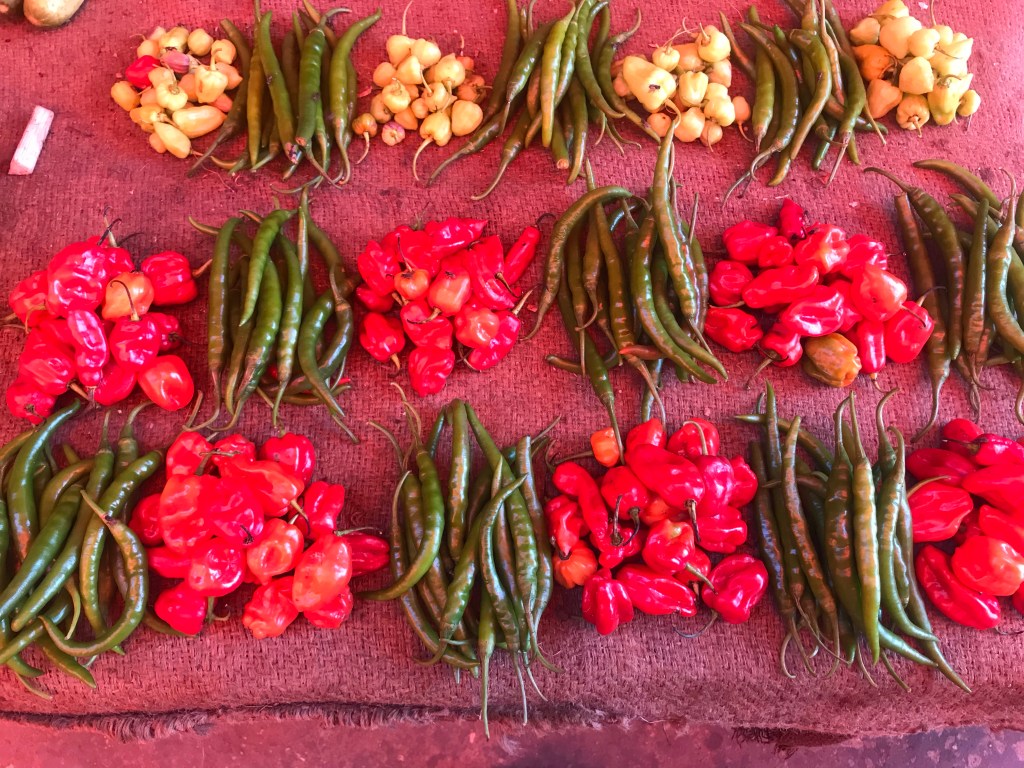
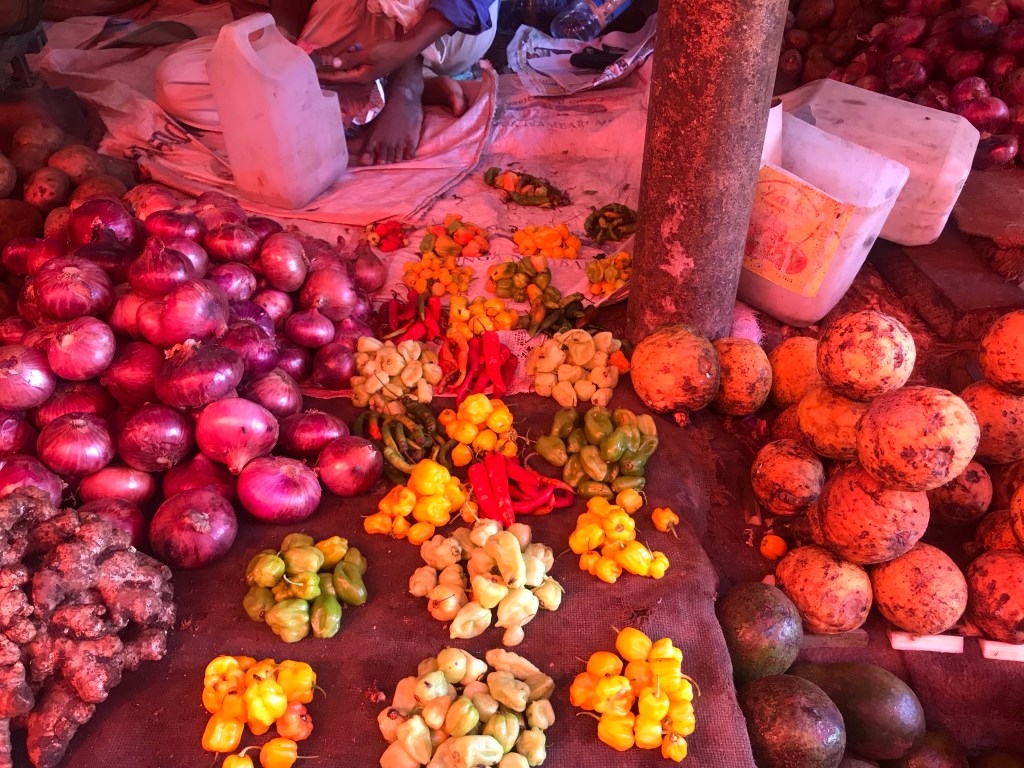
Now although we didn’t see any lemons or limes at the farm, we did see them when we went to the market in Stone town on our last day in Zanzibar (check out my blog post on Zanzibar!) We also saw a lot of fruit selling vendors there, and there were some limes and lemons I saw that I’m not accustomed to buying. They were pretty lumpy as seen down below, but I guess those are what the locals buy to sour up their dishes and drinks.
8.Durian (Durio)
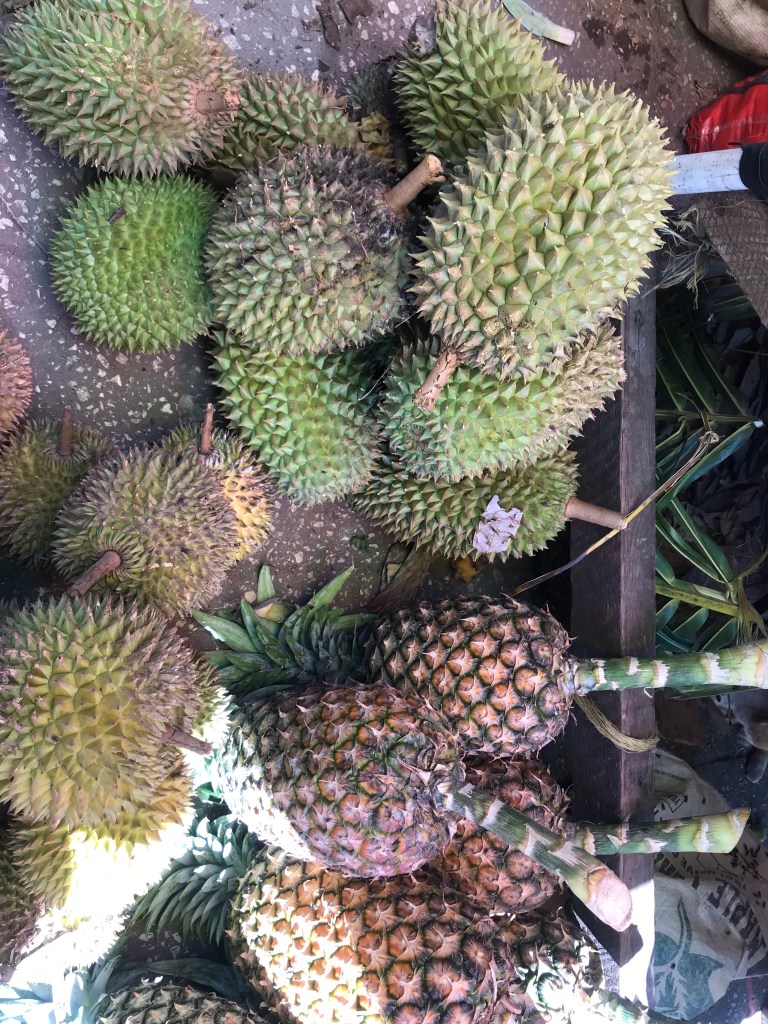
At the market we also got a chance to see Durian, a fruit that has very prickly looking spikes. Here’s what it looks like!
9.Oranges (Citrus sinensis) and Grapefruit (Citrus paradisi)
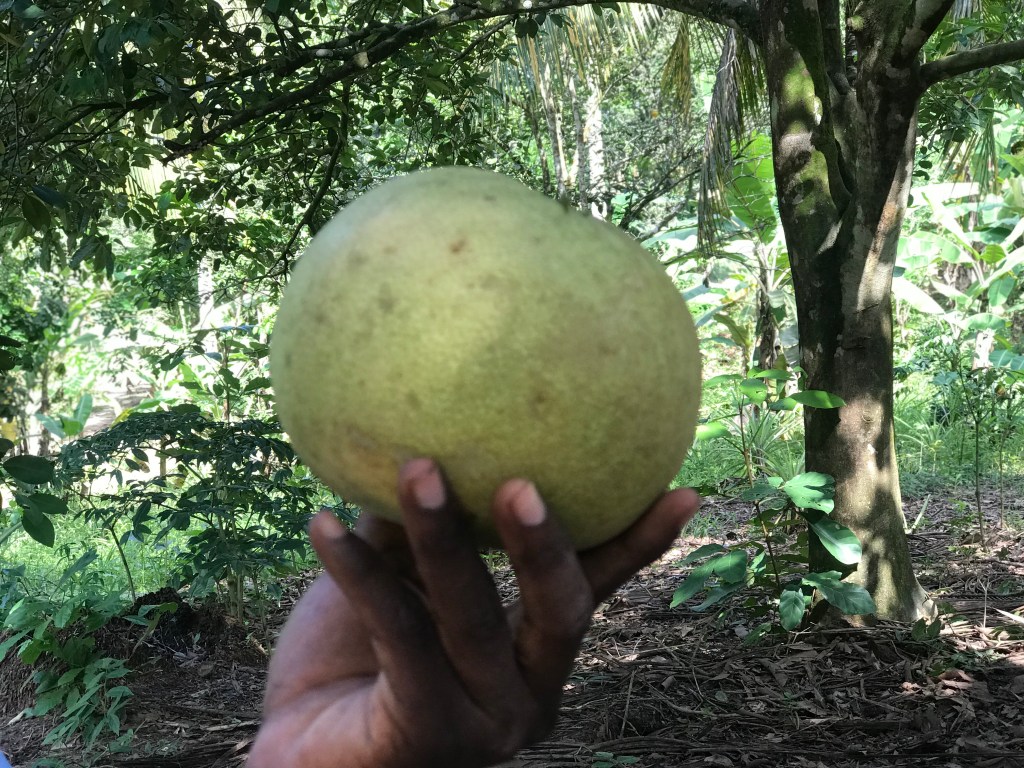
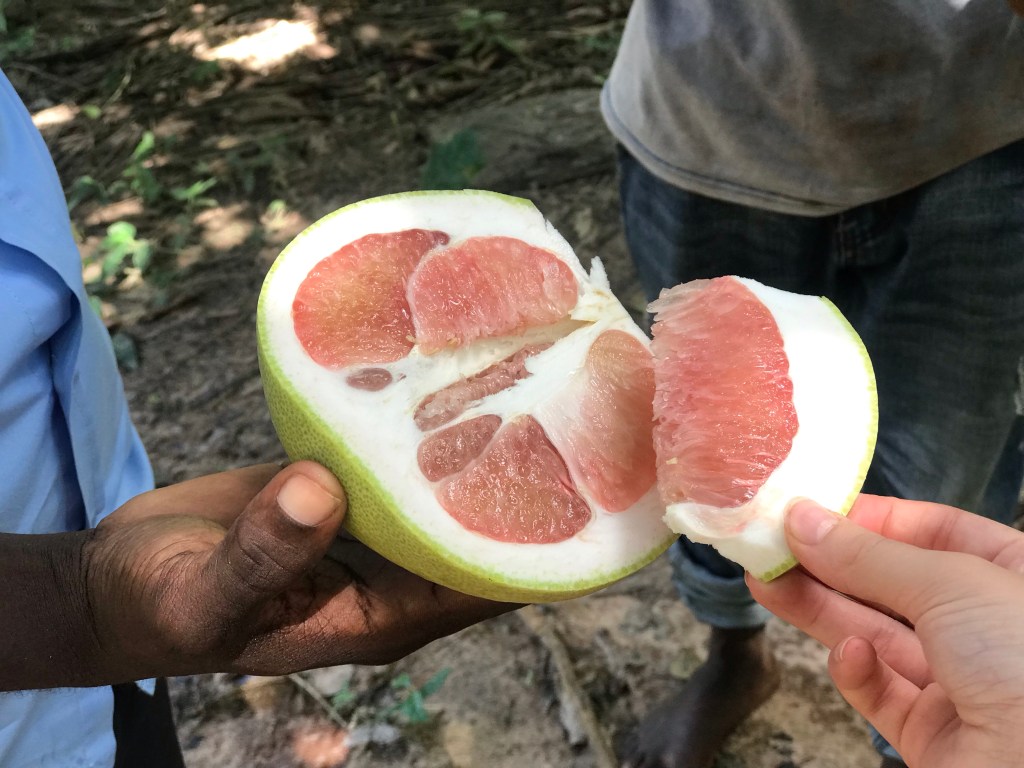
Now these may sound like normal fruits to you, but in Zanzibar the oranges and grapefruits are very different than the U.S. For one, the skin color of the grapefruit we tried was green and it looked bigger than I expected-bigger at least than I’ve seen at grocery stores in Seattle. Although, the inside revealed the beautiful pink fruit that I’m used to. However, when we tried a slice of the grapefruit, the inside tasted pretty dry, probably from hanging on the tree for so long.
We also saw some unique oranges too; the orange’s skin was also green like the grapefruit was.
10.Starfruit (Averrhoa carambola)
We got to taste two different kinds of starfruit. One was an orange color, and it was very soft and spongy. It was really good, and I’ve never had that type of starfruit before.
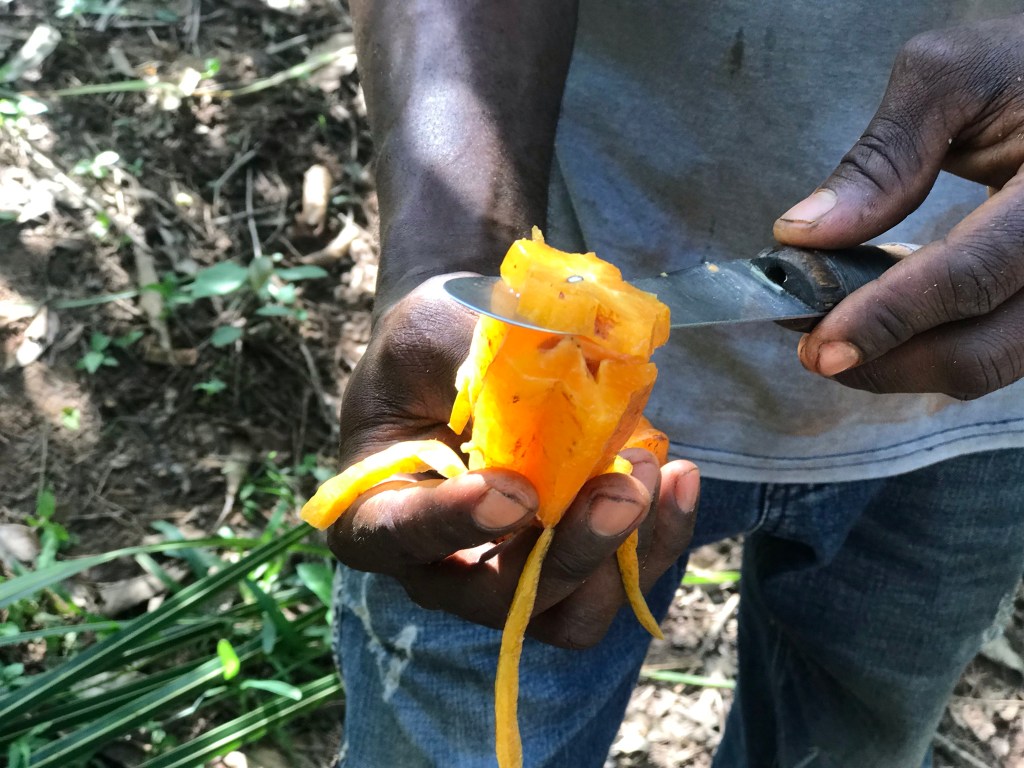
The other kind of starfruit we tried was hard, green, and sour; more like the kind I’ve eaten before (even though I’ve only had starfruit once or twice in my life). I’m guessing that the first kind we tried was ripe starfruit, and the second kind was just unripe starfruit. I like the taste of them both though, and I’m hoping I get to eat more of it on this trip, maybe in Asia.
11.Coconut (Cocos nucifera)
As you may know, coconuts grow on palm trees. Which means someone has to climb up a ladder to get to the coconuts. Or, in this case, they could just climb the tree itself!
At the end of the spice tour, our guide let us watch as he climbed up the long truck of a palm tree (yep, you heard me right!) to retrieve a coconut for us to eat. It was really cool to see someone do that, and it was a new sight for me.
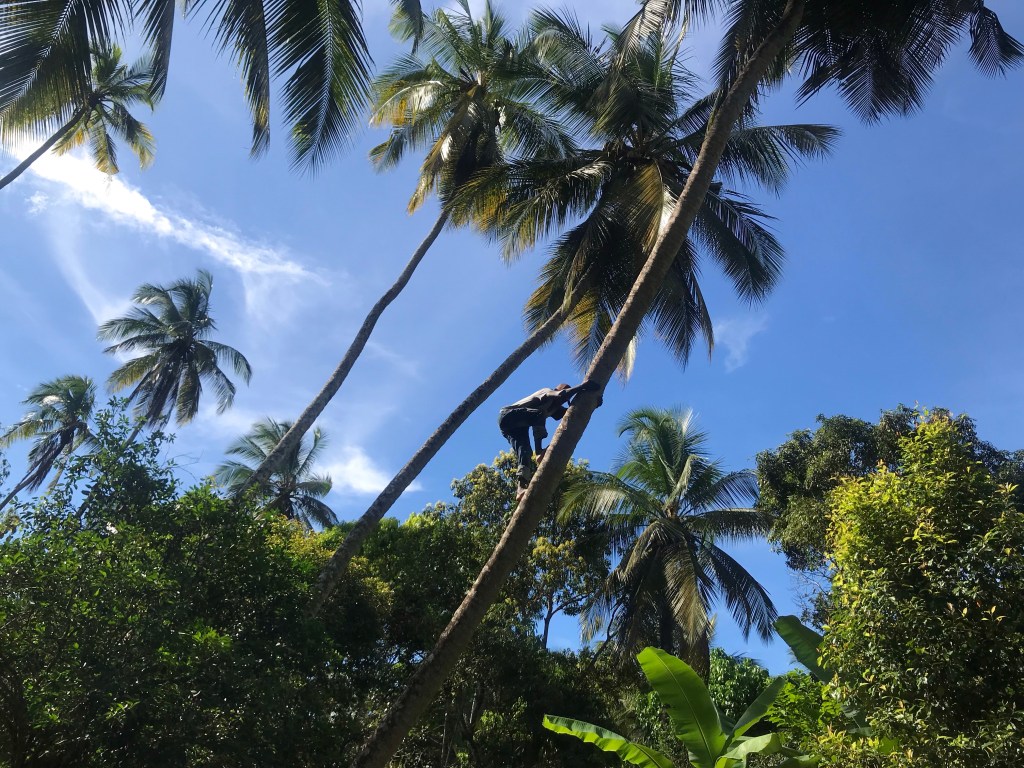
Our guide cut the coconut into slices which a sharp knife, and gave each of us a fresh piece. The last time I had fresh coconut like this was in Mexico where they served it with lime and sugar.
I didn’t finish all of the coconut slice and I threw it on the ground where the chickens that were roaming around the farm went crazy squabbling over it. My parents also drank the coconut water but I didn’t because the taste isn’t my favorite.
LIPSTICK PLANT
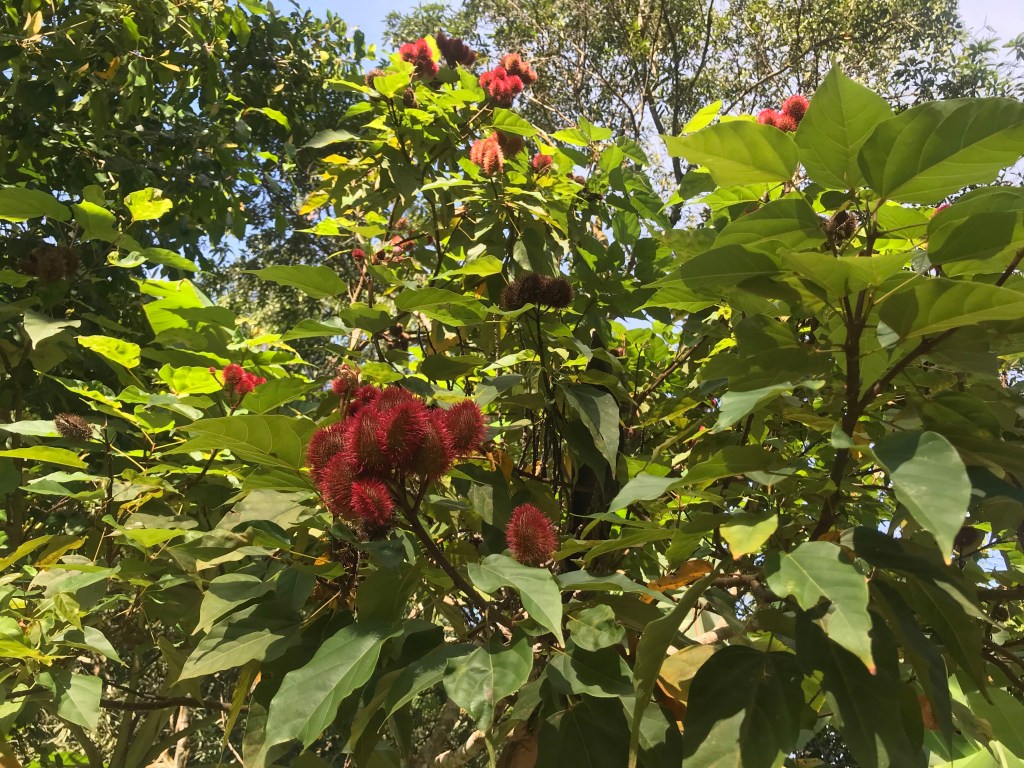
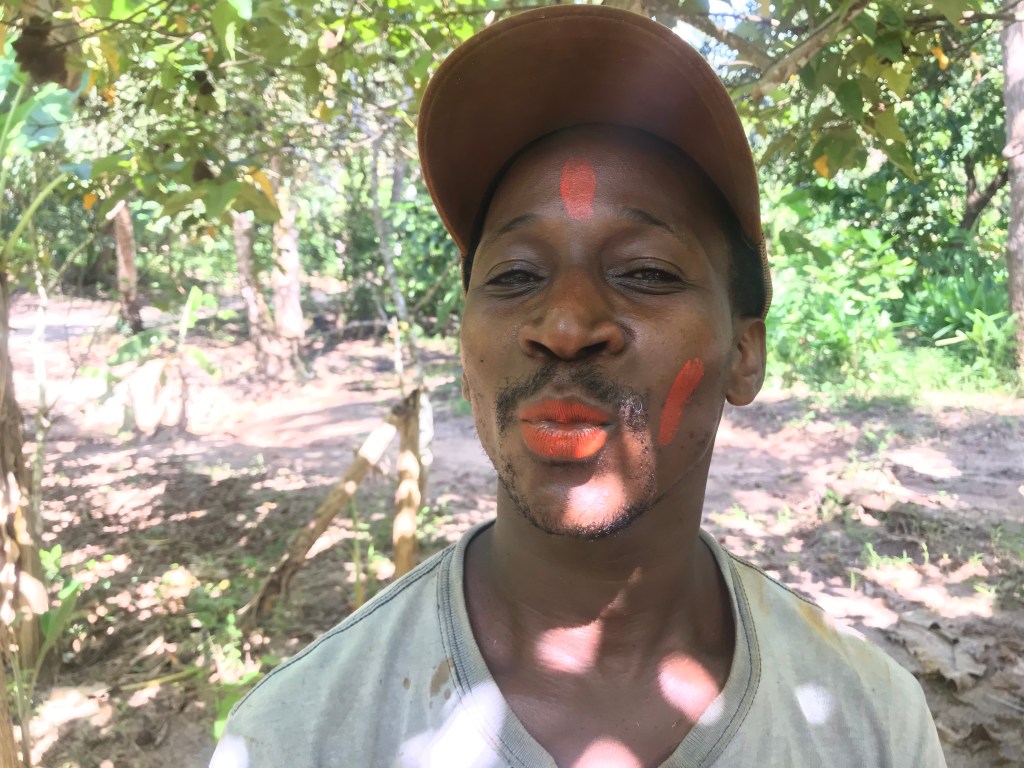
At the spice farm we got to see many different plants that I’ve never seen before in person, and the lipstick plant, or so its called, was one of them. As you can tell by the name of this plant, its got something to do with lipstick. So I’ll just tell you right now that yes, this plant was in fact used as lipstick at one point. That’s also of course, why they named it the lipstick plant. But lipstick wasn’t the only thing this plant was used for. When crushed, the berry looking pods inside let out liquid that could also be used to naturally dye curries with.
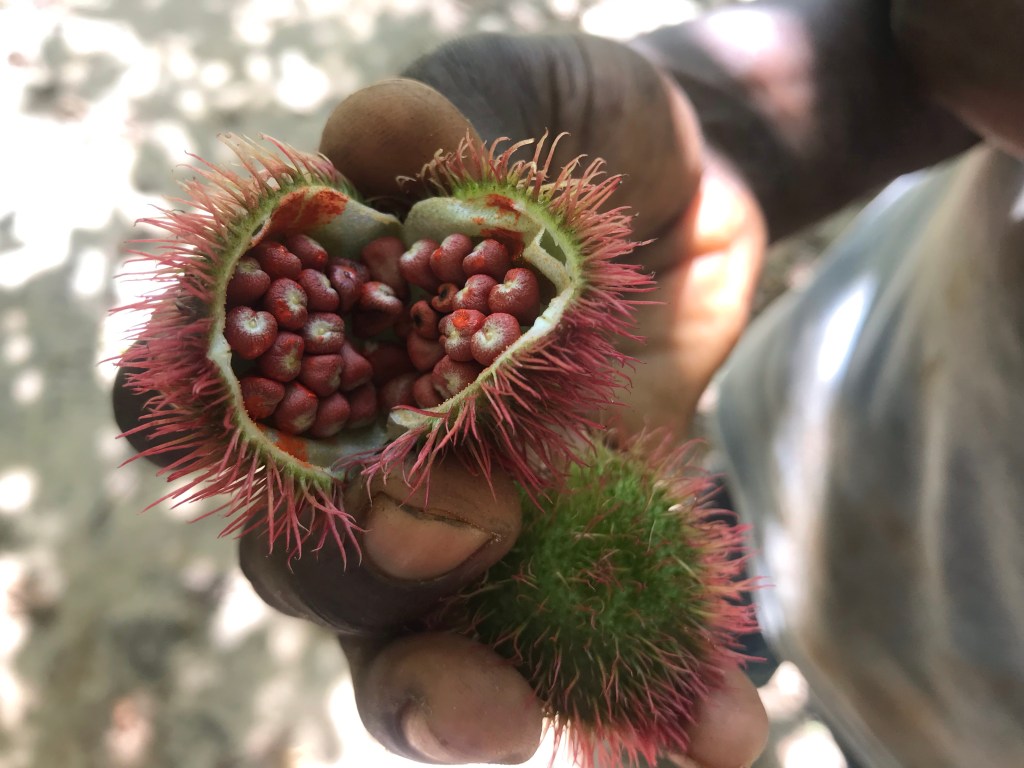
The lipstick plant grows on a tree but I think it looks more like fruit than a plant. The actual lipstick plant itself has green based skin with what looks like bright red fur covering it like a coat. When you cut the plant in halve, the inside reveals red, berry like inky pods with seeds inside of them. If you squish the pods, a red substance squirts out. Its actually not as liquidy as I thought it would be, but its very messy to crush it with your bare fingers. And it actually works really well. But because it stays on so good and its a natural lipstick, you definitely don’t want to get it on your clothes, because it stains well too.
Thank you for reading my blog post about the spice farm we went to in Zanzibar. My next post is going to be about the safari we did in Tanzania, including lots of photos of the animals we saw. And don’t forget to check out our latest video on our first stop in Africa. Until next time!
 Worldschooling
We are enjoying everything about your trip!!! the Richland Malleys!!!
LikeLike