Cutty Sark:
You might be thinking that Cutty Sark is a weird name for a cargo ship, but there is a real ship named exactly that. It served from 1870 to 1895. You might also be thinking that “cargo ships are boring”, but if you are, you’re SO wrong. When my family headed to London, all I thought we would do was go to the British museum and do not much else. But I was amazed at how many things we could do in London. I was surprised specifically at Cutty Sark!
Cutty Sark in it’s early years:
It was 1843 and a new type of ship was being designed. It was called a clipper. These cargo ships were designed to be strong, lightweight, and exceptionally fast. That’s where Cutty Sark comes in. Cutty Sark was a very well made clipper. It was launched on November 22, 1869 in Dumbarton, Scotland. It is now 150 years old. So Cutty Sark began it’s first voyage from London to Shanghai joining the tea trade industry. The clipper sailed up to around 16.511 knots (more than 19 miles per hour), and was considered by some to be the fastest ship of it’s day. Cutty Sark had 25 year of service in the trade industries.
Exploring the depths:
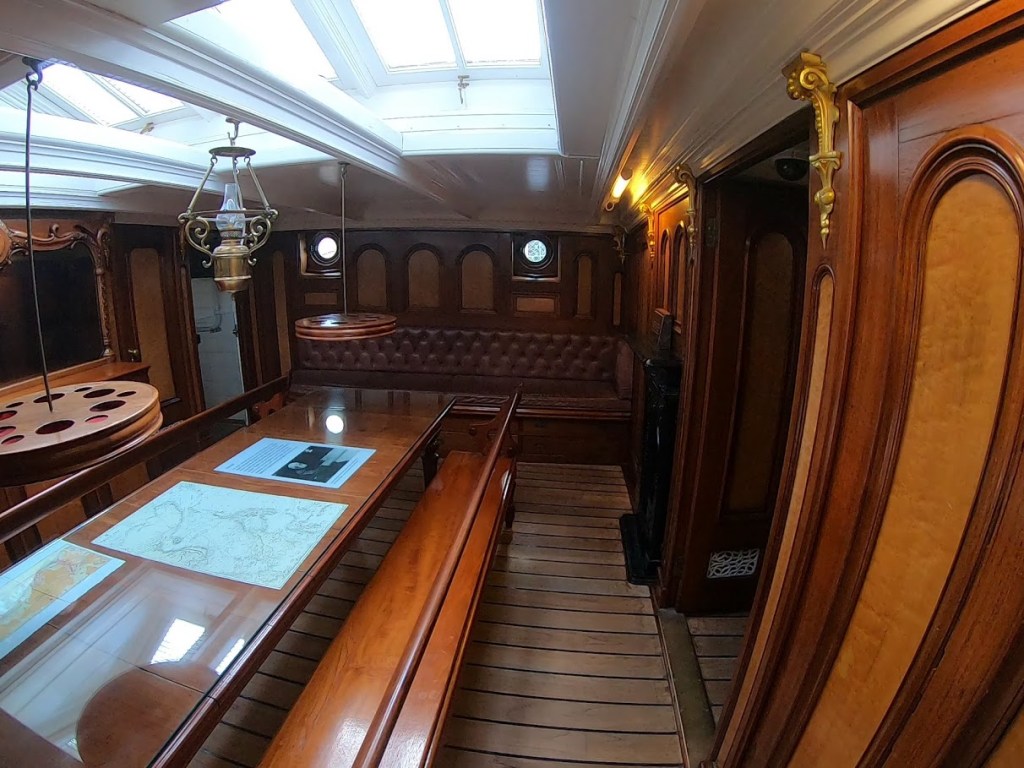
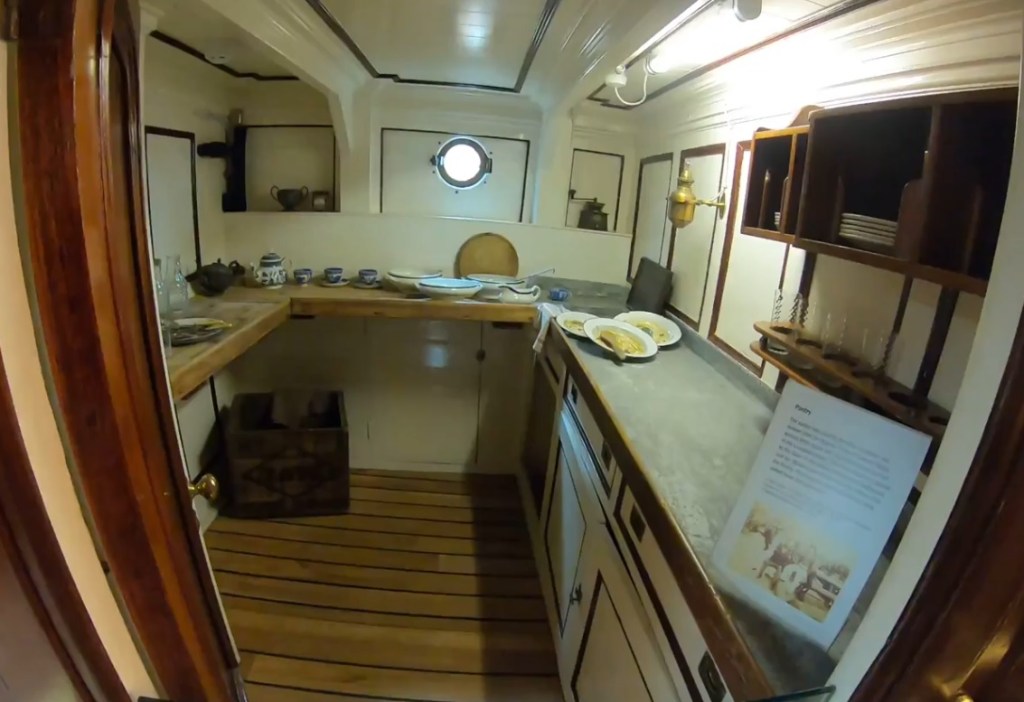
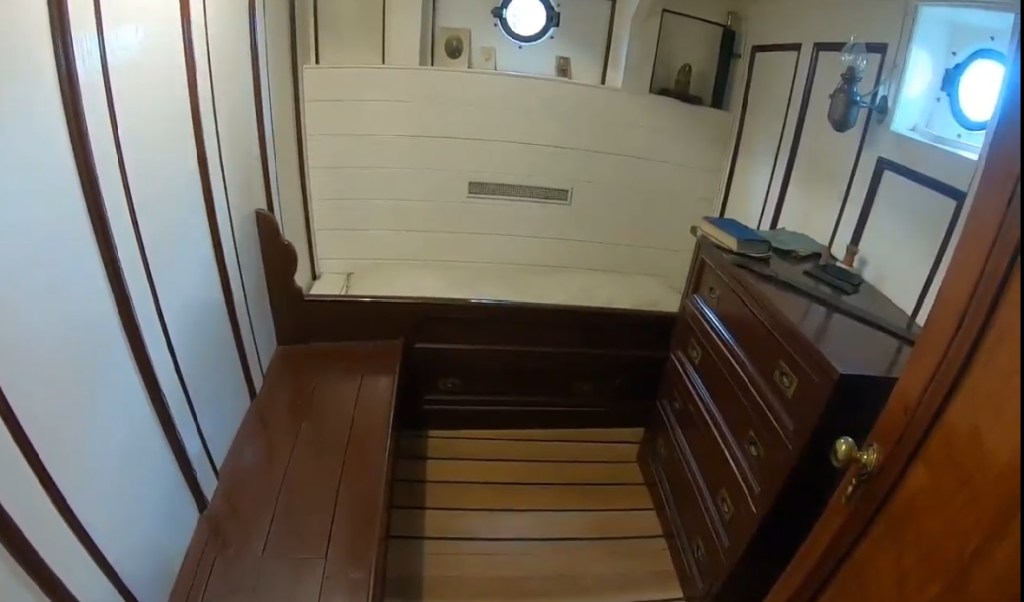
Cutty Sark was a cargo ship that delivered cargo. It seems like a simple explanation for this whole post. Well, the clipper didn’t just have cargo, it had architecture! When I first saw the Cutty Sark, I wondered if people went on the ship or not, if there were cabins or chambers. But of course there were people on the ship! They never had sailing robots in the 1800’s! So the question was, how did they sleep, eat, and survive if they had to be on long voyages across the world? Well, that’s the point of this paragraph. There were two chambers built to hold major storage, the main and the twin. Nothing but boxes and boxes would be piled up to the ceiling of these chambers. So the remaining space had to be handled carefully. The upper deck was the only living space for the workers and sailors who traveled on the Cutty Sark. There are three living spaces on the Ship. The first, for crew members (cooks, doctors, blacksmiths…etc…), the second, for sailors, and the third, for higher ranked sailors (Captain, first mate, second mate…). Usually, only 21 people traveled on the Cutty Sark at one time. Each one of them, usually only served for one voyage. 21 people does not seem like enough people for such a huge ship, but the Cutty Sark dealt with it.
Name and figurehead history:
Cutty Sark’s name was based off a Scottish poem by Robert Burns. This poem is called Tam o’Shanter. Tam o’Shanter is a poem that is about a farmer who’s name is Tam. Farmer Tam gets drunk and goes off to the woods where there are witches. One of the witches is wearing a dress called a cutty sark. So then the witch really gets mad and starts chasing Tam. This probably depicts why Cutty Sark is named after the witch, she’s fast. Farmer Tam gets away but the witch manages to pull the tail out of Tam’s horse. This is why Cutty Sark’s figurehead shows a witch holding a horse’s tail. The first master (captain) of Cutty Sark, who named the ship was Scottish which creates an explanation of why he chose a Scottish poem by Robert Burns. But really nobody know why Cutty Sark was based off of Tam o’Shanter. It remains a mystery.
Cutty Sark and its voyages:
There were a lot of voyages across the world that Cutty Sark took, but it only had two main routes. These were the two routes that changed history. In it’s earlier years, Cutty Sark traveled on its first route to China and joined the tea trade industry. This was the industry that delivered tea from China to the United Kingdom. When Cutty Sark set off on it’s first voyage, it was headed from London to Shanghai. Cutty Sark served in the China tea trade of the 1800’s for 7 years. Why only 7 years? Because of two things. One, steam ships were taking over, and two, the Suez Canal had opened up. On the same year that Cutty Sark was launched, the Suez Canal was built through Egypt. This Canal connected the Mediterranean sea to the Red Sea, and cut off the use of sailing boats. Sail ships could not go through the canal because they can not go in a straight line, and steam ships can. Having a motor allows you to control where your ship goes, where as when you sail you can only travel in wind. Cutty Sark couldn’t travel through the Suez Canal which mean that it’s China tea trade time was over. But Cutty Sark’s sailing life was not over. Actually, it was just beginning.
Cutty Sark’s later years:
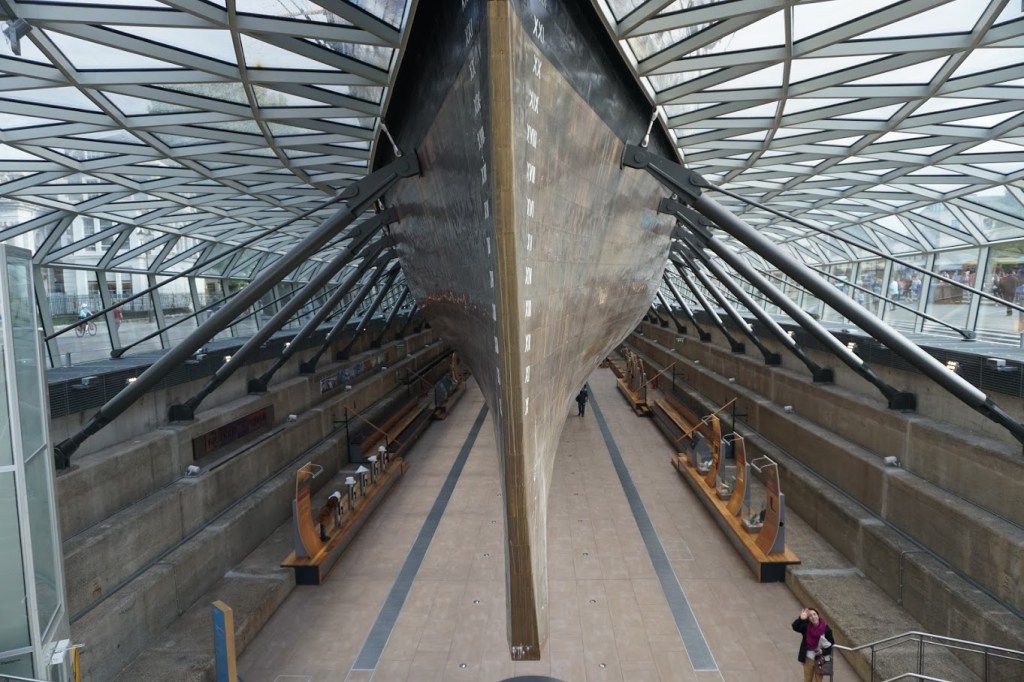
After Cutty Sark ended it’s time in the tea trade, it converted to the wool trade in Australia. It delivered wool from Australia to London for 12 years from 1883-1895. In 1895 when the trade was over, Cutty Sark was sold to a Portuguese company and renamed Ferreira. After a few decades with the Portuguese she was sold and renamed again to Maria de Amparo. After being Maria de Amparo, she was sold and renovated, and sold and renovated again. Eventually after a long time, something bad had to happen, and it did. While it was being renovated, another fire (if you read my last post “Notre Dame the cathedral”) broke out in May 21 2007. After a few hours of burning, the London fire brigade eventually got the fire to settle down. The fire was not a big fire and only a small part of Cutty Sarks frame was damaged. Now, the Cutty Sark is a museum in Greenwich witch my family visited in London. Over the years, Cutty Sark was remembered not of the fire, but if the huge contribution to the trade industry.
Lastly:
If you could be one of the passengers of the Cutty Sark, which would you be?
A) Carpenter (you would always have something to fix and not get much sleep)
B) Cook (it would be hard to cook for 20 other people)
C) Sailor (out in the cold where the valves crash onto the top decks, you would be one of the first that could be tossed overboard)
D) Master or captain (you might think it would be nice, but you’d have to be responsible for everyone else and if something bad happens, it would be blamed on you)
E) First mate (if the captain gets sick or needs help with something, you would have to take the risks and take over)
F) Second mate (if master needs lots of help or first mate does, you have to know a lot of things that the captain does, but you might not know enough to survive, even though it’s rare)
G) Purser (taking care of all the higher ranked officers in the Cutty Sark would be a lot, you would be more like a maid than a butler)
Please tell me your answer in the comment section bellow so I can know some more info about who you would be on the Cutty Sark. Thank you if you do 😊
Thanks for reading about Cutty Sark, I hope you enjoyed my London post. I do not regret going to that museum. If you go, you will not regret it either. Just remember not to confuse Cutty Sark whisky with the Cutty Sark ship. The cargo ship was first. In fact, Cutty Sark whisky was named after the ship!
Please feel free to leave an answer to the question I asked, a suggestion, or just a note in the comment section below.
On a final note, if you haven’t already, please subscribe and like the post. Also, we have a YouTube channel called ON THE ROAD WITH LJ and you can access the first video that’s called: First Destination. By: On the Road with LJ. You can press the link down below to see it ⬇️
https://m.youtube.com/watch?v=z4W4HHlPJOI
We will also have a new video and post soon. Hope you had fun sailing with me!
-Jack👌
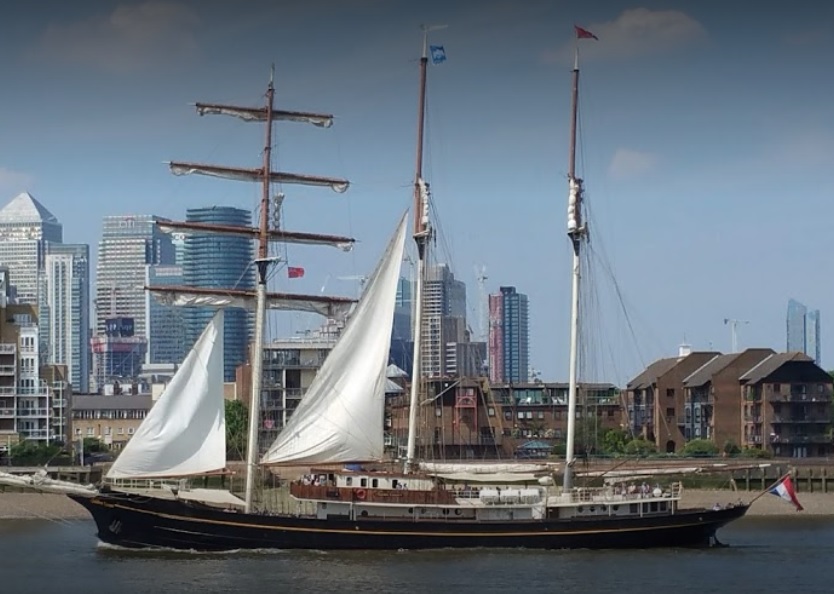
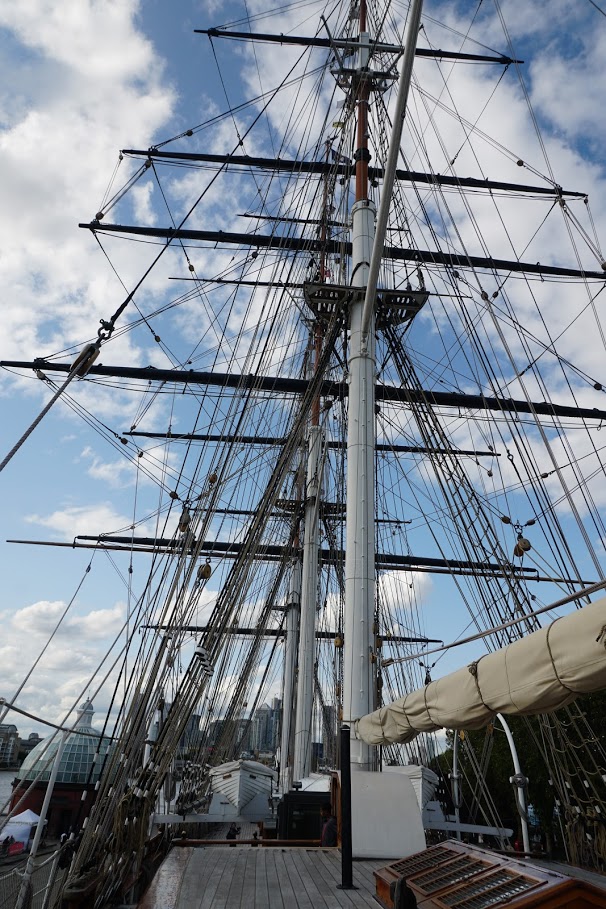
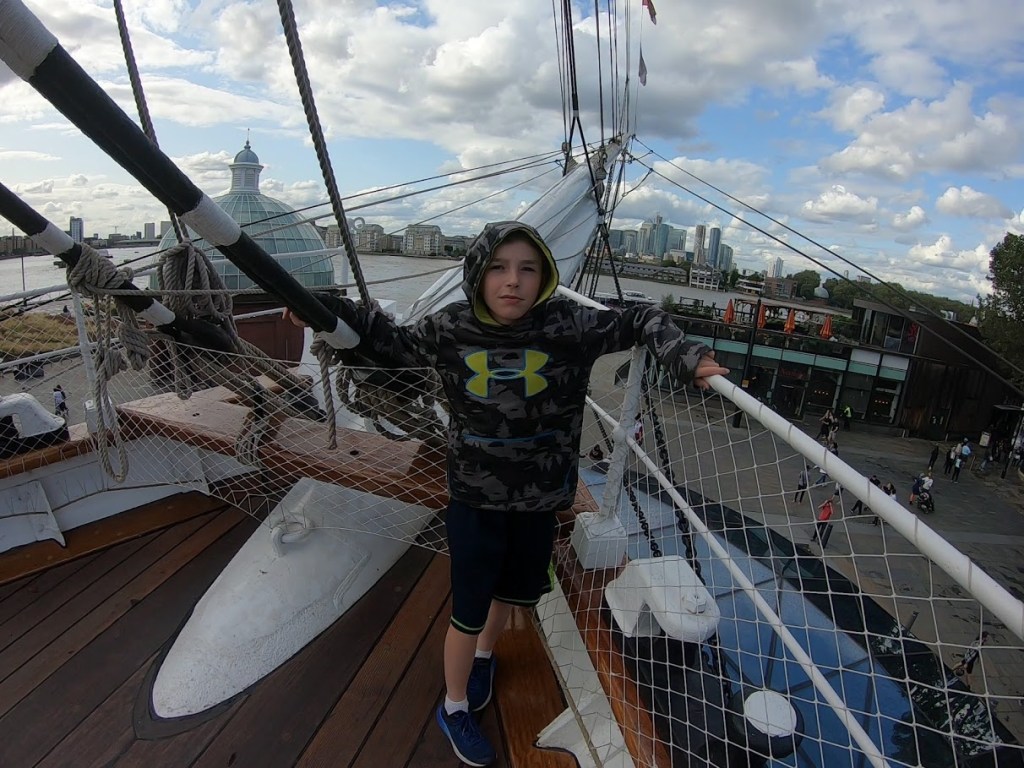
a few photos from our visit to Cutty Sark in London:
 Worldschooling
Hi Jack,
I learned so much about the Cutty Sark by reading your report. Having never visited the Prime Meridian, I knew nothing about the ship. I would not choose to work on any ship, but if I had to sail on that ship I would choose to be the first mate and hope the captain remained well and in command. Each description of the work done by the crew seems challenging and difficult. Grandpa will fill you in on his summer job working on board a freighter sailing from NY to Europe.
The photos you included are helpful in appreciating the beauty of the ship. The captain and officers quarters look very comfortable and elegant. That’s another reason I would want to be first mate!!
LikeLike
Great job !
LikeLike
Bravo Jack! Thank you for the detailed history lesson and beautiful photos. I’m bummed out that the family and I didn’t get to experience this when we were in London this past July. Hopefully, someday we will. Although, I almost feel like we went there through your thorough description. Keep up the wonderful work and continue enjoying every second of your amazing trip. Looking forward to the next posts and blogs from you guys. Hello to all!!! 🙂
LikeLike